Review
. 2012 Jun 5;356(1-2):65-73.
doi: 10.1016/j.mce.2011.11.002. Epub 2011 Nov 12.

Novel signaling mechanisms in the ovary during oocyte maturation and ovulation

Affiliations
Review

Novel signaling mechanisms in the ovary during oocyte maturation and ovulation

Marco Conti et al. Mol Cell Endocrinol. .

Abstract

During the peri-ovulatory period, the gonadotropin LH triggers major changes in both the somatic and germ cell compartments of the ovarian follicle. The oocyte completes the meiotic cell cycle to become a fertilizable egg, and dramatic changes in gene expression and secretion take place in the somatic compartment of the follicle in preparation for follicular rupture and oocyte release. The concerted changes are regulated by activation of intracellular signaling pathways as well as paracrine and autocrine regulatory loops. This review will provide a summary of the current knowledge of the molecular events triggered by LH focusing mostly on the signaling pathways required for oocyte maturation.


Figures

Fig. 1
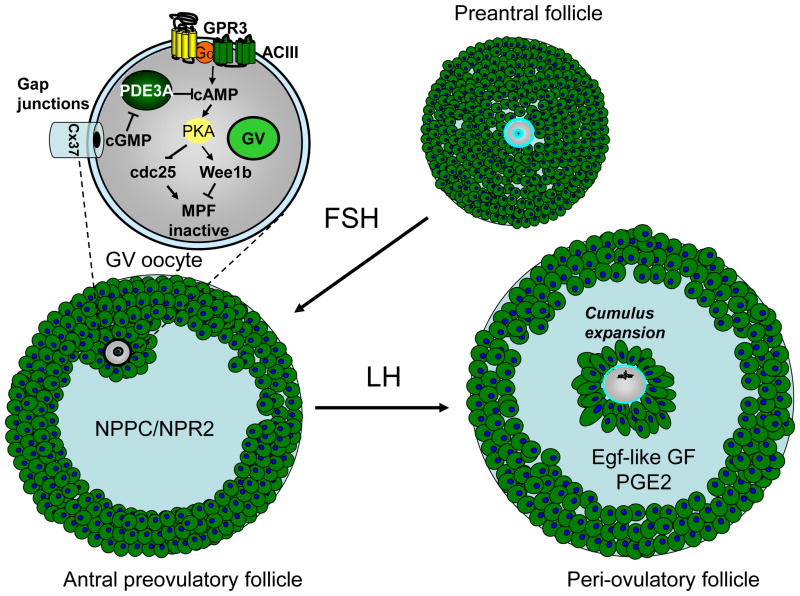
Fig. 1. Schematic representation of follicles at different stages of maturation and primary regulatory signals
During preantral follicle growth, oocytes are not competent to reenter meiosis. With the formation of the antrum, the NPPC/NPR2 paracrine regulation becomes active and maintains oocytes arrested in meiotic prophase via regulation of intrafollicular and oocyte cGMP. With the LH surge, a switch in paracrine regulation takes place with inactivation of the NPPC/NPR2 module and activation of EGF-like growth factors and the PGE2 paracrine regulations. The enlargement of a GV oocyte included in the figure summarized the components of the cAMP signaling pathway involved in meiotic arrest and functional in an antral preovulatory follicle.
Fig. 2
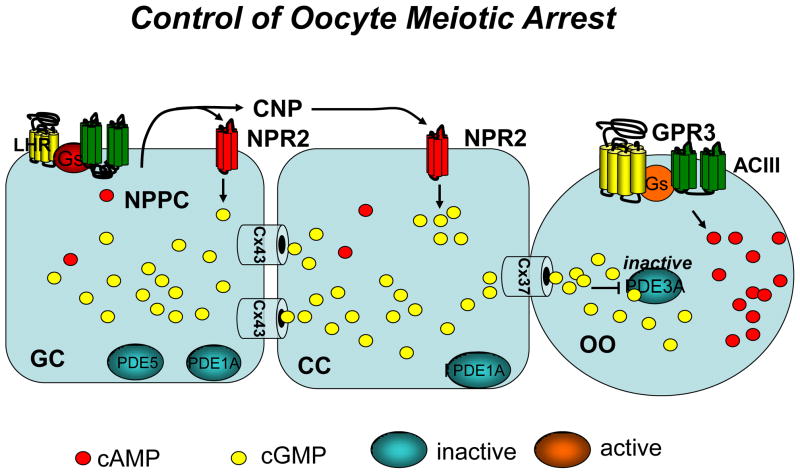
Fig. 2. Model summarizing the cyclic nucleotide signaling pathways involved in maintenance of meiotic arrest in the mouse follicle
The presence of cGMP PDEs in granulosa cells is inferred from biochemical and inhibitor data. Although NPR2 expression in cumulus cells may be higher than in mural cells, mRNA for this receptor is detectable also in mural granulosa cells. GC, granulosa cells; CC, cumulus cells; OO, oocyte. The major connexin subunit expressed in the oocyte is connexin 37 whereas connexin 43 is expressed in the somatic compartment. Heterodimers of connexin 37/43 mediate some communication between the oocyte and cumulus cells.
Fig. 3
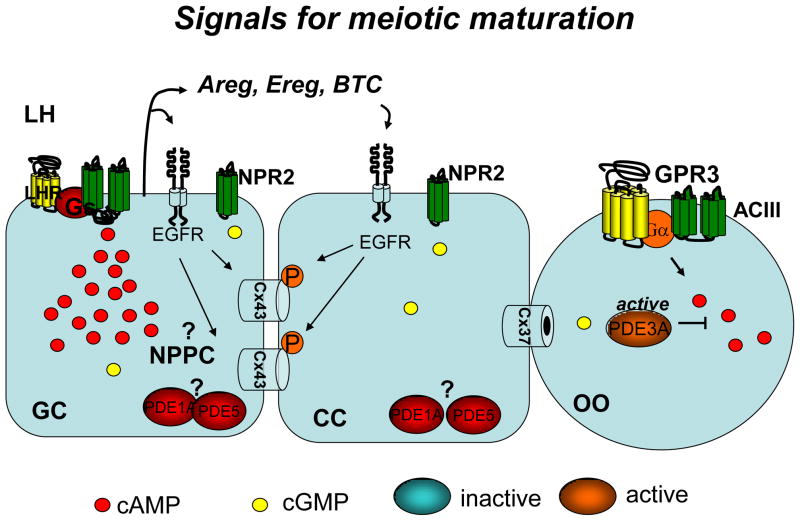
Fig. 3. Scheme of LH Receptor-activated signaling pathways regulating oocyte meiotic maturation
The scheme summarizes our current knowledge on how the signal emanating from the LHR receptor branches to regulation of different signaling pathways. Question marks indicate that the intracellular mechanism linking a signal to downstream responses has not been established. The figure is an updated version of a figure published by Hsieh et al (Hsieh et al. 2011).
Fig. 4
Fig. 4. Model summarizing the different signaling pathways in the ovarian follicle mediating the LH-induced oocyte maturation
Question marks indicate putative changes not yet substantiated by experimental data. P in a red circle indicates phosphorylation. The inactivation of NPR2 may be consequent to decrease in ligand production by granulosa cells or desensitization of the receptor through unknown mechanisms. Activation of a cGMP-specific phosphodiesterase may also contribute to the decrease in cGMP in the follicle.

References

    1. Amsterdam A, Koch Y, Lieberman ME, Lindner HR. Distribution of binding sites for human chorionic gonadotropin in the preovulatory follicle of the rat. J Cell Biol. 1975;67(3):894–900. - PMC - PubMed
    1. Andric N, Ascoli M. Mutations of the lutropin/choriogonadotropin receptor that do not activate the phosphoinositide cascade allow hCG to induce aromatase expression in immature rat granulosa cells. Mol Cell Endocrinol. 2008;285(1–2):62–72. - PMC - PubMed
    1. Andric N, Thomas M, Ascoli M. Transactivation of the epidermal growth factor receptor is involved in the lutropin receptor-mediated down-regulation of ovarian aromatase expression in vivo. Mol Endocrinol. 2010;24(3):552–560. - PMC - PubMed
    1. Ashkenazi H, Cao X, Motola S, Popliker M, Conti M, Tsafriri A. Epidermal growth factor family members: endogenous mediators of the ovulatory response. Endocrinology. 2005;146(1):77–84. - PubMed
    1. Beyer EC, Kistler J, Paul DL, Goodenough DA. Antisera directed against connexin43 peptides react with a 43-kD protein localized to gap junctions in myocardium and other tissues. J Cell Biol. 1989;108(2):595–605. - PMC - PubMed

Publication types

Substances

LinkOut - more resources