


Preventing Chronic Pain following Acute Pain: Risk Factors, Preventive Strategies, and their Efficacy
- PMID: 22102847
- PMCID: PMC3217302
- DOI: 10.1016/j.eujps.2011.08.013
Preventing Chronic Pain following Acute Pain: Risk Factors, Preventive Strategies, and their Efficacy
Abstract
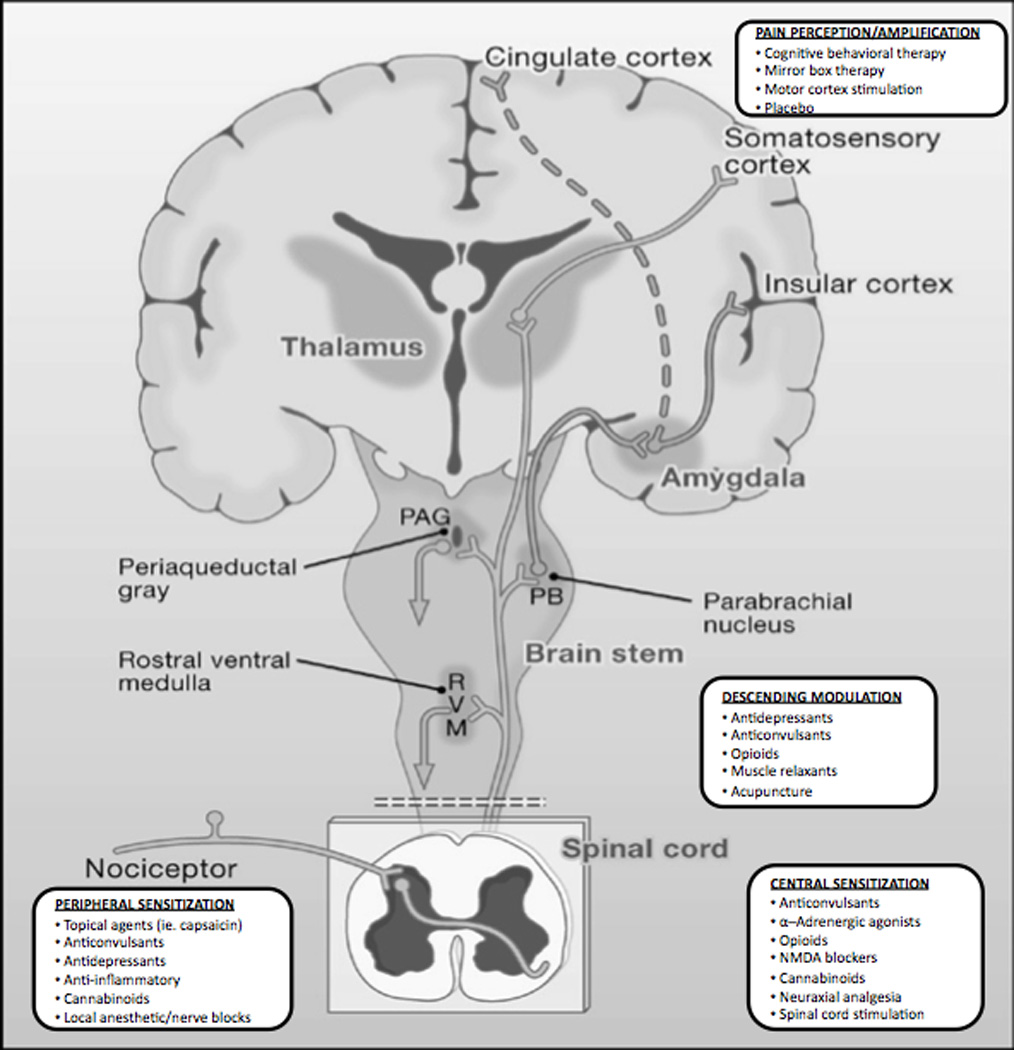
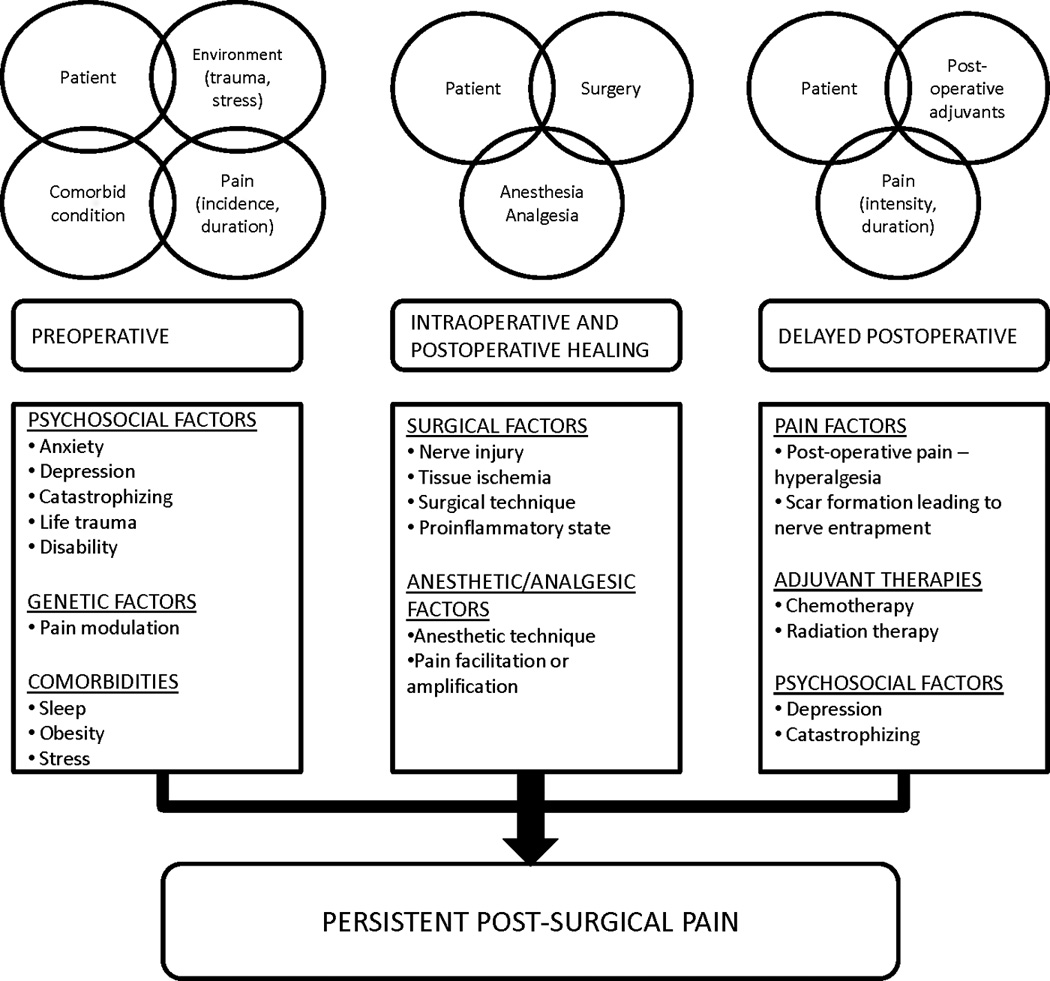
Chronic pain is the leading cause of disability in the United States. The transition from acute to persistent pain is thought to arise from maladaptive neuroplastic mechanisms involving three intertwined processes, peripheral sensitization, central sensitization, and descending modulation. Strategies aimed at preventing persistent pain may target such processes. Models for studying preventive strategies include persistent post-surgical pain (PPP), persistent post-trauma pain (PTP) and post-herpetic neuralgia (PHN). Such entities allow a more defined acute onset of tissue injury after which study of the long-term effects is more easily examined. In this review, we examine the pathophysiology, epidemiology, risk factors, and treatment strategies for the prevention of chronic pain using these models. Both pharmacological and interventional approaches are described, as well as a discussion of preventive strategies on the horizon.
Conflict of interest statement
Kai McGreevy, MD has nothing to disclose. Michael Bottros, MD has nothing to disclose. Srinivasa Raja, MD has nothing to disclose.
Figures
References
-
- Bachiocco V, Morelli-Labate A, Rusticali A, Bragaglia R, Mastrorilli M, Carli G. Intensity, latency and duration of post-thoracotomy pain: relationship to personality traits. Funct Neurol. 1990;5:321–332. - PubMed
-
- Backonja M, Beydoun A, Edwards KR, Schwartz SL, Fonseca V, Hes M, LaMoreaux L, Garofalo E for the Gabapentin Diabetic Neuropathy Study Group. Gabapentin for the Symptomatic Treatment of Painful Neuropathy in Patients With Diabetes Mellitus. JAMA: The Journal of the American Medical Association. 1998;280:1831–1836. - PubMed
-
- Barmparas G, Inaba K, Teixeira P, DuBose JJ, Criscuoli M, Talving P, Plurad D, Green D, Demetriades D. Epidemiology of Post-Traumatic Limb Amputation: A National Trauma Databank Analysis. The American Surgeon. 2010;76:1214–1222. - PubMed
-
- Bisgaard T. Analgesic treatment after laparoscopic cholecystectomy: a critical assessment of the evidence. Anesthesiology. 2006;104:846. - PubMed
Grants and funding
LinkOut - more resources
Full Text Sources
Other Literature Sources