The field-testing of a novel integrated mapping protocol for neglected tropical diseases
- PMID: 22102921
- PMCID: PMC3216917
- DOI: 10.1371/journal.pntd.0001380
The field-testing of a novel integrated mapping protocol for neglected tropical diseases
Abstract
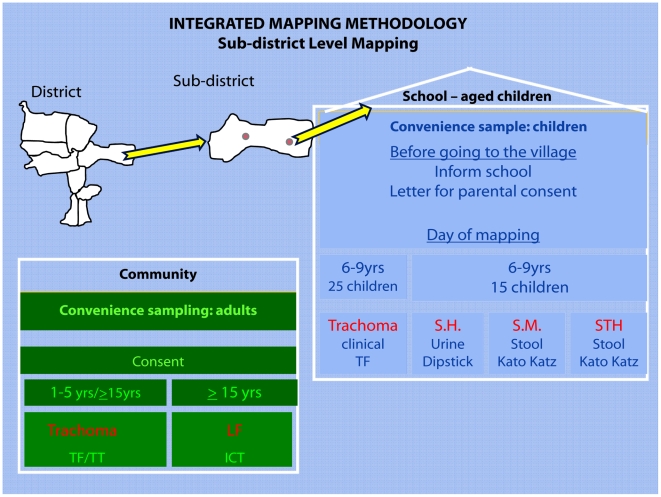
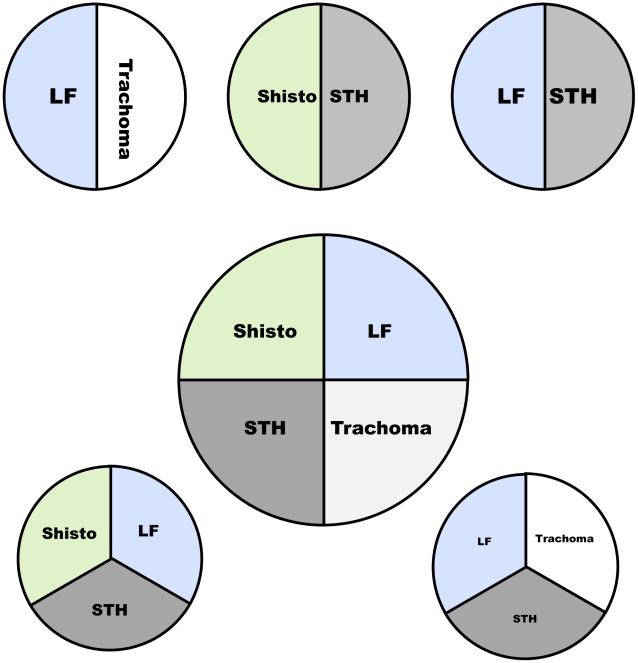
Background: Vertical control and elimination programs focused on specific neglected tropical diseases (NTDs) can achieve notable success by reducing the prevalence and intensity of infection. However, many NTD-endemic countries have not been able to launch or scale-up programs because they lack the necessary baseline data for planning and advocacy. Each NTD program has its own mapping guidelines to collect missing data. Where geographic overlap among NTDs exists, an integrated mapping approach could result in significant resource savings. We developed and field-tested an innovative integrated NTD mapping protocol (Integrated Threshold Mapping (ITM) Methodology) for lymphatic filariasis (LF), trachoma, schistosomiasis and soil-transmitted helminths (STH).
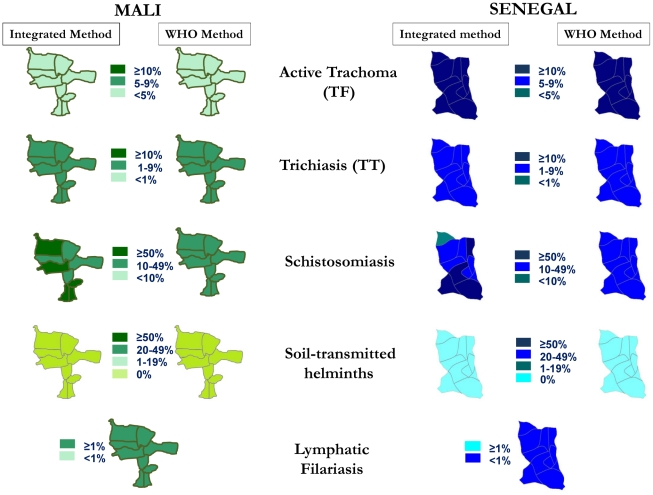
Methodology/principal findings: The protocol is designed to be resource-efficient, and its specific purpose is to determine whether a threshold to trigger public health interventions in an implementation unit has been attained. The protocol relies on World Health Organization (WHO) recommended indicators in the disease-specific age groups. For each disease, the sampling frame was the district, but for schistosomiasis, the sub-district rather than the ecological zone was used. We tested the protocol by comparing it to current WHO mapping methodologies for each of the targeted diseases in one district each in Mali and Senegal. Results were compared in terms of public health intervention, and feasibility, including cost. In this study, the ITM methodology reached the same conclusions as the WHO methodologies regarding the initiation of public health interventions for trachoma, LF and STH, but resulted in more targeted intervention recommendations for schistosomiasis. ITM was practical, feasible and demonstrated an overall cost saving compared with the standard, non-integrated, WHO methodologies.
Conclusions/significance: This integrated mapping tool could facilitate the implementation of much-needed programs in endemic countries.
Conflict of interest statement
The authors have declared that no competing interests exist.
Figures
References
-
- Hotez PJ, Molyneux DH, Fenwick A, Kumaresan J, Sachs SE, et al. Control of neglected tropical diseases. N Engl J Med. 2007;357:1018–1027. - PubMed
-
- Musgrove P, Hotez PJ. Turning neglected tropical diseases into forgotten maladies. Health Aff (Millwood) 2009;28:1691–1706. - PubMed
-
- Lammie PJ, Fenwick A, Utzinger J. A blueprint for success: integration of neglected tropical disease control programmes. Trends Parasitol. 2006;22:313–321. - PubMed
-
- Hotez PJ. Mass drug administration and integrated control for the world's high-prevalence neglected tropical diseases. Clin Pharmacol Ther. 2009;85:659–664. - PubMed
Publication types
MeSH terms
LinkOut - more resources
Full Text Sources