Review
. 2012 Feb;22(1):14-20.
doi: 10.1016/j.sbi.2011.10.005. Epub 2011 Nov 19.

How, when and why proteins collapse: the relation to folding

Affiliations
Review

How, when and why proteins collapse: the relation to folding

Gilad Haran. Curr Opin Struct Biol. 2012 Feb.

Abstract

Unfolded proteins under strongly denaturing conditions are highly expanded. However, when the conditions are more close to native, an unfolded protein may collapse to a compact globular structure distinct from the folded state. This transition is akin to the coil-globule transition of homopolymers. Single-molecule FRET experiments have been particularly conducive in revealing the collapsed state under conditions of coexistence with the folded state. The collapse can be even more readily observed in natively unfolded proteins. Time-resolved studies, using FRET and small-angle scattering, have shown that the collapse transition is a very fast event, probably occurring on the submicrosecond time scale. The forces driving collapse are likely to involve both hydrophobic and backbone interactions. The loss of configurational entropy during collapse makes the unfolded state less stable compared to the folded state, thus facilitating folding.


Figures

Figure 1
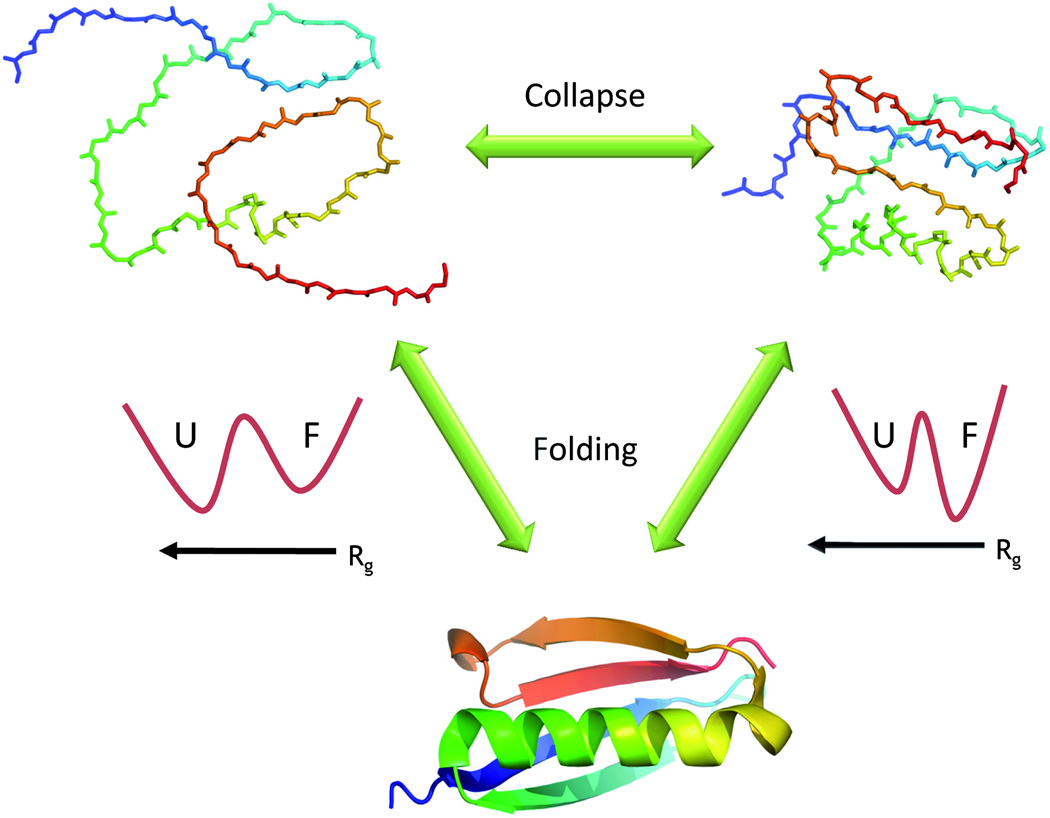
Figure 1. The collapse transition and protein folding
Unfolded proteins may change their configuration depending on the quality of the solution. In a good solvent they are expanded (top left) while in a bad solvent they are collapsed (top right). The collapse transition has been observed in both equilibrium and time-resolved experiments. The configuration of the chain may have an effect on folding thermodynamics. Thus, an expanded chain (whose radius of gyration, Rg, is much larger than that of the folded protein) is stabilized with respect to the folded state due to its higher configurational entropy. This is depicted by the schematic free energy surface on the left (U- unfolded state, F- folded state), plotted as a function of Rg. When the protein collapses, it loses much of its configurational entropy, and it is therefore less stable than the folded state- see the free energy surface on the right. The entropic loss accompanying collapse may thus facilitate folding.
Figure 2
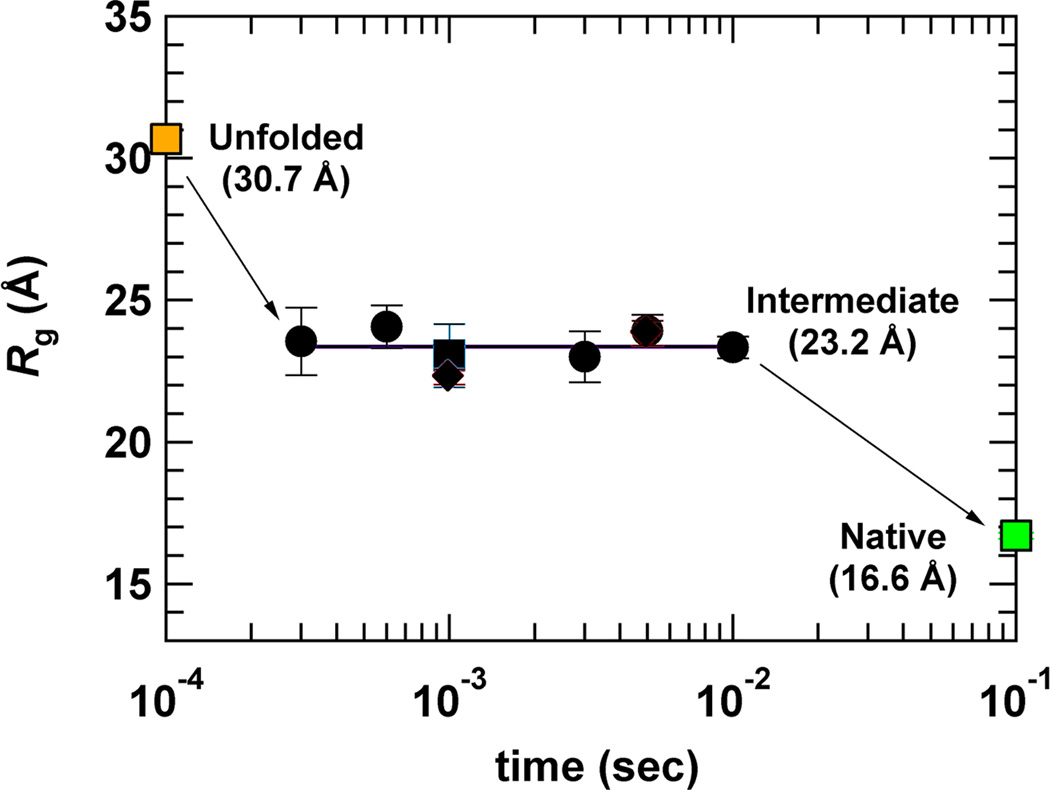
Figure 2. Time-resolved SAXS experiments show collapse
Rg values for the protein dihydrofolate reductase, obtained from SAXS measurements following a fast jump in solution conditions [11]. The native and fully unfolded Rg values are also shown (in green and orange, respectively), to indicate that the SAXS experiment ‘sees’ a collapsed state whose size is intermediate between the two. This figure is reproduced with permission.
Figure 3
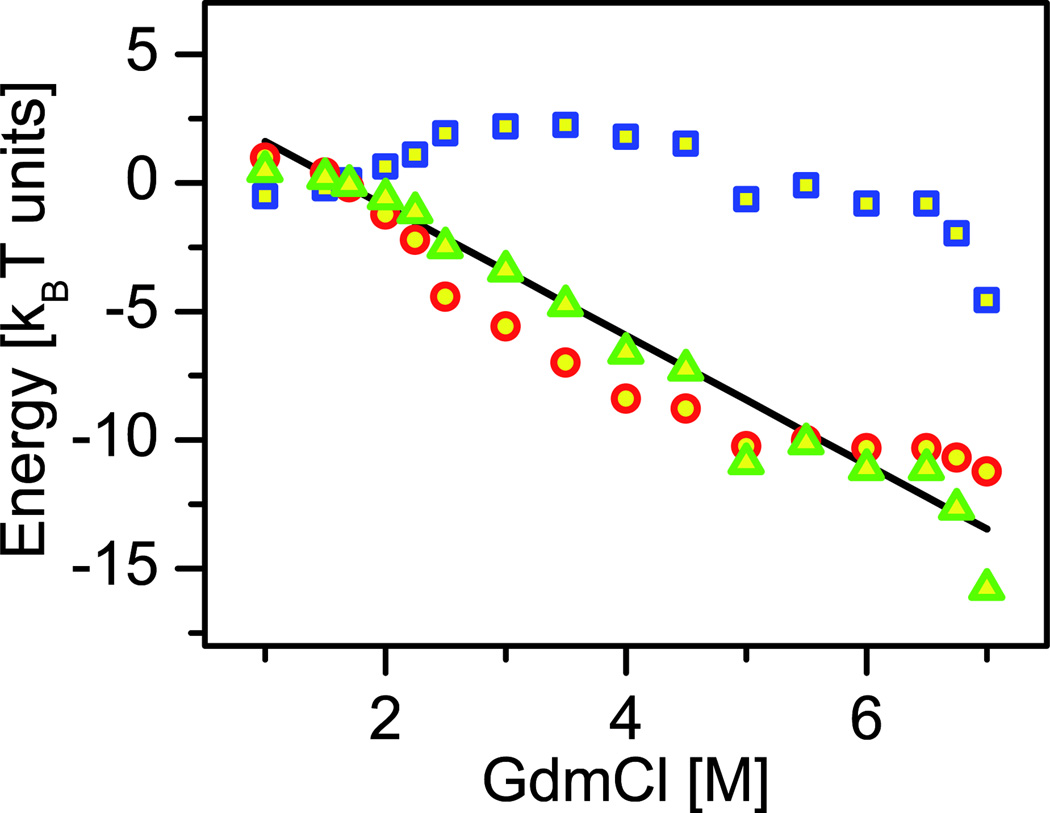
Figure 3. Sample calculation of the collapse free energy from single-molecule FRET measurements
The collapse free energy, ΔGU→C is shown in green triangles, and is found to be linear with denaturant concentration, with a slope that matches very well the folding transition m-value (black line). ΔGU→C is also decomposed in the figure into an enthalpic part (blue squares), and an entropic part (red circles). Note the substantial contribution of the configurational entropy (based on data and analysis in ref. [60]).

References

    1. de Gennes P-G. Scaling concepts in polymer physics. Cornell university press: Ithaca; 1979.
    1. Grosberg AY, Kokhlov AR. Statistical Physics of Macromolecules. AIP Press: New York; 1994.
    1. Uversky VN. Natively unfolded proteins: A point where biology waits for physics. Protein Science. 2002;11:739–756. - PMC - PubMed
    1. Wilkins DK, Grimshaw SB, Receveur V, Dobson CM, Jones JA, Smith LJ. Hydrodynamic radii of native and denatured proteins measured by pulse field gradient NMR techniques. Biochemistry. 1999;38:16424–16431. - PubMed
    1. Kohn JE, Millett IS, Jacob J, Zagrovic B, Dillon TM, Cingel N, Dothager RS, Seifert S, Thiyagarajan P, Sosnick TR, et al. Random-coil behavior and the dimensions of chemically unfolded proteins. Proceedings of the National Academy of Sciences of the United States of America. 2004;101:12491–12496. - PMC - PubMed

Publication types

LinkOut - more resources