


Antigen depot is not required for alum adjuvanticity
- PMID: 22106367
- PMCID: PMC3289510
- DOI: 10.1096/fj.11-184556
Antigen depot is not required for alum adjuvanticity
Abstract
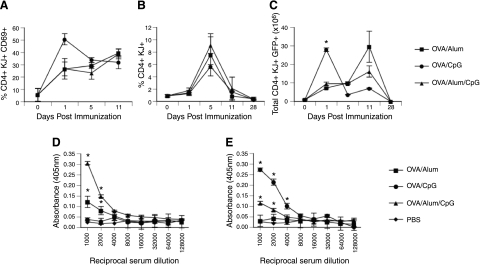
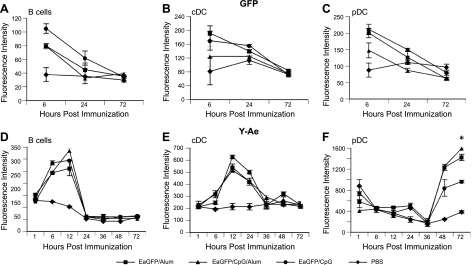
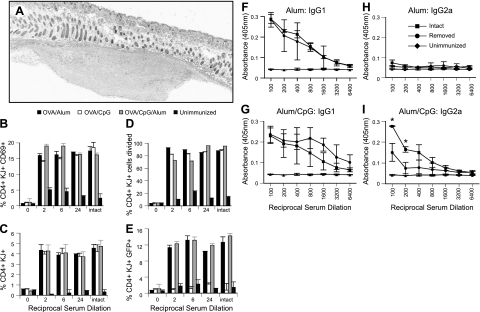
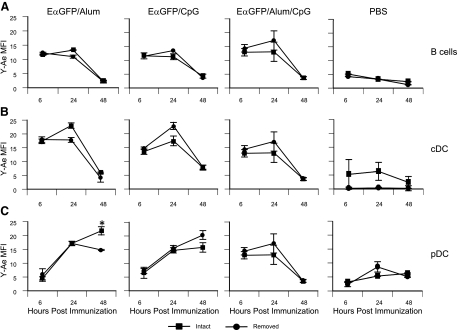
Alum adjuvants have been in continuous clinical use for more than 80 yr. While the prevailing theory has been that depot formation and the associated slow release of antigen and/or inflammation are responsible for alum enhancement of antigen presentation and subsequent T- and B-cell responses, this has never been formally proven. To examine antigen persistence, we used the chimeric fluorescent protein EαGFP, which allows assessment of antigen presentation in situ, using the Y-Ae antibody. We demonstrate that alum and/or CpG adjuvants induced similar uptake of antigen, and in all cases, GFP signal did not persist beyond 24 h in draining lymph node antigen-presenting cells. Antigen presentation was first detectable on B cells within 6-12 h of antigen administration, followed by conventional dendritic cells (DCs) at 12-24 h, then finally plasmacytoid DCs at 48 h or later. Again, alum and/or CpG adjuvants did not have an effect on the magnitude or sequence of this response; furthermore, they induced similar antigen-specific T-cell activation in vivo. Notably, removal of the injection site and associated alum depot, as early as 2 h after administration, had no appreciable effect on antigen-specific T- and B-cell responses. This study clearly rules out a role for depot formation in alum adjuvant activity.
Figures


References
-
- Glenny A. T., Pope C. G. (1925) The antigenic effect of intravenous injection of diphtheria toxin. J. Pathol. Bacteriol. 28, 273–278
-
- Glenny A. T., Buttle G. A. H., Stevens M. F. (1931) Rate of disappearance of diphtheria toxoid injected into rabbits and guinea-pigs: toxoid precipitated with alum. J. Pathol. Bacteriol. 34, 267–275
-
- Van Duin D., Medzhitov R., Shaw A. C. (2006) Triggering TLR signaling in vaccination. Trends Immunol. 27, 49–49 - PubMed
-
- Shi Y., Evans J. E., Rock K. L. (2003) Molecular identification of a danger signal that alerts the immune system to dying cells. Nature 425, 516–521 - PubMed
Publication types
MeSH terms
Substances
Grants and funding
LinkOut - more resources
Full Text Sources
Other Literature Sources
