


Assessment of special care newborn units in India
- PMID: 22106756
- PMCID: PMC3225112
- DOI: 10.3329/jhpn.v29i5.8904
Assessment of special care newborn units in India
Abstract
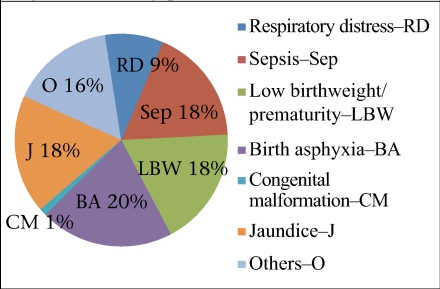
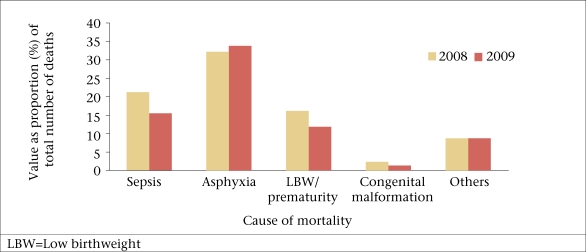
The neonatal mortality rate in India is high and stagnant. Special Care Newborn Units (SCNUs) have been set up to provide quality level II newborn-care services in several district hospitals to meet this challenge. The units are located in some remotest districts where the burden of neonatal deaths is high, and access to special newborn care is poor. The study was conducted to assess the functioning of SCNUs in eight rural districts of India. The evaluation was based on an analysis of secondary data from the eight units that had been functioning for at least one year. A cross-sectional survey was also conducted to assess the availability of human resources, equipment, and quality care. Descriptive statistics were used for analyzing the inputs (resources) and outcomes (morbidity and mortality). The rate of mortality among admitted neonates was taken as the key outcome variable to assess the performance of the units. Chi-square test was used for analyzing the trend of case-fatality rate over a period of 3-5 years considering the first year of operationalization as the base. Correlation coefficients were estimated to understand the possible association of case-fatality rate with factors, such as bed:doctor ratio, bed:nurse ratio, average duration of stay, and bed occupancy rate, and the asepsis score was determined. The rates of admission increased from a median of 16.7 per 100 deliveries in 2008 to 19.5 per 100 deliveries in 2009. The case-fatality rate reduced from 4% to 40% within one year of their functioning. Proportional mortality due to sepsis and low birthweight (LBW) declined significantly over two years (LBW <2.5 kg). The major reasons for admission and the major causes of deaths were birth asphyxia, sepsis, and LBW/prematurity. The units had a varying nurse:bed ratio (1:0.5-1:1.3). The bed occupancy rate ranged from 28% to 155% (median 103%), and the average duration of stay ranged from two days to 15 days (median 4.75 days). Repair and maintenance of equipment were a major concern. It is possible to set up and manage quality SCNUs and improve the survival of newborns with LBW and sepsis in developing countries, although several challenges relating to human resources, maintenance of equipment, and maintenance of asepsis remain.
Figures
References
-
- Lawn JE, Cousens S, Zupan J. Lancet Neonatal Survival Steering Team.; 4 million neonatal deaths: when? Where? Why? Lancet. 2005;365:891–900. - PubMed
-
- Toolkit for setting up of special care newborn units, stabilization units and newborn corners. New Delhi: United Nations Children's Fund; 2008. p. 9. ( http://www.unicef.org/india/SCNU_book1_April_6.pdf, accessed on 20 August 2009).
-
- Darmstadt GL, Bhutta ZA, Cousens S, Adam T, Walker N, de Bernis L, Lancet Neonatal Survival Steering Team Evidence based, cost effective interventions: how many newborn babies can we save? Lancet. 2005;365:977–88. ;: - PubMed
-
- Estimating number of beds required for SCNU . Toolkit for setting up of special care newborn units, stabilization units and newborn corners. New Delhi: United Nations Children's Fund; 2008. ( http://www.unicef.org/india/SCNU_book1_April_6.pdf, accessed on 20 August 2009).
-
- Sen A, Mahalanabis D, Singh AK, Som TK, Bandyopadhyay S. Impact of a district level sick newborn care unit on neonatal neonatal mortality rate: 2-year follow-up. J Perinatol. 2009;29:150–5. - PubMed
Publication types
MeSH terms
LinkOut - more resources
Full Text Sources