


Induction chemotherapy with paclitaxel and cisplatin to concurrent radiotherapy and weekly paclitaxel in the treatment of loco-regionally advanced, stage IV (M0), head and neck squamous cell carcinoma. Mature results of a prospective study
- PMID: 22108341
- PMCID: PMC3235077
- DOI: 10.1186/1748-717X-6-162
Induction chemotherapy with paclitaxel and cisplatin to concurrent radiotherapy and weekly paclitaxel in the treatment of loco-regionally advanced, stage IV (M0), head and neck squamous cell carcinoma. Mature results of a prospective study
Abstract
Background: to evaluate activity and toxicity of a sequential treatment in advanced, non metastatic, mostly unresectable, head and neck squamous cell carcinoma.
Methods: Patients with loco-regionally advanced or unresectable, head and neck cancer, were prospectively treated with 3 courses of induction chemotherapy followed by concurrent chemoradiation. Induction chemotherapy consisted of paclitaxel 175 mg/m2 day 1 and cisplatin 75 mg/m2 day 2, given every 3 weeks, to a total of three courses. Curative radiotherapy started 4 weeks after the last cycle of chemotherapy with the goal of delivering a total dose ≥ 66 Gy. During RT weekly paclitaxel (40 mg/m2) was administered.
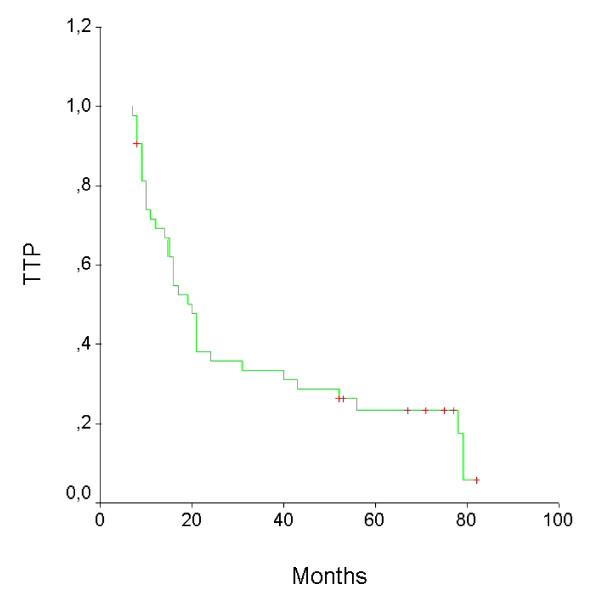
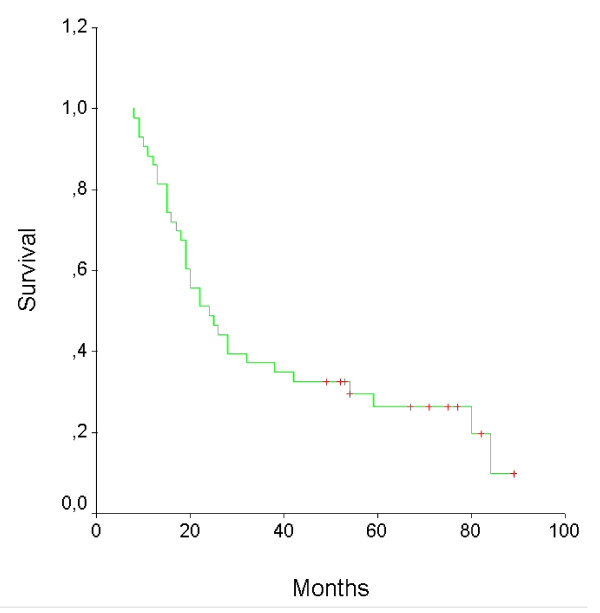
Results: The trial accrued 43 patients from January 1999 to December 2002. All patients received 3 courses of induction chemotherapy and the planned dose of radiotherapy. Thirty-eight patients were able to tolerate weekly paclitaxel during irradiation at least for 4 courses. After induction therapy there were 32 overall responses, 74.4% (23 partial and 9 complete); at completion of concomitant treatment overall responses were 42, 97.7% (20 partial and 22 complete). Median time to treatment failure was 20 months and the disease progression rate at 3 and 5 years was 33% and 23%, respectively. The median overall survival time was 24 months and 3 and 5 years overall survival rates were 37% and 26%, respectively. The major toxicity was mucositis.
Conclusions: This combined treatment was found to be feasible and active in advanced or unresectable, head and neck squamous cell carcinoma patients. Long-term results observed in this trial encourage to consider this approach in further investigation using newer radiation delivering technique and new molecularly agents.
Figures
References
-
- Pignon JP, Bourhis J, Domenge C, Designé L. Chemotherapy added to locoregional treatment for head and neck squamous-cell carcinoma: three meta-analyses of updated individual data. MACHNC Collaborative Group. Meta-Analysis of Chemotherapy on Head and Neck Cancer. Lancet. 2000;355:949–955. - PubMed
-
- Paccagnella A, Orlando A, Marchiori C, Zorat PL, Cavaniglia G, Sileni VC, Jirillo A, Tomio L, Fila G, Fede A, Endrizzi L, Bari M, Sampognaro E, Balli M, Gava A, Pappagallo GL, Fiorenton MV. Phase III trial of initial chemotherapy in stage III or IV head and neck cancers: A study by the Gruppo di Studio sui Tumori della Testa e del Collo. J Natl Cancer Inst. 1994;86:265–272. doi: 10.1093/jnci/86.4.265. - DOI - PubMed
-
- Schuller DE, Metch B, Stein DW, Mattox D, McCracken JD. Preoperative chemotherapy in advanced resectable head and neck cancer: Final report of the Southwest Oncology Group. Laryngoscope. 1988;98:1205–1211. - PubMed
-
- The Department of Veterans Affairs Laryngeal Cancer Study Group. Induction chemotherapy plus radiation compared with surgery plus radiation in patients with advanced laryngeal cancer. N Engl J Med. 1991;324:1685–1690. - PubMed
Publication types
MeSH terms
Substances
LinkOut - more resources
Full Text Sources
Medical
