


The Infant Aphakia Treatment Study: evaluation of cataract morphology in eyes with monocular cataracts
- PMID: 22108352
- PMCID: PMC3345197
- DOI: 10.1016/j.jaapos.2011.05.016
The Infant Aphakia Treatment Study: evaluation of cataract morphology in eyes with monocular cataracts
Abstract
Purpose: To describe a video-documented assessment of cataract type in the eyes of patients with monocular infantile cataract who were enrolled in the Infant Aphakia Treatment Study.
Methods: The Infant Aphakia Treatment Study is a randomized clinical trial in which the investigators compared intraocular lens (IOL) versus contact lens correction in 114 infants, aged 28 days to <7 months. A total of 83 videos were available for morphological analysis of cataract. Three examiners reviewed all surgical recordings and agreed on the cataract characteristics by using a score sheet to record the lens layer or configuration of the opacity.
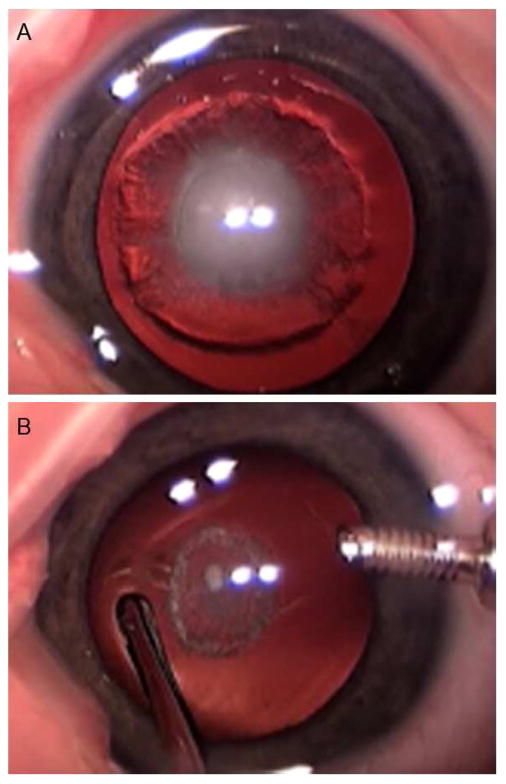
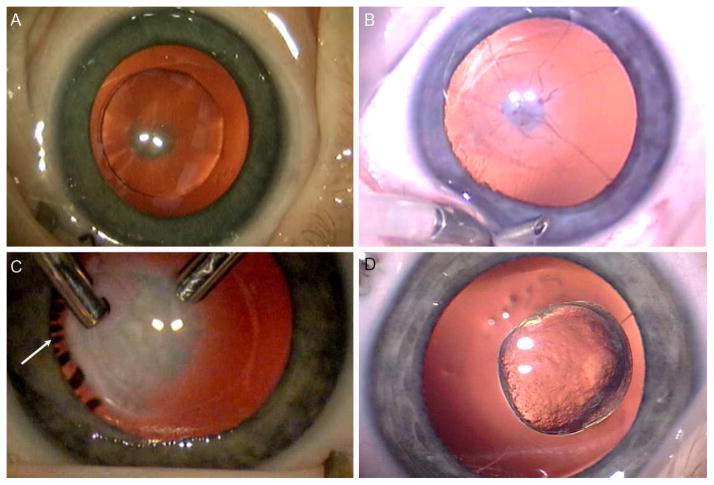
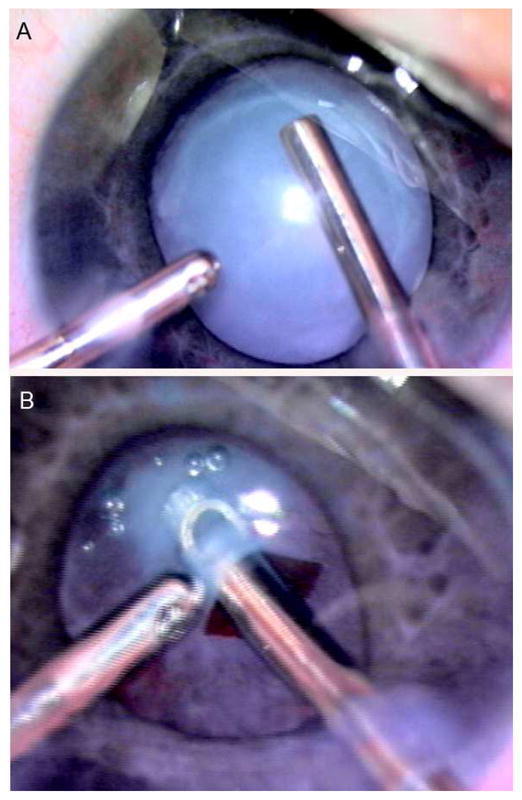
Results: Nuclear cataract was present in 45 of 83 eyes (54%). Posterior capsule plaque was observed in 73 eyes (88%). All eyes with fetal nuclear cataract had associated posterior capsule plaque. Cortical cataract without nuclear involvement was seen in 21 eyes (25%). Posterior bowing of the posterior capsule was noted in 4 eyes (5%). Evidence of persistent fetal vasculature (PFV) was present in 18 eyes (22%). PFV was the only finding in 5 eyes but was also seen in combination with nuclear (7 eyes) and cortical cataracts (6 eyes). The entire lens was white in 3 eyes (4%), whereas the lens was partially resorbed in 7 (8%) eyes. Anterior capsule fibrosis was noted in 5 eyes with advanced cataract (1 with total cataract, 4 with partially resorbed lens).
Conclusions: Nuclear opacities were common, but many different cataract types presented in infancy. PFV occurred in isolation or in association with cataract. Posterior capsule plaque was frequently noted, especially when a nuclear cataract was present.
Copyright © 2011 American Association for Pediatric Ophthalmology and Strabismus. Published by Mosby, Inc. All rights reserved.
Figures
Comment in
-
Why is there an Infant Aphakia Treatment Study (IATS)?J AAPOS. 2011 Oct;15(5):413-4. doi: 10.1016/j.jaapos.2011.09.001. Epub 2011 Oct 19. J AAPOS. 2011. PMID: 22015317 No abstract available.
References
-
- Parks MM, Johnson DA, Reed GW. Long-term visual results and complications in children with aphakia. A function of cataract type. Ophthalmology. 1993;100:826–40. discussion 40–1. - PubMed
-
- Chua BE, Mitchell P, Cumming RG. Effects of cataract type and location on visual function: The Blue Mountains Eye Study. Eye (Lond) 2004;18:765–72. - PubMed
-
- Parks MM. Visual results in aphakic children. Am J Ophthalmol. 1982;94:441–9. - PubMed
Publication types
MeSH terms
Grants and funding
LinkOut - more resources
Full Text Sources
Medical
