doi: 10.1084/jem.20112160.
100 years of Rous sarcoma virus
Affiliations
- PMID: 22110182
- PMCID: PMC3256973
- DOI: 10.1084/jem.20112160
Item in Clipboard
100 years of Rous sarcoma virus
J Exp Med.
.
Abstract
The discovery of Rous sarcoma virus, which was reported by Peyton Rous in the Journal of Experimental Medicine 100 years ago, opened the field of tumor virology. It showed that some cancers have infectious etiology, led to the discovery of oncogenes, and laid the foundation for the molecular mechanisms of carcinogenesis. Rous spent his entire research career at The Rockefeller Institute, and he was the JEM's longest serving editor. Here, we comment briefly on the life of this remarkable scientist and on the importance of his discoveries.
Figures
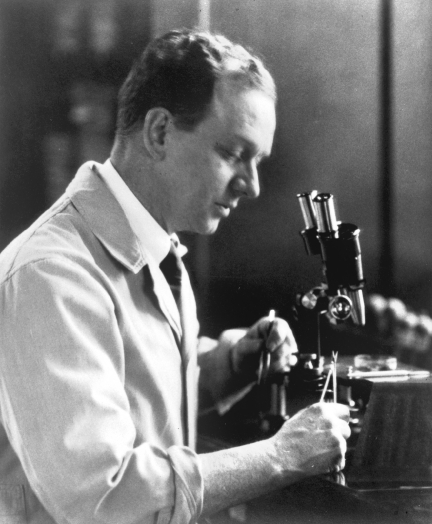
Peyton Rous in 1923. Reproduced with permission from The Rockefeller University archives. Van Epps, 2005. J. Exp. Med.
http://dx.doi.org/10.1084/jem.2013fta
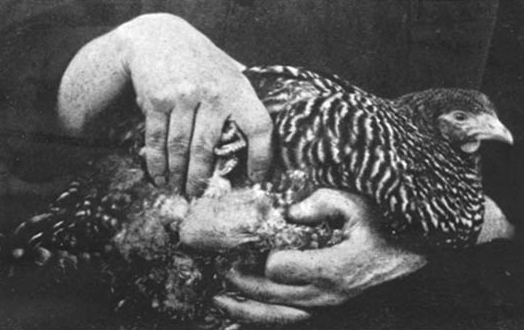
The original Plymouth Barred Rock fowl bearing the tumor presented to Rous and held by somewhat arthritic hands. Reproduced from Rous, 1910.
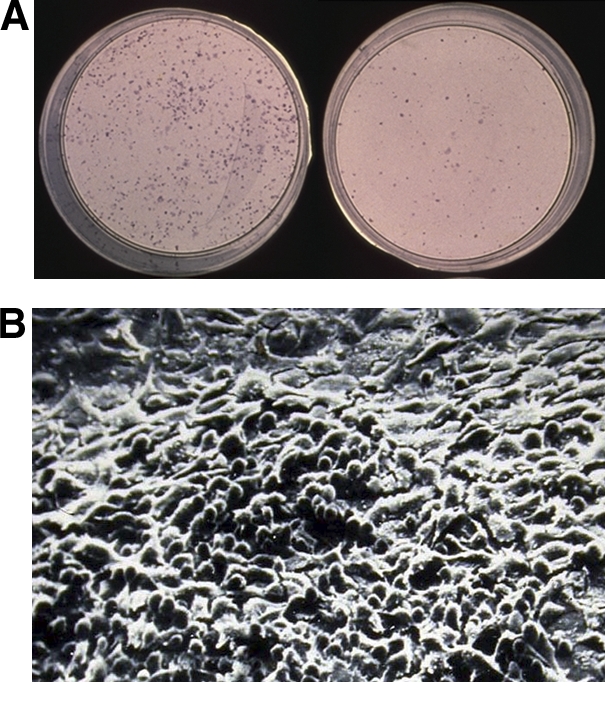
Cell transformation by RSV. (A) The RSV focus assay of transformed cells in a chick embryo fibroblast monolayer as described by Temin and Rubin (1958) showing a 1:100 and 1:1000 dilution of the virus stock. Each stained dot represents a focus of transformed cells. (B) A scanning electron micrograph of one focus of RSV-transformed cells. It was the ability to transform cells in culture and to isolate individual clones of RSV that led to the molecular biology and genetic studies of tumor viruses. (Reproduced from Weiss, R.A., PhD thesis, University of London. 1969.)
References
-
- Achong B.G., Mansell P.W.A., Epstein M.A., Clifford P. 1971. An unusual virus in cultures from a human nasopharyngeal carcinoma. J. Natl. Cancer Inst. 46:299–307 - PubMed
-
- Barré-Sinoussi F., Chermann J.C., Rey F., Nugeyre M.T., Chamaret S., Gruest J., Dauget C., Axler-Blin F., Rouzioux C., Rozenbaum W., Montgnier L. 2004. Isolation of a T-lymphomatropic retrovirus from a patient at risk for acquired immune deficiency syndrome (AIDS). Science. 220:868–871 10.1126/science.6189183 - DOI - PubMed