Dietary intake and nutritional status in a Scandinavian adult cystic fibrosis-population compared with recommendations
- PMID: 22110412
- PMCID: PMC3220890
- DOI: 10.3402/fnr.v55i0.7561
Dietary intake and nutritional status in a Scandinavian adult cystic fibrosis-population compared with recommendations
Abstract
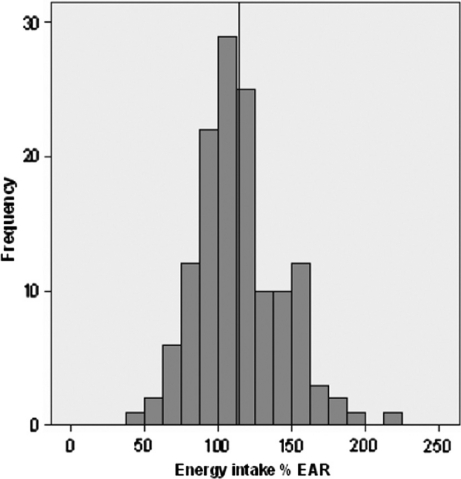
Background: Malnutrition is a well-known complication in cystic fibrosis (CF). There is good evidence that maintaining a normal body-weight correlates well with improved survival in CF. Energy intake in excess of 120% of the estimated average requirement (EAR) has been advised since 1980s.
Objectives: To investigate the nutritional intake and status in the adult Scandinavian CF-population.
Subjects/methods: A cross-sectional multi-centre study was used to investigate the nutritional status of 456 adult CF-patients (2003 2006). Height and weight were measured and body mass index (BMI) and z-scores were calculated. Pulmonary function was examined by dynamic spirometry. A 7-day pre-coded food record (FR) obtained energy and nutrient intake data in 180 patients.
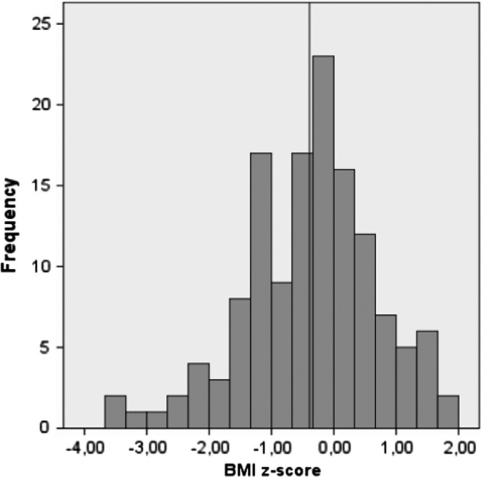
Results: The mean energy intake was 114 (SD 30.0)% of EAR and thus significantly lower than the target of 120% EAR (p< 0.001) for patients with pancreatic insufficiency (PI) (n=136). Mean BMI was 22.0 (SD 2.9), the prevalence of BMI <18 was 13% and the prevalence of BMI ≥25 was 15% (n=136). Mean BMI was 20.8 (SD 2.4) in PI-patients with FEV(1) <70% and 23.2% (SD 3.0), in PI-patients with FEV(1) ≥70%, mean difference 2.4, (95% CI: 1.5, 3.3) (p<0.001), but there was no difference in energy intake. BMI ≥18.5 and a reported energy intake <120% were revealed in 54% of the PI-patients.
Conclusions: The energy intake did not reach the recommended 120% EAR, but the prevalence of underweight was lower than reported in other studies. The recommendation may exceed the requirement for a number of CF-patients. The nutritional status must still be closely monitored and nutritional advice and intervention should be individualised and adjusted to actual needs.
Keywords: adult; body mass index; cystic fibrosis; energy intake; forced expiratory volume; nutritional requirement.
Figures

References
-
- Dodge JA, Lewis PA, Stanton M, Wilsher J. Cystic fibrosis mortality and survival in the UK: 1947–2003. Eur Respir J. 2007;29:522–6. - PubMed
-
- Lannefors L, Lindgren A. Demographic transition of the Swedish cystic fibrosis community-results of modern care. Respir Med. 2002;96:681–5. - PubMed
-
- Farrell PM. The prevalence of cystic fibrosis in the European Union. J Cyst Fibros. 2008;7:450–3. - PubMed
-
- Sinaasappel M, Stern M, Littlewood J, Wolfe S, Steinkamp G, Heijerman HG, et al. Nutrition in patients with cystic fibrosis: a European Consensus. J Cyst Fibros. 2002;1:51–75. - PubMed
-
- Littlewood JM, Wolfe SP, Conway SP. Diagnosis and treatment of intestinal malabsorption in cystic fibrosis. Pediatr Pulmonol. 2006;41:35–49. - PubMed
LinkOut - more resources
Full Text Sources
Research Materials
Miscellaneous