


A Population-Based Study of Peyronie's Disease: Prevalence and Treatment Patterns in the United States
- PMID: 22110491
- PMCID: PMC3202120
- DOI: 10.1155/2011/282503
A Population-Based Study of Peyronie's Disease: Prevalence and Treatment Patterns in the United States
Abstract
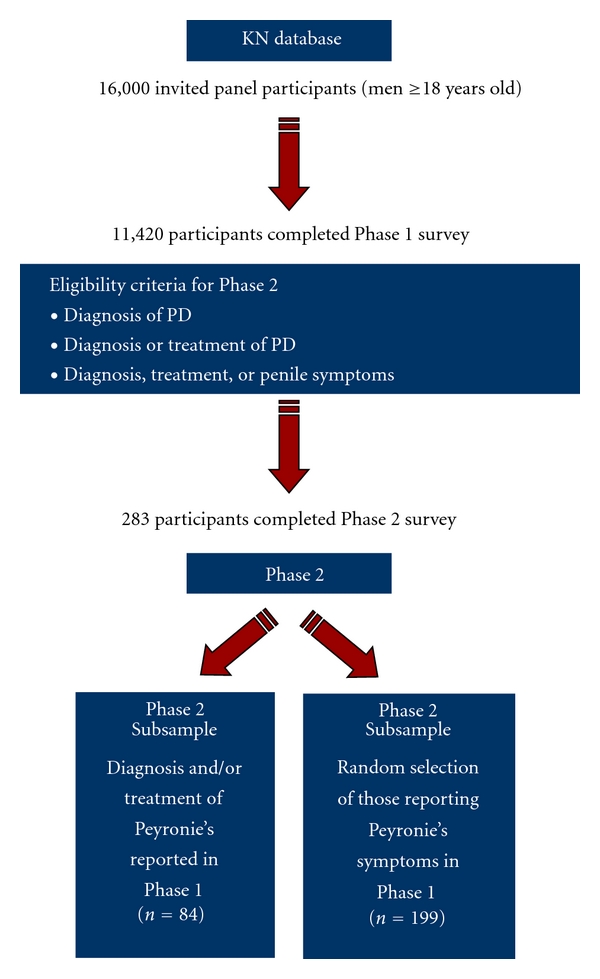
Purpose. To estimate the US prevalence of Peyronie's disease (PD) from patient-reported data and to identify diagnosis and treatment patterns. Methods. 11,420 US males ≥18 years old completed a brief web-based survey regarding the presence of PD, past treatments, and penile symptoms (Phase 1). Phase 1 respondents with PD diagnosis, history of treatment, or PD-related symptoms then completed a disease-specific survey (Phase 2). Results. Estimated prevalence of PD ranged from 0.5% (diagnosis of PD) to 13% (diagnosis, treatment, or penile symptoms). Thirty-six percent of Phase 2 participants reported that penile symptoms interfered with sexual activities. Of participants who sought treatment for penile symptoms (n = 128), 73% initially saw a primary care physician, 74% did not receive treatment from their first doctor, and 92% were not diagnosed with PD. Conclusions. PD may be underdiagnosed/undertreated in the US. Improved awareness is needed of PD symptoms and treatment options among health care professionals.
Figures
References
-
- Taylor FL, Levine LA. Peyronie's disease. Urologic Clinics of North America. 2007;34(4):517–534. - PubMed
-
- Hellstrom WJG. History, epidemiology, and clinical presentation of Peyronie's disease. International Journal of Impotence Research. 2003;15(supplement 5):S91–S92. - PubMed
-
- Smith CJ, McMahon C, Shabsigh R. Peyronie's disease: the epidemiology, aetiology and clinical evaluation of deformity. BJU International. 2005;95(6):729–732. - PubMed
-
- Akman T, Sanli O, Kadioglu A, et al. Factors affecting the degree of penile deformity in Peyronie's disease: an analysis of 1001 patients. Journal of Andrology. 2011;32(5):502–508. - PubMed
-
- Rosen R, Catania J, Lue T, et al. Impact of Peyronie's disease on sexual and psychosocial functioning: qualitative findings in patients and controls. Journal of Sexual Medicine. 2008;5(8):1977–1984. - PubMed
LinkOut - more resources
Full Text Sources
Other Literature Sources
Miscellaneous
