


An fMRI study on the role of serotonin in reactive aggression
- PMID: 22110714
- PMCID: PMC3218006
- DOI: 10.1371/journal.pone.0027668
An fMRI study on the role of serotonin in reactive aggression
Abstract
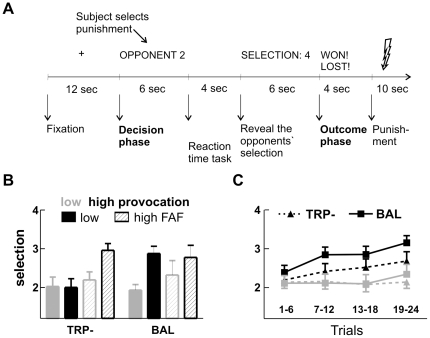
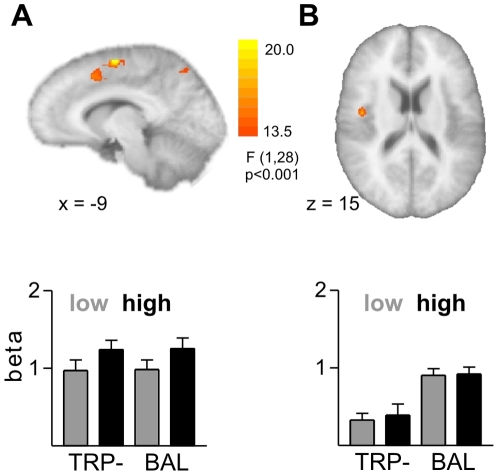
Reactive aggression after interpersonal provocation is a common behavior in humans. Little is known, however, about brain regions and neurotransmitters critical for the decision-making and affective processes involved in aggressive interactions. With the present fMRI study, we wanted to examine the role of serotonin in reactive aggression by means of an acute tryptophan depletion (ATD). Participants performed in a competitive reaction time task (Taylor Aggression Paradigm, TAP) which entitled the winner to punish the loser. The TAP seeks to elicit aggression by provocation. The study followed a double-blind between-subject design including only male participants. Behavioral data showed an aggression diminishing effect of ATD in low trait-aggressive participants, whereas no ATD effect was detected in high trait-aggressive participants. ATD also led to reduced insula activity during the decision phase, independently of the level of provocation. Whereas previous reports have suggested an inverse relationship between serotonin level and aggressive behavior with low levels of serotonin leading to higher aggression and vice versa, such a simple relationship is inconsistent with the current data.
Conflict of interest statement
Figures
References
-
- Manuck SB, Kaplan JR, Lotrich FE. Brain serotonin and aggressive disposition in humans and nonhuman primates. In: Nelson RJ, editor. Biology of aggression. New York: Oxford University Press; 2006.
-
- Olivier B, van Oorschot R. 5-HT1B receptors and aggression: a review. European Journal of Pharmacology. 2005;526:207–217. - PubMed
-
- Moore TM, Scarpa A, Raine A. A meta-analysis of serotonin metabolite 5-HIAA and antisocial behavior. Aggressive Behavior. 2002;28:299.
-
- Coccaro EF. Central serotonin and impulsive aggression. British Journal of Psychiatry. 1989;52-62 - PubMed
-
- Higley JD, Mehlman PT, Poland RE, Taub DM, Vickers J, et al. CSF testosterone and 5-HIAA correlate with different types of aggressive behaviors. Biological psychiatry. 1996;40:1067–1082. - PubMed
Publication types
MeSH terms
Substances
LinkOut - more resources
Full Text Sources
Medical
Research Materials
Miscellaneous
