


Treatment-resistant depression in adolescents: is the addition of cognitive behavioral therapy of benefit?
- PMID: 22114540
- PMCID: PMC3218778
- DOI: 10.2147/PRBM.S13780
Treatment-resistant depression in adolescents: is the addition of cognitive behavioral therapy of benefit?
Abstract
Background: Many young people with major depression fail first-line treatments. Treatment-resistant depression has various definitions in the literature but typically assumes nonresponse to medication. In young people, cognitive behavioral therapy (CBT) is the recommended first-line intervention, thus the definition of treatment resistance should be expanded. Therefore, our aim was to synthesize the existing evidence of any interventions for treatment-resistant depression, broadly defined, in children and adolescents and to investigate the effectiveness of CBT in this context.
Methods: We used Cochrane Collaboration methodology, with electronic searches of Medline, PsycINFO, Embase, and the Cochrane Depression Anxiety and Neurosis Group trials registers. Only randomized controlled trials were included, and were assessed for risk of bias. Meta- analysis was undertaken where possible and appropriate.
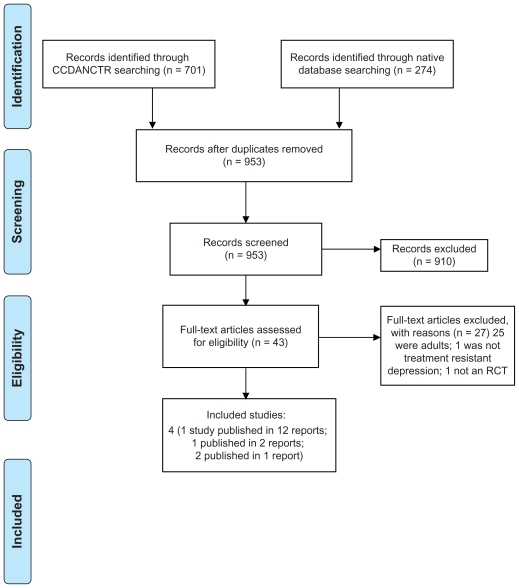
Results: Of 953 articles retrieved, four trials were eligible for inclusion. For one study, only the trial registration document was available, because the study was never completed. All other studies were well conducted with a low risk of bias, although one study had a high dropout rate. Two studies assessed the effect of adding CBT to medication. While an assertive trial of antidepressants does appear to lead to benefit, when compared with placebo, there was no significant advantage, in either study, or in a meta-analysis of data from these trials, that clearly demonstrated an additional benefit of CBT. The third trial showed little advantage of a tricyclic antidepressant over placebo in the context of an inpatient admission.
Conclusion: Few randomized controlled trials have investigated interventions for treatment-resistant depression in young people, and results from these show modest benefit from antidepressants with no additional benefit over medication from CBT. Overall, there is a lack of evidence about effective interventions to treat young people who have failed to respond to evidence-based interventions for depression. Research in this area is urgently required.
Keywords: adolescence; cognitive behavioral therapy; depressive disorder; meta-analysis; systematic review; treatment-resistant.
Figures



References
-
- Costello JE, Erkanli A, Angold A. Is there an epidemic of child or adolescent depression? J Child Psychol Psychiatry. 2006;47:1263–1271. - PubMed
-
- Lewinsohn PM, Rohde P, Seeley JR. Major depressive disorder in older adolescents: prevalence, risk factors and clinical implications. Clin Psychol Rev. 1998;18:765–794. - PubMed
-
- Lewinsohn PM, Hops H, Roberts RE, Seeley JR, Andrews JA. Adolescent psychopathology: I. Prevalence and incidence of depression and other DSM-III-R disorders in high school students. J Abnorm Psychol. 1993;102:133–144. - PubMed
-
- Birmaher B, Ryan ND, Williamson DE, et al. Childhood and adolescent depression: a review of the past 10 years: Part 1. J Am Acad Child Adoles Psychiatry. 1996;35:1427–1439. - PubMed
-
- Ebmeier KP, Donaghey C, Steele JD. Recent developments and current controversies in depression. Lancet. 2006;367:153–167. - PubMed
LinkOut - more resources
Full Text Sources
