


Autism and exergaming: effects on repetitive behaviors and cognition
- PMID: 22114543
- PMCID: PMC3218790
- DOI: 10.2147/PRBM.S24016
Autism and exergaming: effects on repetitive behaviors and cognition
Abstract
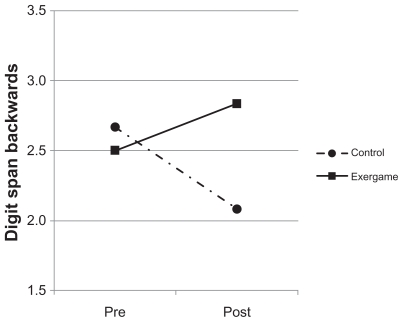
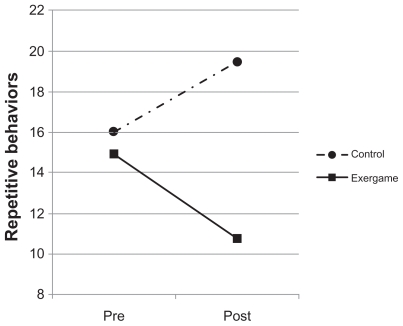
Autism is a neurodevelopmental disorder that leads to impairment in social skills and delay in language development, and results in repetitive behaviors and restricted interests that impede academic and social involvement. Physical exercise has been shown to decrease repetitive behaviors in autistic children and improve cognitive function across the life-span. Exergaming combines physical and mental exercise simultaneously by linking physical activity movements to video game control and may yield better compliance with exercise. In this investigation, two pilot studies explored the potential behavioral and cognitive benefits of exergaming. In Pilot I, twelve children with autism spectrum disorders completed a control task and an acute bout of Dance Dance Revolution (DDR); in Pilot II, ten additional youths completed an acute bout of cyber cycling. Repetitive behaviors and executive function were measured before and after each activity. Repetitive behaviors significantly decreased, while performance on Digits Backwards improved following the exergaming conditions compared with the control condition. Additional research is needed to replicate these findings, and to explore the application of exergaming for the management of behavioral disturbance and to increase cognitive control in children on the autism spectrum.
Keywords: autism; executive function; exercise; exergaming; repetitive behaviors.
Figures
References
-
- American Psychiatric Association. Diagnostic and Statistical Manual of Mental Disorders. 4th ed. Washington, DC: American Psychiatric Association; 2000. Text-Revised (DSM-IV-TR)
-
- Centers for Disease Control and Prevention. Prevalence of autism spectrum disorders – Autism and Developmental Disabilities Monitoring Network, 14 sites, United States, 2002. [Accessed August 24, 2011];Surveillance Summaries. 2007 56(SS-01):12–28. Available at: http://www.cdc.gov/mmwr/preview/mmwrhtml/ss5601a2.htm. - PubMed
-
- Happé F, Frith U. The neuropsychology of autism. Brain. 1996;119( Pt 4):1377–1400. - PubMed
-
- Turner M. Repetitive behavior in autism: a review of psychological research. J Child Psychol Psychiatry. 1999;40(6):839–849. - PubMed
LinkOut - more resources
Full Text Sources
Other Literature Sources
Medical
Miscellaneous
