


Complement fragment C3a controls mutual cell attraction during collective cell migration
- PMID: 22118769
- PMCID: PMC3272547
- DOI: 10.1016/j.devcel.2011.10.012
Complement fragment C3a controls mutual cell attraction during collective cell migration
Abstract
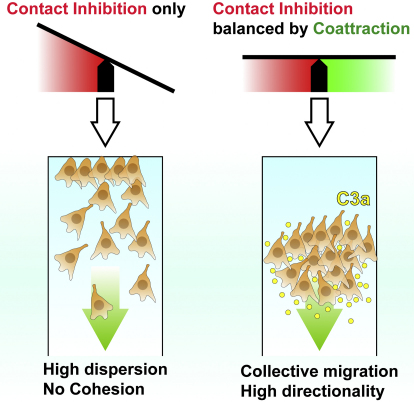
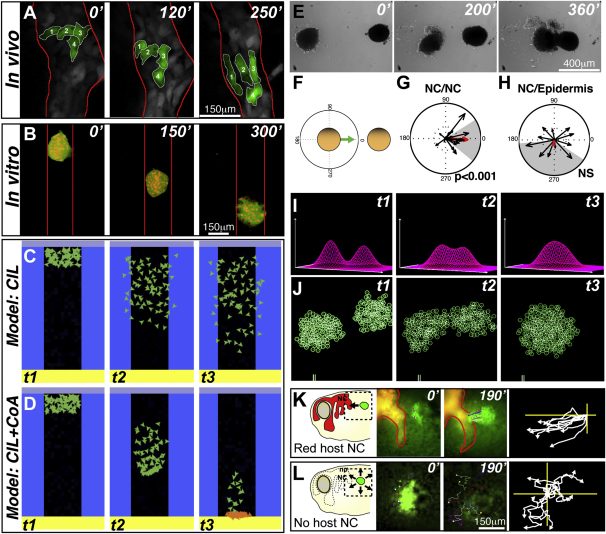
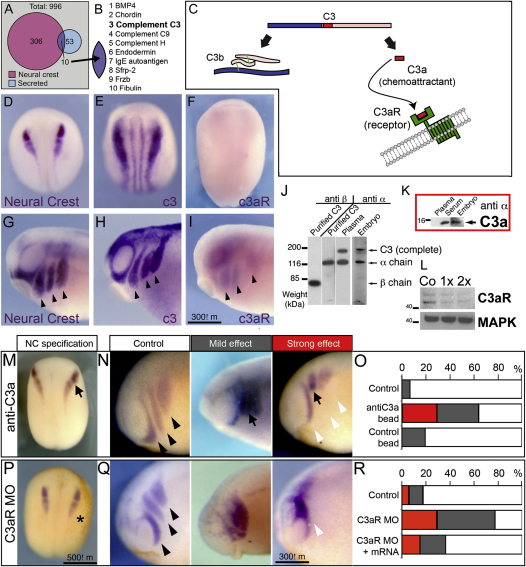
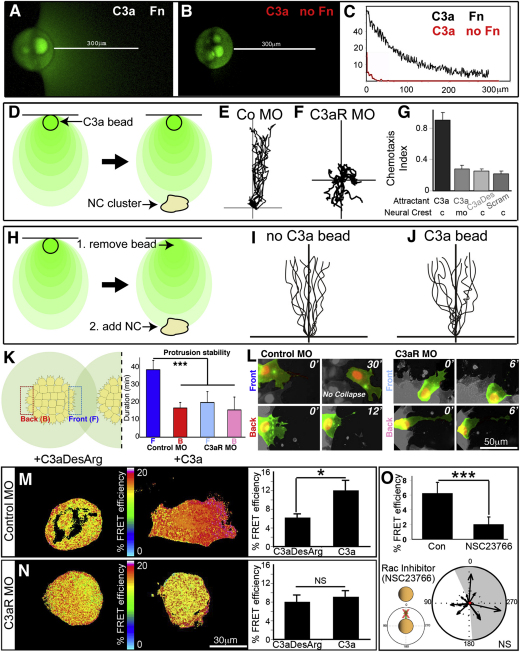
Collective cell migration is a mode of movement crucial for morphogenesis and cancer metastasis. However, little is known about how migratory cells coordinate collectively. Here we show that mutual cell-cell attraction (named here coattraction) is required to maintain cohesive clusters of migrating mesenchymal cells. Coattraction can counterbalance the natural tendency of cells to disperse via mechanisms such as contact inhibition and epithelial-to-mesenchymal transition. Neural crest cells are coattracted via the complement fragment C3a and its receptor C3aR, revealing an unexpected role of complement proteins in early vertebrate development. Loss of coattraction disrupts collective and coordinated movements of these cells. We propose that coattraction and contact inhibition act in concert to allow cell collectives to self-organize and respond efficiently to external signals, such as chemoattractants and repellents.
Copyright © 2011 Elsevier Inc. All rights reserved.
Figures
References
-
- Atherton E., Sheppard R.C. Volume 53. IRL Press; Oxford: 1989. (Solid Phase Peptide Synthesis: A Practical Approach).
-
- Buhl J., Sumpter D.J., Couzin I.D., Hale J.J., Despland E., Miller E.R., Simpson S.J. From disorder to order in marching locusts. Science. 2006;312:1402–1406. - PubMed
Publication types
MeSH terms
Substances
Associated data
- Actions
Grants and funding
LinkOut - more resources
Full Text Sources
Other Literature Sources
Molecular Biology Databases
