


Hyphal growth in human fungal pathogens and its role in virulence
- PMID: 22121367
- PMCID: PMC3216317
- DOI: 10.1155/2012/517529
Hyphal growth in human fungal pathogens and its role in virulence
Abstract
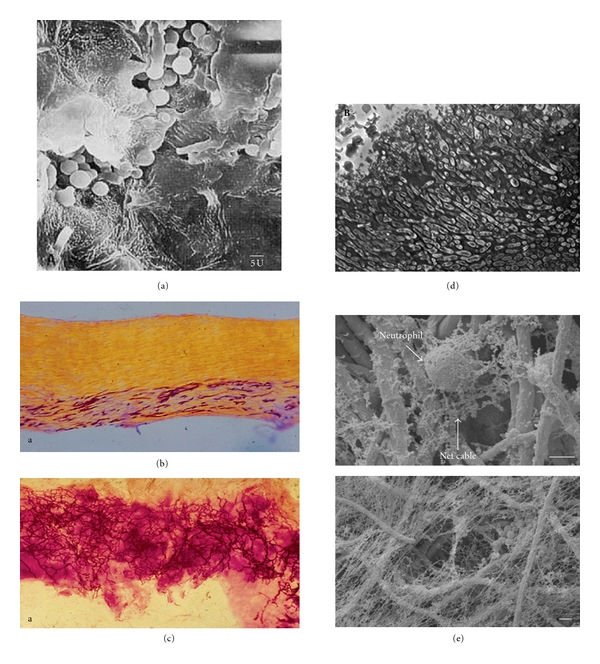
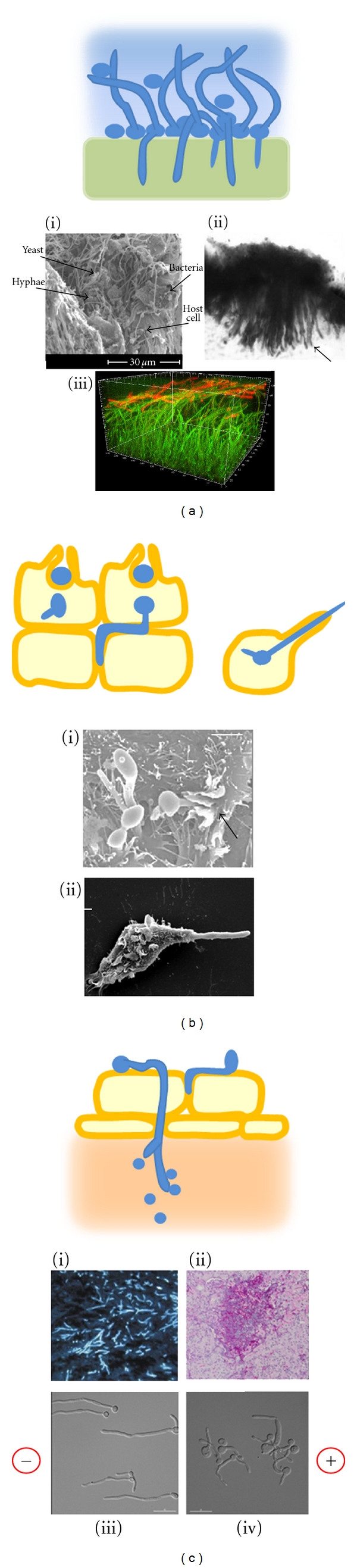
Most of the fungal species that infect humans can grow in more than one morphological form but only a subset of pathogens produce filamentous hyphae during the infection process. This subset is phylogenetically unrelated and includes the commonly carried yeasts, Candida albicans, C. dubliniensis, and Malassezia spp., and the acquired pathogens, Aspergillus fumigatus and dermatophytes such as Trichophyton rubrum and T. mentagrophytes. The primary function of hypha formation in these opportunistic pathogens is to invade the substrate they are adhered to, whether biotic or abiotic, but other functions include the directional translocation between host environments, consolidation of the colony, nutrient acquisition and the formation of 3-dimensional matrices. To support these functions, polarised hyphal growth is co-regulated with other factors that are essential for normal hypha function in vivo.
Figures
References
-
- Benham RW. The cultural characteristics of Pityrosporum ovale; a lipophilic fungus. Journal of Investigivative Dermatology. 1939;2:187–203.
-
- Ro BI, Dawson TL. The role of sebaceous gland activity and scalp microfloral metabolism in the etiology of seborrheic dermatitis and dandruff. Journal of Investigative Dermatology Symposium Proceedings. 2005;10(3):194–197. - PubMed
-
- Mccormick A, Loeffler J, Ebel F. Aspergillus fumigatus: contours of an opportunistic human pathogen. Cellular Microbiology. 2010;12(11):1535–1543. - PubMed
Grants and funding
LinkOut - more resources
Full Text Sources
Other Literature Sources
Miscellaneous
