


Bacteremia caused by extended-spectrum-β-lactamase-producing Escherichia coli sequence type ST131 and non-ST131 clones: comparison of demographic data, clinical features, and mortality
- PMID: 22123694
- PMCID: PMC3264214
- DOI: 10.1128/AAC.05753-11
Bacteremia caused by extended-spectrum-β-lactamase-producing Escherichia coli sequence type ST131 and non-ST131 clones: comparison of demographic data, clinical features, and mortality
Abstract
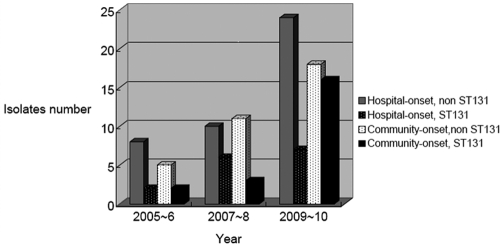
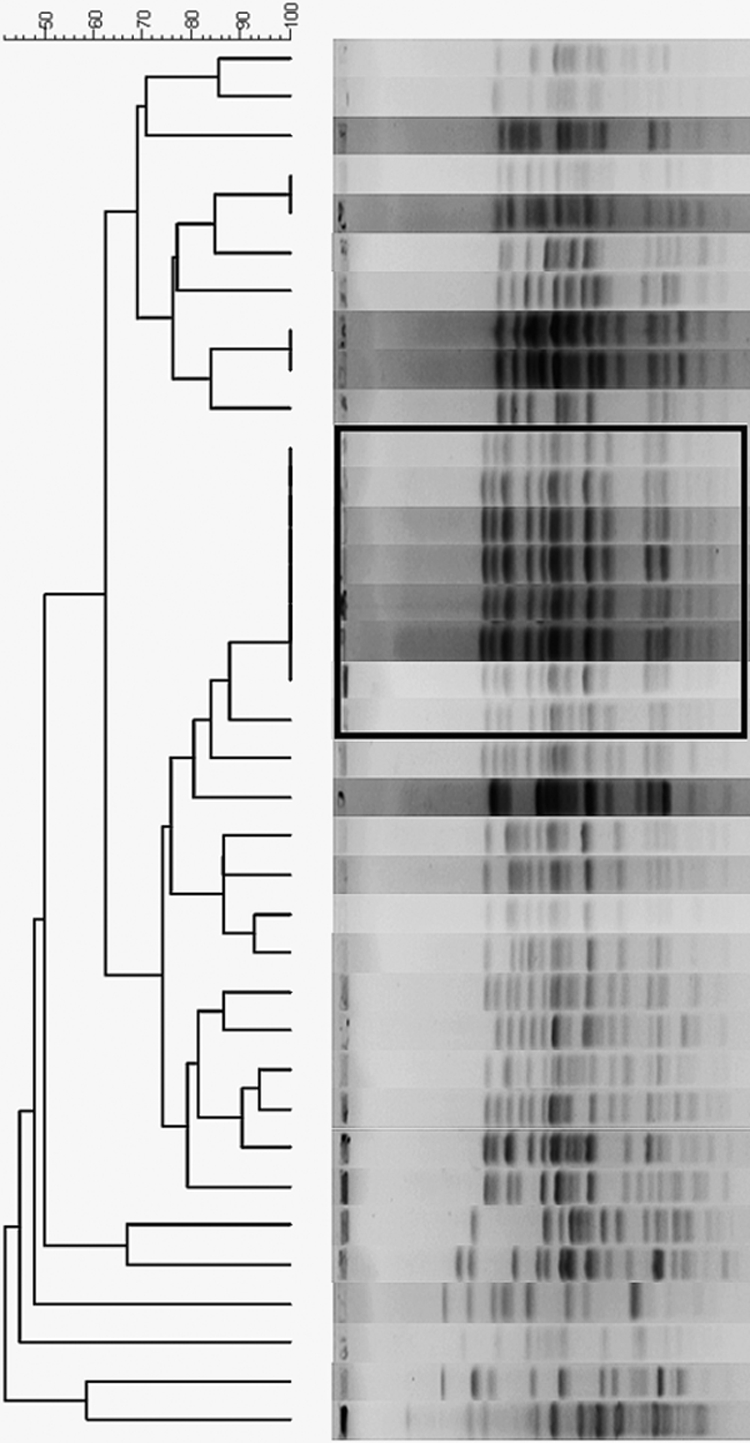
Escherichia coli producing the highly virulent, multidrug-resistant, CTX-M-15 extended-spectrum β-lactamase (ESBL), sequence type 131 (ST131), has emerged on three continents since the late 2000s. We described the molecular epidemiology, clinical features, and outcome of ESBL-producing E. coli bacteremia in Taiwan from 2005 to 2010. This study aims to determine whether the risk factors, clinical features, and outcomes of the ST131 isolate differ from those of non-ST131 isolates. From 2005 to 2010, we collected 122 nonduplicated, consecutive, ESBL-producing E. coli isolates from bloodstream infections in a 1,200-bed hospital in Taiwan. Isolates were characterized using multilocus sequence typing. Demographic data, clinical features, and outcomes were collected from medical chart records. Thirty-six (29.5%) patients with bacteremia with ESBL-producing E. coli ST131 were identified. Patients with clone ST131 were more likely to have secondary bacteremia and noncatheterized urinary tract infections (P < 0.05). Secondary bacteremia (odds ratio [OR], 5.05; 95% confidence interval [CI], 1.08 to 23.56) and urinary catheter nonuse (OR, 3.77; 95% CI, 1.17 to 12.18) were independent risk factors for the ST131 clone after adjustment. Mortality rates at day 28 were similar in ST131 and non-ST131 populations. Independent risk factors predicting mortality at day 28 included malignancy, shock, and hospital-acquired bacteremia. In ESBL-producing E. coli bloodstream infections, the ST131 clone was not associated with health-care-associated risk factors, such as urinary catheter use or antibiotic exposure. Although highly virulent and multidrug resistant, the ST131 clone was not associated with higher mortality than non-ST131 clones.
Figures
References
-
- Bauer RJ, et al. 2002. Molecular epidemiology of 3 putative virulence genes for Escherichia coli urinary tract infection—usp, iha, and iroN(E. coli). J. Infect. Dis. 185: 1521–1524 - PubMed
-
- Calbo E, et al. 2006. Risk factors for community-onset urinary tract infections due to Escherichia coli harbouring extended-spectrum beta-lactamases. J. Antimicrob. Chemother. 57: 780–783 - PubMed
-
- Charlson ME, Pompei P, Ales KL, MacKenzie CR. 1987. A new method of classifying prognostic comorbidity in longitudinal studies: development and validation. J. Chronic Dis. 40: 373–383 - PubMed
-
- Clinical and Laboratory Standards Institute 2008. Performance standards for antimicrobial susceptibility testing: eighteenth informational supplement. CLSI document M100-S18. CLSI, Wayne, PA
Publication types
MeSH terms
Substances
LinkOut - more resources
Full Text Sources
Medical
