


Family doctor-driven follow-up for adult childhood cancer survivors supported by a web-based survivor care plan
- PMID: 22124938
- PMCID: PMC3321136
- DOI: 10.1007/s11764-011-0207-5
Family doctor-driven follow-up for adult childhood cancer survivors supported by a web-based survivor care plan
Abstract
Purpose: To facilitate family doctor-driven follow-up for adult childhood cancer survivors, we developed a survivor care plan (SCP) for adult survivors and their family doctors.
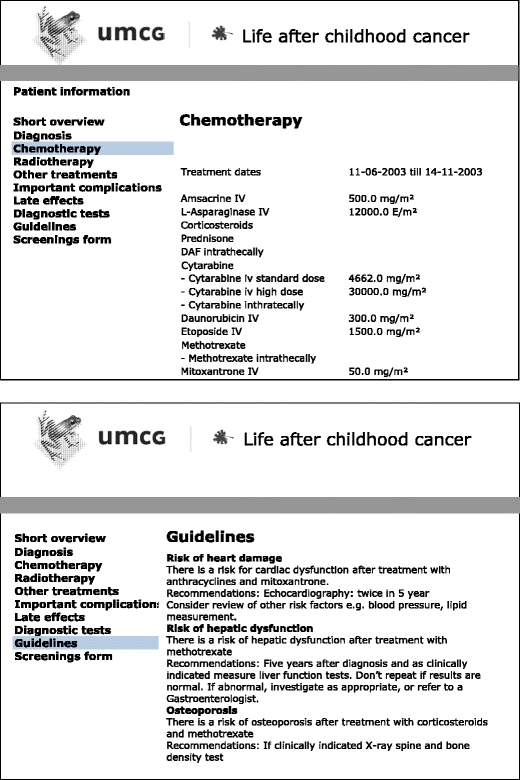
Methods: The SCP was accessible for survivors and their family doctors on a secure website and as a printed booklet. It included data on diagnosis, treatment and potential risks as well as recommendations for follow-up. Childhood cancer survivors who were off-treatment ≥5 years, aged ≥18 years and not involved in a long-term follow-up program were eligible. They were advised to visit their family doctor. The endpoints were numbers of participants, adherence of family doctors to the guidelines and satisfaction ratings.
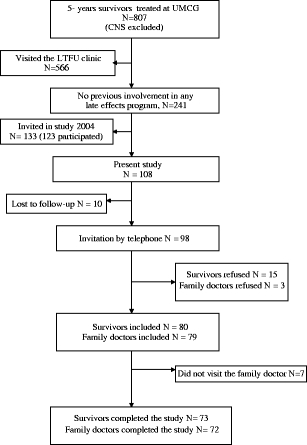
Results: The eligibility criteria were fulfilled by 108 survivors. Three family doctors and 15 survivors refused, 10 survivors were non-responders. Of the remaining 80 survivors, 73 survivors visited 72 family doctors. Sixty-nine (96%) family doctors returned data of whom 60 (83%) fully adhered to the recommended tests. The majority of survivors and family doctors were satisfied about the SCP.
Conclusions: A (web-based) SCP for survivors and family doctors can serve as an effective communication vehicle to provide adequate shared care by the long-term follow-up clinic and family doctors.
Figures
References
Publication types
MeSH terms
LinkOut - more resources
Full Text Sources
Medical
