


Frequency of ketoacidosis in newly diagnosed type 1 diabetic children
- PMID: 22125712
- PMCID: PMC3215499
- DOI: 10.5001/omj.2010.31
Frequency of ketoacidosis in newly diagnosed type 1 diabetic children
Abstract
Objectives: Diabetic ketoacidosis (DKA) is the leading cause of morbidity and mortality in children with type 1 diabetes mellitus (TIDM). Many patients with newly diagnosed type 1 diabetes present with DKA. The aim of this study is to determine the frequency and the clinical presentation of diabetic ketoacidosis at the diagnosis of type 1 diabetes mellitus in youths in hamadan, Western Province of Iran.
Methods: The Clinical and laboratory data of a total of 200 patients under 19 years of age with newly diagnosed type 1 diabetes mellitus between 1995-2005 were retrospectively reviewed. Statistical analysis was performed using SPSS 11.
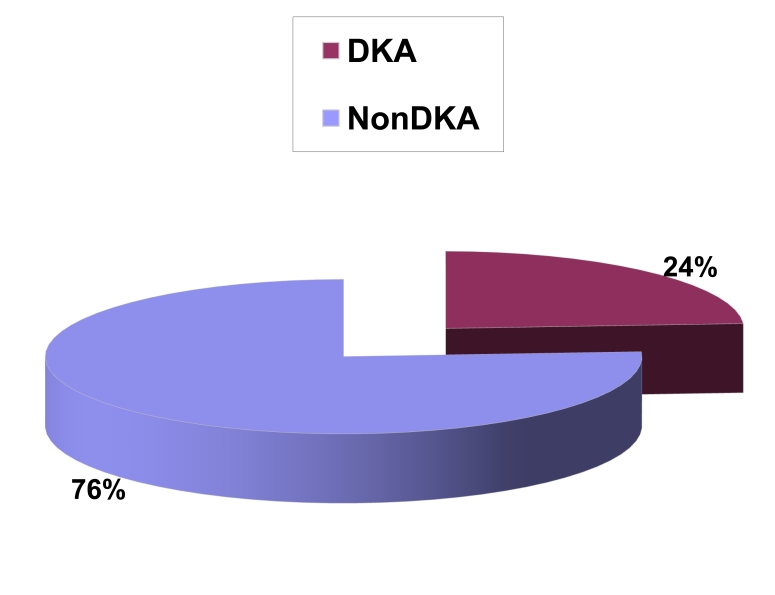
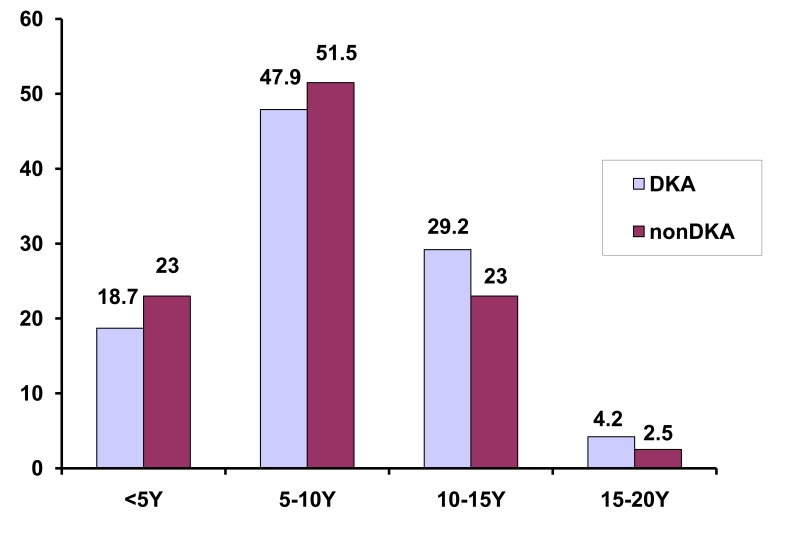
Results: 48 (24%)of the children were presented in a state of ketoacidosis. Sever form of DKA (pH≤7.2) was observed in 54.5% of patients. The mean age at diagnosis was 7.3±5.15 years in DKA group and 8.59±3.07 in non-DKA group (p=0.22). 60.4% of patient with DKA were female whereas in the non-DKA group, 53.3% of patients were female, the difference was not significant (p=0.38). The duration of symptoms before diagnosis was 14.84±8.19 days in patients with DKA and 22.39±2.27 in the non-DKA group, (p=0.11). No significant difference was found between the age, sex and duration of the symptoms and occurance of DKA. Polydipsia (85.4) polyuria (83.3%), weakness (68.8%) and abdominal pain (52.1%) were the most frequently notified symptoms among the patients. In two cases, diagnosis of DKA was preceded by as appendicitis and the patient underwent appendectomy.
Conclusion: Frequency of DKA at onset of type 1 diabetes mellitus was significant in the studied region. However, it was lower than other regions in Asia. Polydipsia, polyuria, fatigue and abdominal pain were the most common symptoms on presentation.
Figures
References
-
- SWIFT PGF, ed. ISPAD Consensus Guidelines 2000. Medical Forum International, Zeist 2000.
LinkOut - more resources
Full Text Sources