Review
. 2012 Mar 5;9(3):342-54.
doi: 10.1021/mp2005033. Epub 2011 Dec 13.

Exploiting dendrimer multivalency to combat emerging and re-emerging infectious diseases

Affiliations
Review

Exploiting dendrimer multivalency to combat emerging and re-emerging infectious diseases

Meredith A Mintzer et al. Mol Pharm. .

Abstract

The emergence and re-emergence of bacterial strains that are resistant to current antibiotics reveal the clinical need for new agents that possess broad-spectrum antibacterial activity. Furthermore, bacteriophobic coatings that repel bacteria are important for medical devices, as the lifetime, reliability, and performance of implant devices are hindered by bacterial adhesion and infection. Dendrimers, a specific class of monodisperse macromolecules, have recently shown potential to function as both antibacterial agents and antimicrobial surface coatings. This review discusses the limitations with currently used antibacterial agents and describes how various classes of dendrimers, including glycodendrimers, cationic dendrimers, anionic dendrimers, and peptide dendrimers, have the potential to improve upon or replace certain antibiotics. Furthermore, the unexplored areas in this field of research will be mentioned to present opportunities for additional studies regarding the use of dendrimers as antimicrobial agents.


Figures
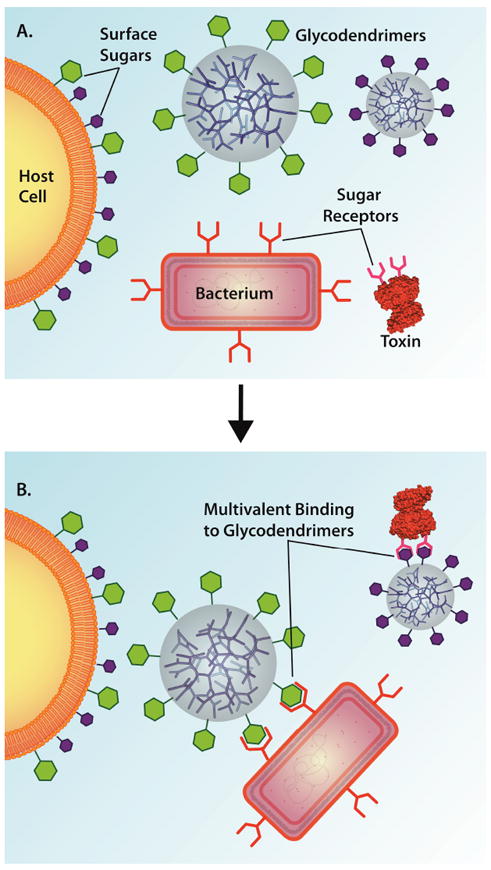
Figure 1
Figure 1
Multivalent binding of a bacterium or a bacterial toxin to a glycodendrimer. (A) Depiction of a host eukaryotic cell with surface sugar groups, two glycodendrimers with surface sugars groups, a bacterial toxin with receptors for the purple sugar groups, and a generic bacterium with receptors for the green sugar groups. (B) Binding of the bacterium and the toxin to the glycodendrimer through multivalent interactions to prevent infection of the host cell. Structures not draw to scale.
Figure 2
Figure 2
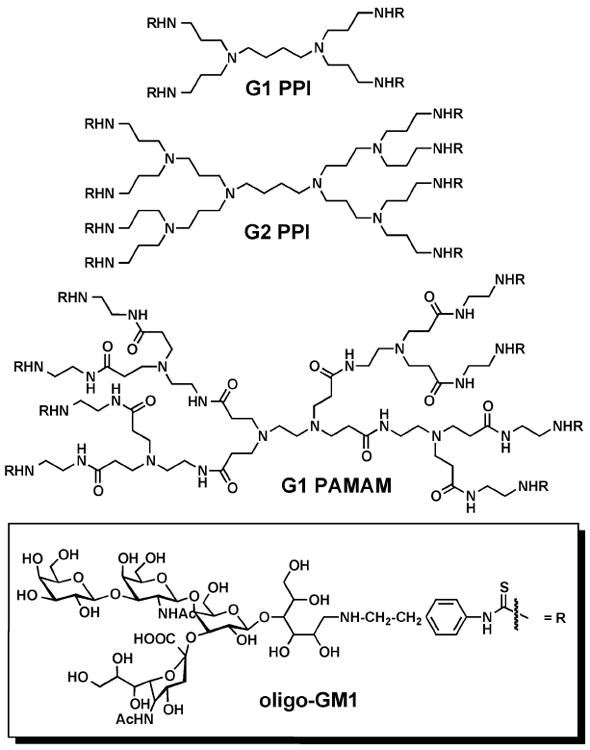
Structures of oligosaccharide dendrimers based on PAMAM and PPI cores with oligo-GM1 sugar appended to the surface.
Figure 3
Figure 3
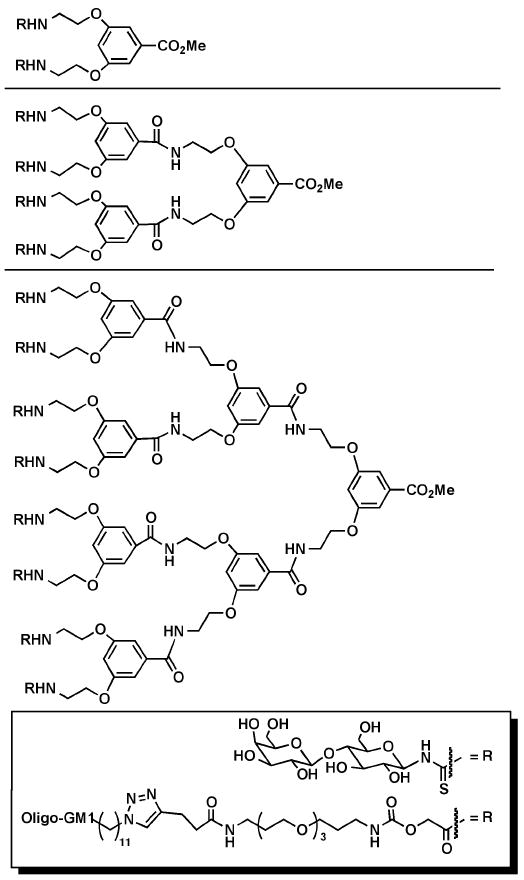
Dendrimers based on the 3,5-di(2-aminoethoxy)benzoic acid repeat units with 2, 4, or 8 oligo-GM1 or lactose groups appended to the surface.
Figure 4
Figure 4
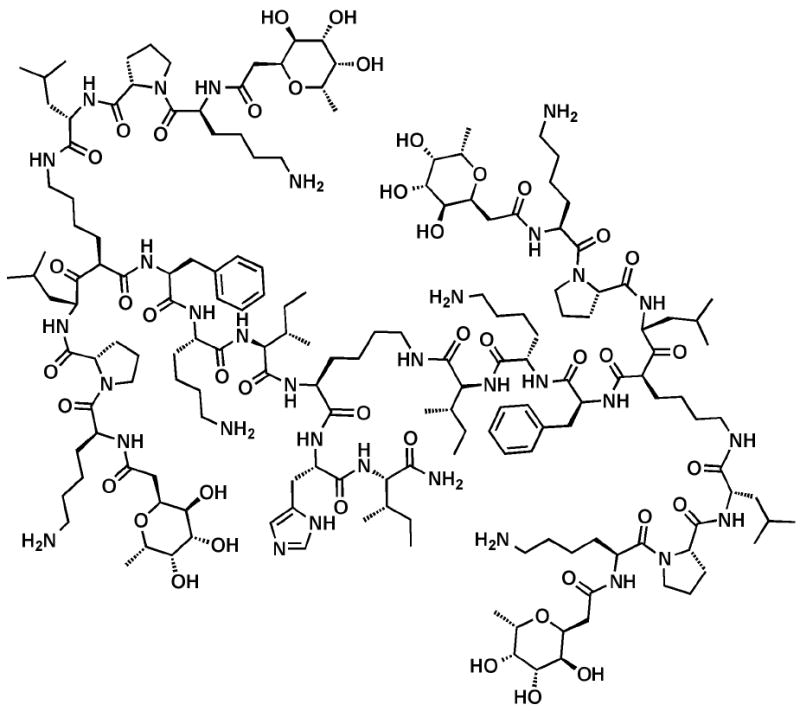
Structure of glycopeptide dendrimer FD2.
Figure 5
Figure 5
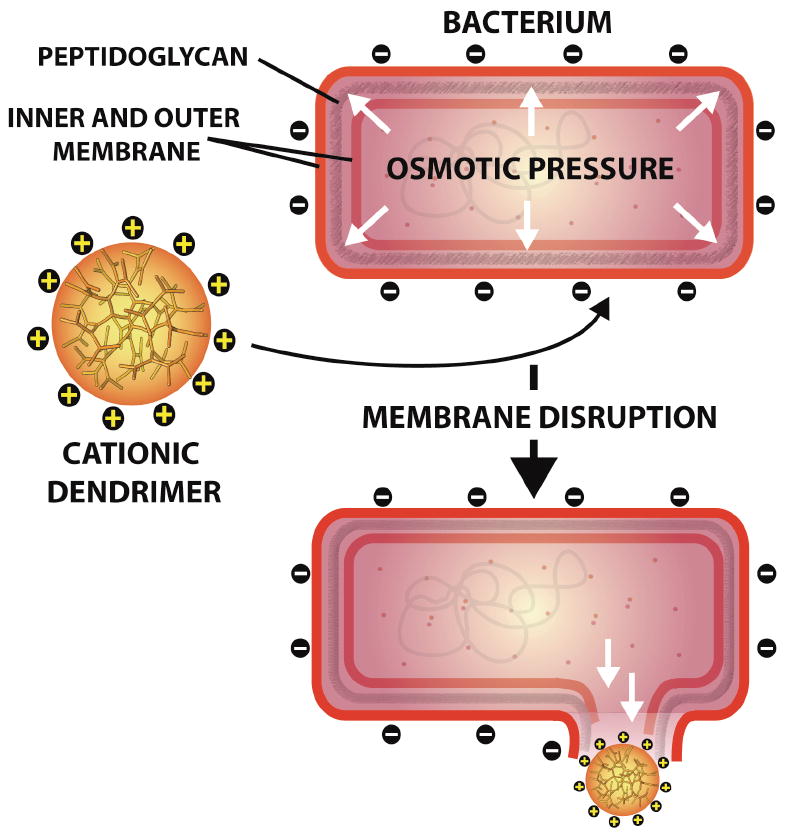
Proposed mechanism of action of cationic dendrimers via initial electrostatic attraction to the negatively charged bacterium followed by membrane and peptidoglycan disruption. Structures not drawn to scale.
Figure 6
Figure 6
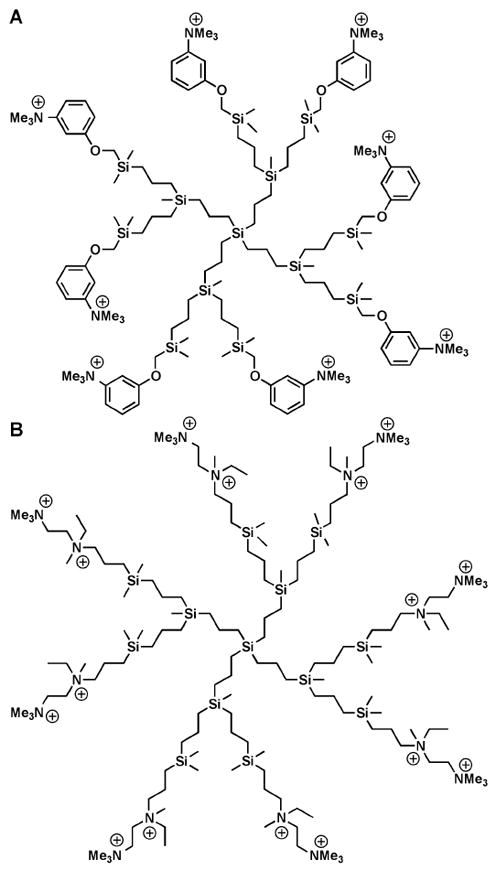
(A) Structure of initial carbosilane used for antimicrobial studies. (B) Structure of modified carbosilane dendrimer with improved solubility in aqueous conditions.
Figure 7
Figure 7
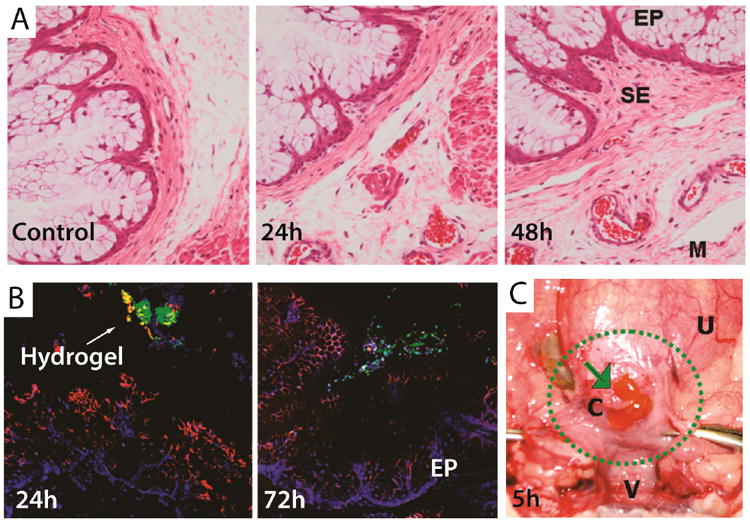
(A) Histological sections of the cervix of pregnant guinea pigs not treated (control) and treated with hydrogel after 24 and 72 hours. The epithelial cells do not show signs of damage or inflammation and are comparable to the control. (B) Confocal image of the guinea pig cervix treated with the hydrogel (green) after 24 and 72 hours confirming that the gel remains on the mucosal layer (red) after 3 days. (C) Hydrogel (green arrow) 5 hours after being placed on the guinea pig cervix. EP = epithelial cells, SE = subepithelium, M = muscular layer, C = cervix, V = vaginal cavity, U = uterus with pups. Adapted from Ref. .
Figure 8
Figure 8
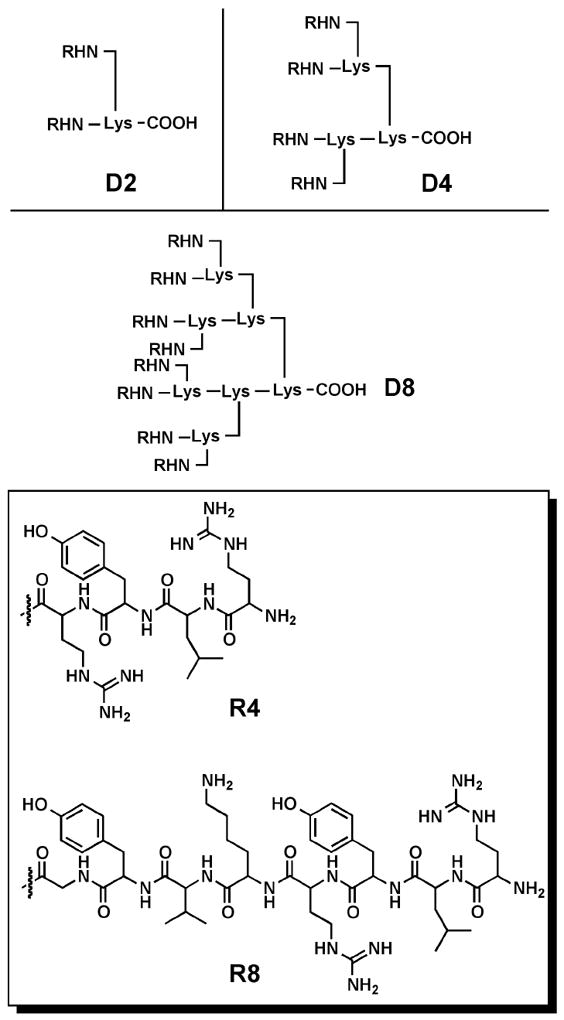
Schematic representation of three types of peptide dendrimer cores (D2, D4, and D8) and the structures of two short peptide sequences (R4 and R8) appended to the surface of the cores.
Figure 9
Figure 9
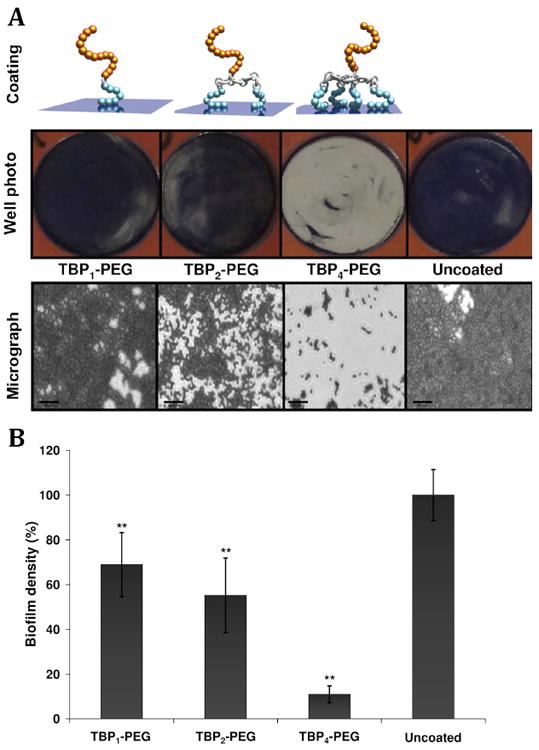
(Top) Illustration of the bacteriophobic coatings possess one or more bottom TBPs (blue), a peptide linker (silver), and a top PEG domain (gold). Schematic of three bacteriophobic coatings under investigation where one (left), two (middle), or four (right) titanium-binding peptides (TBPs) are covalently attached to a polyethylene glycol (PEG). Digital photographs and (bottom) phase-contrast micrographs (Magnification = 630X) of coated and uncoated Ti wells following a 5 h exposure to S. aureus cultures (starting inoculum of ~5×10⁷ CFUs/mL). Bacteria were stained with 0.1% crystal violet to aid visualization. Scale bars = 20 μm. (Bottom) Quantification of biofilm formation on coated and uncoated Ti surfaces following a 5 h exposure to S. aureus (starting inoculum of ~5×10⁷ CFUs/mL) cultures. (N=3, ** P <0.01). Adapted from Ref. .
Figure 10
Figure 10
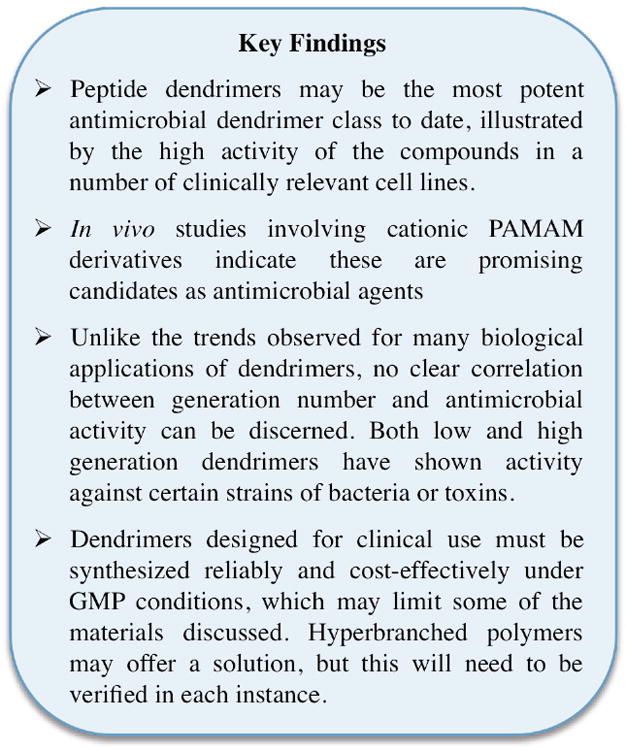
Key findings in the review of dendrimers for use as antimicrobial agents, coatings, or drug delivery devices.

References

    1. MacDougall C, Polk RE. Antimicrobial stewardship programs in health care systems. Clin Microbiol Rev. 2005;18(4):638–656. - PMC - PubMed
    1. Projan SJ. Whither antibacterial drug discovery. Drug Discov Today. 2008;13:279–280. - PubMed
    1. Dunne WMJ. Bacterial adhesion: Seen any good biofilms lately? Clin Microbiol Rev. 2002;15:155–166. - PMC - PubMed
    1. Davey ME, O’Toole GA. Microbial biofilms: From ecology to molecular genetics. Microbiol Mol Biol Rev. 2000;64:847–867. - PMC - PubMed
    1. Hall-Stoodley L, Costerton JW, Stoodley P. Bacterial Biofilms: From the natural environment to infectious diseases. Nat Rev Microbiol. 2004;2:95–108. - PubMed

Publication types

MeSH terms