


Incretin-based therapy: a powerful and promising weapon in the treatment of type 2 diabetes mellitus
- PMID: 22127804
- PMCID: PMC3144767
- DOI: 10.1007/s13300-011-0002-3
Incretin-based therapy: a powerful and promising weapon in the treatment of type 2 diabetes mellitus
Abstract
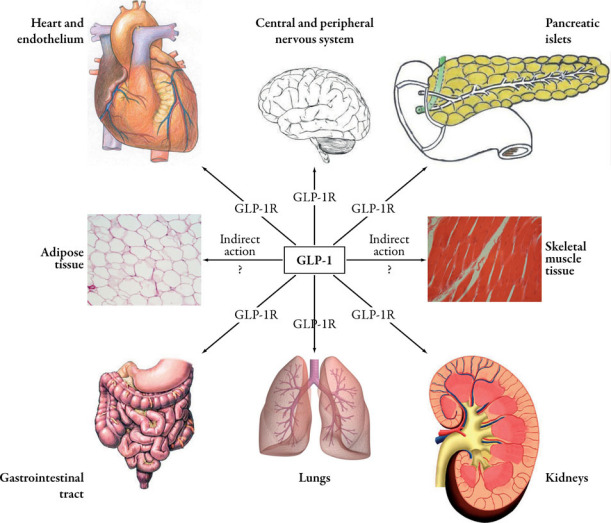
Type 2 diabetes mellitus (T2DM) is a progressive multisystemic disease that increases significantly cardiovascular morbidity and mortality. It is associated with obesity, insulin resistance, beta-cell dysfunction, and hyperglucagonemia, the combination of which typically leads to hyperglycemia. Incretin-based treatment modalities, and in particular glucagon-like peptide 1 (GLP-1) receptor agonists, are able to successfully counteract several of the underlying pathophysiological abnormalities of T2DM. The pancreatic effects of GLP-1 receptor agonists include glucose-lowering effects by stimulating insulin secretion and inhibiting glucagon release in a strictly glucose-dependent manner, increased beta-cell proliferation, and decreased beta-cell apoptosis. GLP-1 receptors are widely expressed throughout human body; thus, GLP-1-based therapies exert pleiotropic and multisystemic effects that extend far beyond pancreatic islets. A large body of experimental and clinical data have suggested a considerable protective role of GLP-1 analogs in the cardiovascular system (decreased blood pressure, improved endothelial and myocardial function, functional recovery of failing and ischemic heart, arterial vasodilatation), kidneys (increased diuresis and natriuresis), gastrointestinal tract (delayed gastric emptying, reduced gastric acid secretion), and central nervous system (appetite suppression, neuroprotective properties). The pharmacologic use of GLP-1 receptor agonists has been shown to reduce bodyweight and systolic blood pressure, and significantly improve glycemic control and lipid profile. Interestingly, weight reduction induced by GLP-1 analogs reflects mainly loss of abdominal visceral fat. The critical issue of whether the emerging positive cardiometabolic effects of GLP-1 analogs can be translated into better clinical outcomes for diabetic patients in terms of long-term hard endpoints, such as cardiovascular morbidity and mortality, remains to be elucidated with prospective, large-scale clinical trials.
Keywords: GLP-1 analogs; GLP-1 receptor agonists; glucagon-like peptide 1; glucagonlike peptide 1 receptor; incretins; pleiotropic effects; type 2 diabetes mellitus.
References
-
- International Diabetes Federation. United Nations Resolution 61/225: World Diabetes Day. 2008. Available at: www.idf.org/webdata/docs/World_Diabetes_Day_Media_Kit.pdf. Accessed: January 28, 2011.
-
- International Diabetes Federation. Diabetes Atlas. Executive Summary. second edition. Brussels: International Diabetes Federation; 2003.
-
- Munshi M. Managing the “geriatric syndrome” in patients with type 2 diabetes. Consult Pharm. 2008;23(suppl.B):12–16. - PubMed
-
- Fox K. M., Gerber R.A., Bolinder B., Chen J., Kumar S. Prevalence of inadequate glycemic control among patients with type 2 diabetes in the United Kingdom general practice research database: A series of retrospective analyses of data from 1998 through 2002. Clin Ther. 2006;28:388–395. doi: 10.1016/j.clinthera.2006.03.005. - DOI - PubMed
LinkOut - more resources
Full Text Sources
Other Literature Sources
