


Patient-centred screening for primary immunodeficiency, a multi-stage diagnostic protocol designed for non-immunologists: 2011 update
- PMID: 22132890
- PMCID: PMC3248092
- DOI: 10.1111/j.1365-2249.2011.04461.x
Patient-centred screening for primary immunodeficiency, a multi-stage diagnostic protocol designed for non-immunologists: 2011 update
Abstract
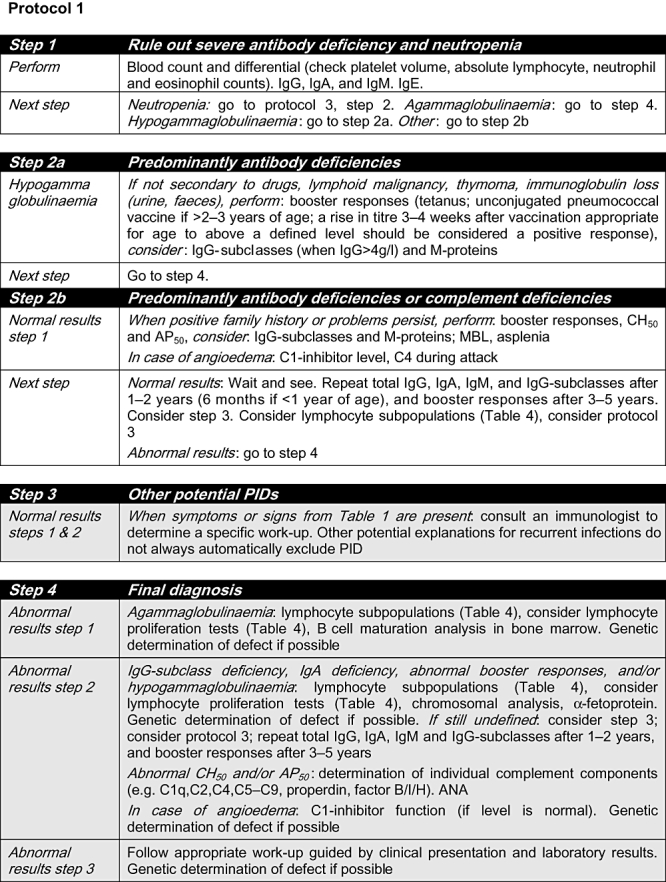
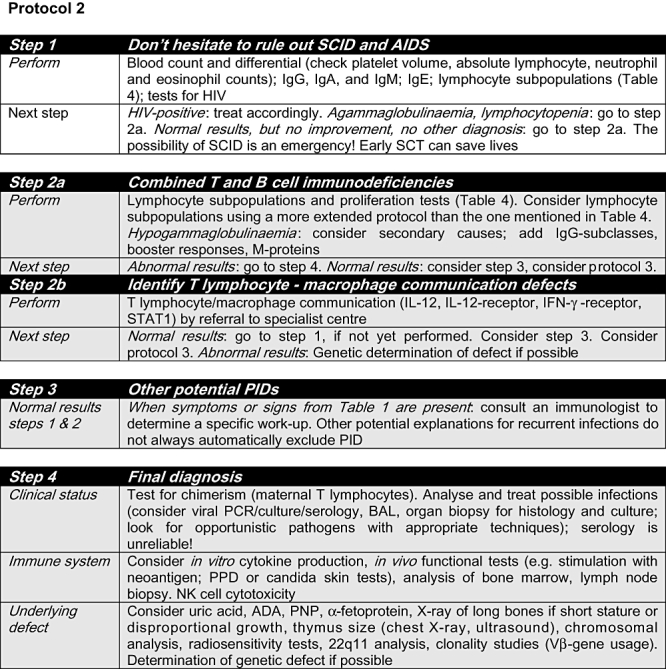
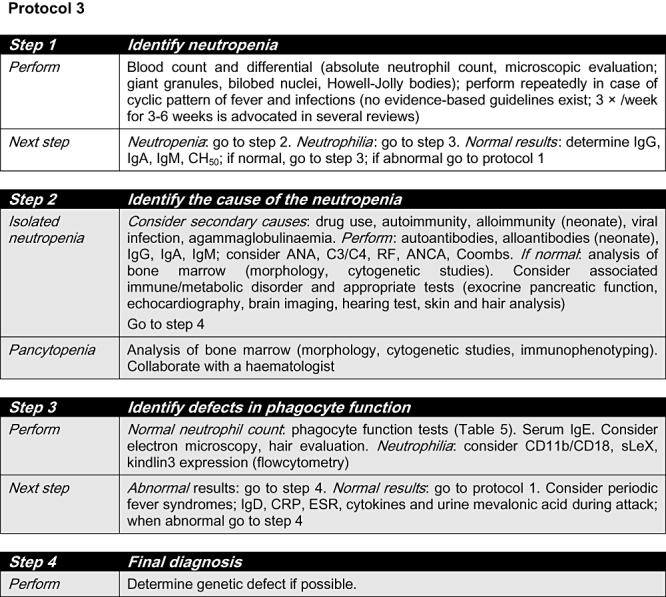
Members of the European Society for Immunodeficiencies (ESID) and other colleagues have updated the multi-stage expert-opinion-based diagnostic protocol for non-immunologists incorporating newly defined primary immunodeficiency diseases (PIDs). The protocol presented here aims to increase the awareness of PIDs among doctors working in different fields. Prompt identification of PID is important for prognosis, but this may not be an easy task. The protocol therefore starts from the clinical presentation of the patient. Because PIDs may present at all ages, this protocol is aimed at both adult and paediatric physicians. The multi-stage design allows cost-effective screening for PID of the large number of potential cases in the early phases, with more expensive tests reserved for definitive classification in collaboration with a specialist in the field of immunodeficiency at a later stage.
© 2011 The Author. Clinical and Experimental Immunology © 2011 British Society for Immunology.
Figures
References
-
- Samarghitean C, Ortutay C, Vihinen M. Systematic classification of primary immunodeficiencies based on clinical, pathological, and laboratory parameters. J Immunol. 2009;183:7569–75. - PubMed
-
- Ballow M. Approach to the patient with recurrent infections. Clin Rev Allergy Immunol. 2008;34:129–40. - PubMed
-
- Azar AE, Ballas ZK. Evaluation of the adult with suspected immunodeficiency. Am J Med. 2007;120:764–8. - PubMed
Publication types
MeSH terms
LinkOut - more resources
Full Text Sources
