


Review
doi: 10.1172/JCI57173.
Epub 2011 Dec 1.
Syphilis: using modern approaches to understand an old disease
Affiliations
- PMID: 22133883
- PMCID: PMC3225993
- DOI: 10.1172/JCI57173
Item in Clipboard
Review
Syphilis: using modern approaches to understand an old disease
J Clin Invest.
2011 Dec.
Abstract
Syphilis is a fascinating and perplexing infection, with protean clinical manifestations and both diagnostic and management ambiguities. Treponema pallidum subsp. pallidum, the agent of syphilis, is challenging to study in part because it cannot be cultured or genetically manipulated. Here, we review recent progress in the application of modern molecular techniques to understanding the biological basis of this multistage disease and to the development of new tools for diagnosis, for predicting efficacy of treatment with alternative antibiotics, and for studying the transmission of infection through population networks.
Figures
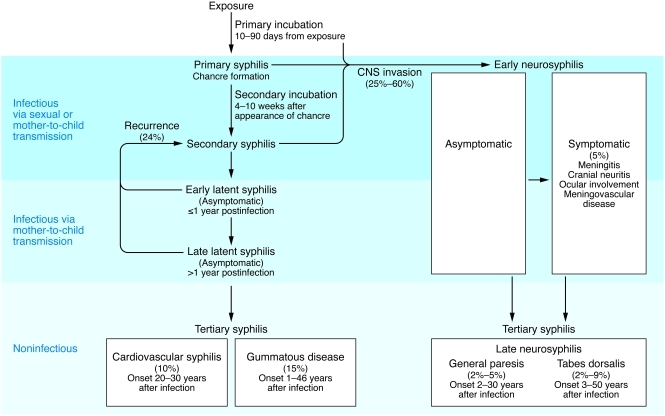
Percentages of individuals developing to specific stages as well as time intervals are based on information in references , , and (based on data from refs. –148).
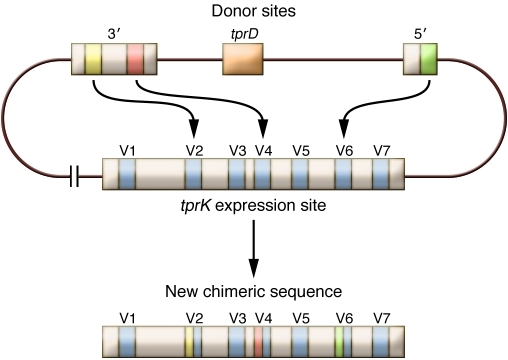
Variant DNA segments located adjacent to the tprD gene non-reciprocally recombine with the variable regions (V1-V7) of the tprK gene in the expression site to generate new TprK mosaic proteins.

The strain type information, years of collection, and the frequency of each strain type from each location are based on information in references , , –, –, , and .
References
-
- Alexander LJ, Schoch AG, Mantooth WB. Abortive treatment of syphilis; results obtained in the incubation, primary, and secondary stages of syphilis. Am J Syph Gonorrhea Vener Dis. 1949;33(5):429–436. - PubMed
