


YKL-40 is differentially expressed in human embryonic stem cells and in cell progeny of the three germ layers
- PMID: 22140133
- PMCID: PMC3351129
- DOI: 10.1369/0022155411433331
YKL-40 is differentially expressed in human embryonic stem cells and in cell progeny of the three germ layers
Abstract
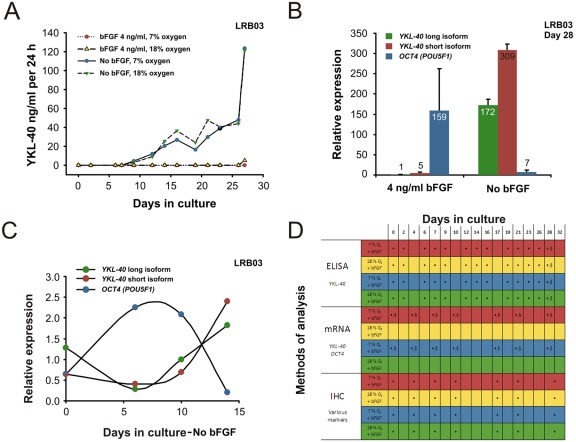
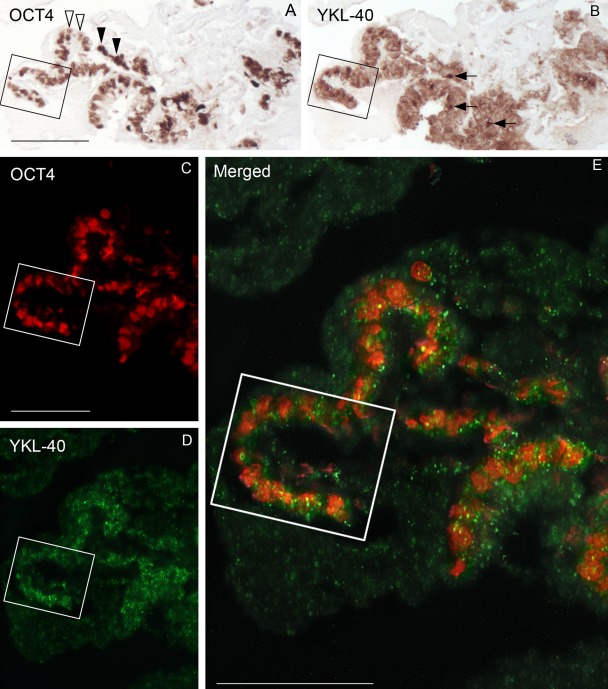
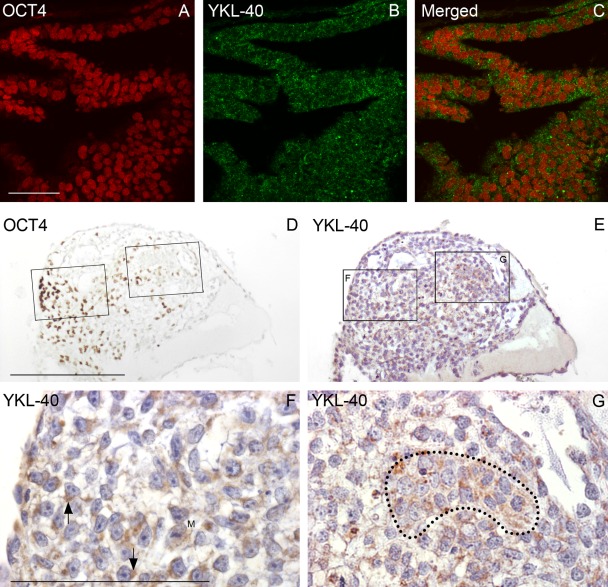
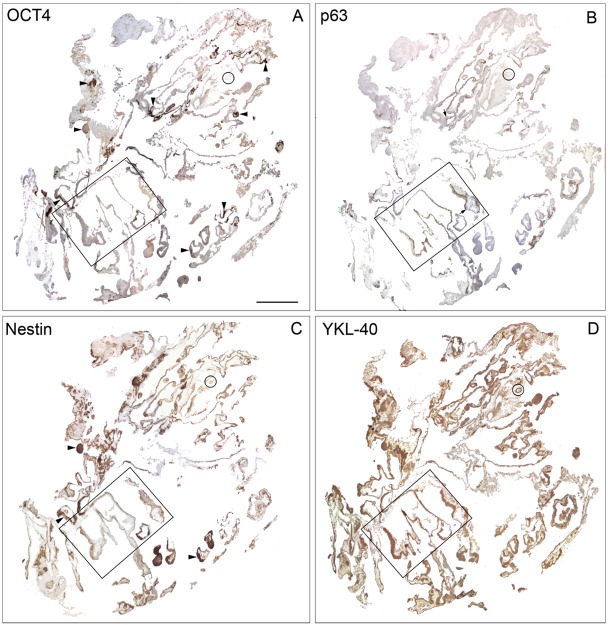
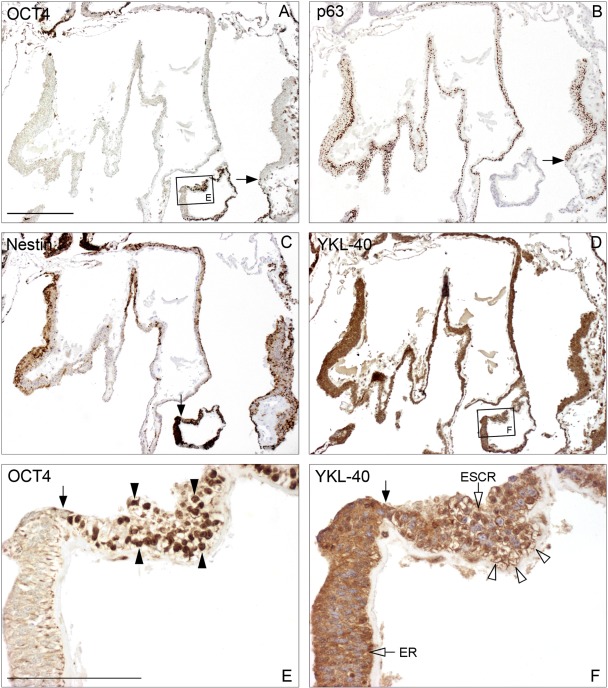
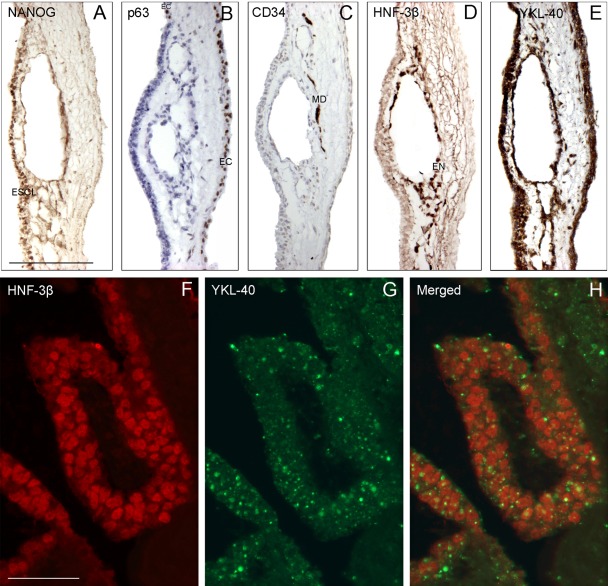
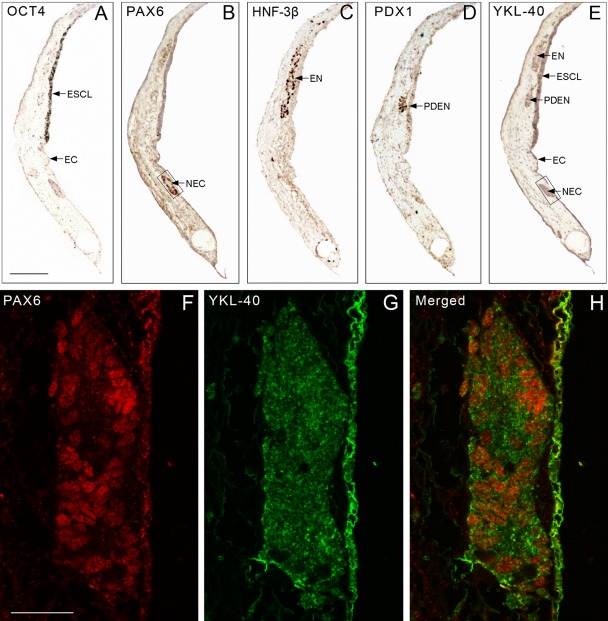
The secreted glycoprotein YKL-40 participates in cell differentiation, inflammation, and cancer progression. High YKL-40 expression is reported during early human development, but its functions are unknown. Six human embryonic stem cell (hESC) lines were cultured in an atmosphere of low or high oxygen tension, in culture medium with or without basic fibroblast growth factor, and on feeder layers comprising mouse embryonic fibroblasts or human foreskin fibroblasts to evaluate whether hESCs and their progeny produced YKL-40 and to characterize YKL-40 expression during differentiation. Secreted YKL-40 protein and YKL-40 mRNA expression were measured by enzyme-linked immunosorbent assay (ELISA) and quantitative RT-PCR. Serial-sectioned colonies were stained for YKL-40 protein and for pluripotent hESC (OCT4, NANOG) and germ layer (HNF-3β, PDX1, CD34, p63, nestin, PAX6) markers. Double-labeling showed YKL-40 expression in OCT4-positive hESCs, PAX6-positive neuroectodermal cells, and HNF-3β-positive endodermal cells. The differentiating progeny showed strong YKL-40 expression. Abrupt transition between YKL-40 and OCT4-positive hESCs and YKL-40-positive ecto- and neuroectodermal lineages was observed within the same epithelial-like layer. YKL-40-positive cells within deeper layers lacked contact with OCT4-positive cells. YKL-40 may be important in initial cell differentiation from hESCs toward ectoderm and neuroectoderm, with retained epithelial morphology, whereas later differentiation into endoderm and mesoderm involves a transition into the deeper layers of the colony.
Conflict of interest statement
The authors declared no potential conflicts of interest with respect to the authorship and/or publication of this article.
Figures
References
-
- Adewumi O, Aflatoonian B, Ahrlund-Richter L, Amit M, Andrews PW, Beighton G, Bello PA, Benvenisty N, Berry LS, Bevan S, et al. 2007. Characterization of human embryonic stem cell lines by the International Stem Cell Initiative. Nat Biotechnol. 25:803–816 - PubMed
-
- Awan A, Oliveri RS, Jensen PL, Christensen ST, Andersen CY. 2010. Immunoflourescence and mRNA analysis of human embryonic stem cells (hESCs) grown under feeder-free conditions. Methods Mol Biol. 584:195–210 - PubMed
-
- Baeten D, Boots AM, Steenbakkers PG, Elewaut D, Bos E, Verheijden GF, Berheijden G, Miltenburg AM, Rijnders AW, Veys EM, et al. 2000. Human cartilage gp-39+,CD16+ monocytes in peripheral blood and synovium: correlation with joint destruction in rheumatoid arthritis. Arthritis Rheum. 43:1233–1243 - PubMed
-
- Bigg HF, Wait R, Rowan AD, Cawston TE. 2006. The mammalian chitinase-like lectin, YKL-40, binds specifically to type I collagen and modulates the rate of type I collagen fibril formation. J Biol Chem. 281:21082–21095 - PubMed
-
- Brøchner CB, Vestentoft PS, Lynnerup N, Andersen CY, Møllgård K. 2010. A two- and three-dimensional approach for visualizing human embryonic stem cell differentiation. Methods Mol Biol. 584:179–193 - PubMed
Publication types
MeSH terms
Substances
LinkOut - more resources
Full Text Sources
Research Materials
