. 2011;6(11):e28282.
doi: 10.1371/journal.pone.0028282. Epub 2011 Nov 30.

Progressive, transgenerational changes in offspring phenotype and epigenotype following nutritional transition

Affiliations

Progressive, transgenerational changes in offspring phenotype and epigenotype following nutritional transition

Graham C Burdge et al. PLoS One. 2011.

Abstract

Induction of altered phenotypes during development in response to environmental input involves epigenetic changes. Phenotypic traits can be passed between generations by a variety of mechanisms, including direct transmission of epigenetic states or by induction of epigenetic marks de novo in each generation. To distinguish between these possibilities we measured epigenetic marks over four generations in rats exposed to a sustained environmental challenge. Dietary energy was increased by 25% at conception in F0 female rats and maintained at this level to generation F3. F0 dams showed higher pregnancy weight gain, but lower weight gain and food intake during lactation than F1 and F2 dams. On gestational day 8, fasting plasma glucose concentration was higher and β-hydroxybutyrate lower in F0 and F1 dams than F2 dams. This was accompanied by decreased phosphoenolpyruvate carboxykinase (PEPCK) and increased PPARα and carnitine palmitoyl transferase-1 mRNA expression. PEPCK mRNA expression was inversely related to the methylation of specific CpG dinucleotides in its promoter. DNA methyltransferase (Dnmt) 3a2, but not Dnmt1 or Dnmt3b, expression increased and methylation of its promoter decreased from F1 to F3 generations. These data suggest that the regulation of energy metabolism during pregnancy and lactation within a generation is influenced by the maternal phenotype in the preceding generation and the environment during the current pregnancy. The transgenerational effects on phenotype were associated with altered DNA methylation of specific genes in a manner consistent with induction de novo of epigenetic marks in each generation.


Conflict of interest statement

Competing Interests: The authors have declared that no competing interests exist.

Figures

Figure 1
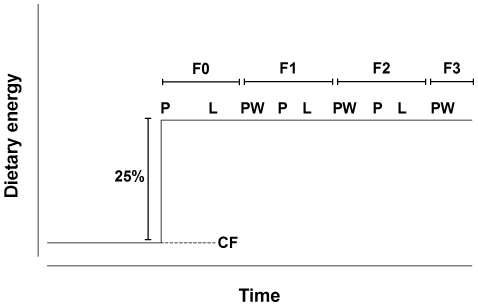
Figure 1. Experimental design.
After conception in F0 dams, the energy content of the diet was increased by approximately 25% compared to the chow diet fed in the breeding colony. The energy content of the diet did not differ between generations during pregnancy (P), lactation (L) and to the offspring after weaning (PW).
Figure 2
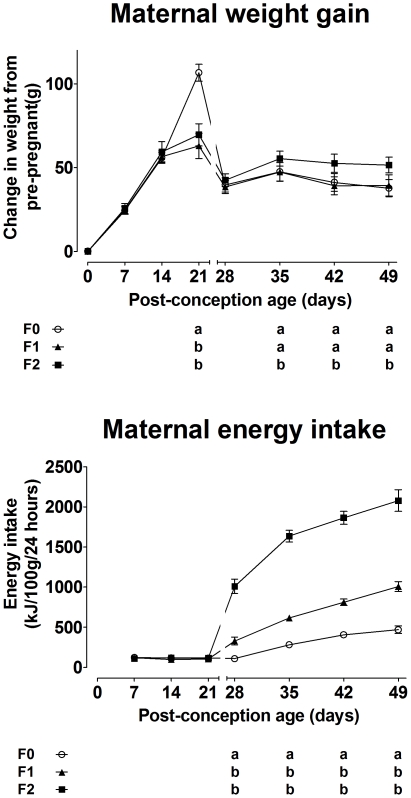
Figure 2. Change in maternal body weight from conception and energy intake during pregnancy and lactation.
Values are mean ± SD for n = 5−7 rats per group. Different letters indicate significantly different (P<0.05) values between generations.
Figure 3
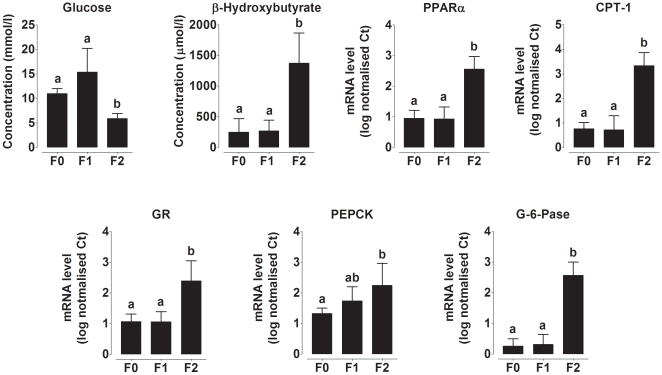
Figure 3. Maternal blood metabolite concentrations and mRNA expression of genes involved in hepatic gluconeogenesis and ketogenesis.
Plasma fasting glucose and β-hydroxybutyrate concentrations. Hepatic PPARα, carnitine palmitoyltransferase-1 (CPT-1), glucocorticoid receptor (GR), phosphoenolpyruvate carboxykinase (PEPCK), (G) glucose-6-phosphatase (G-6-Pase) mRNA expression. Values are mean ± SD for n = 5−7 rats per group. Values with different letters are significantly different (P<0.05).
Figure 4
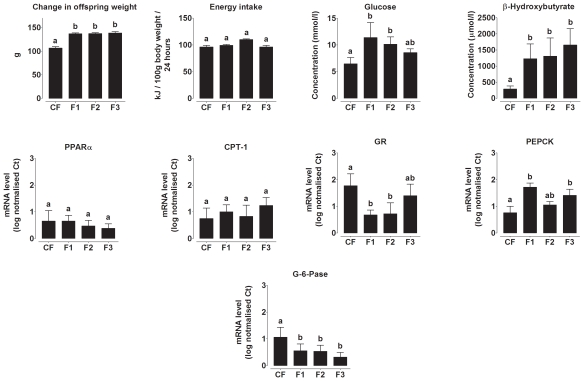
Figure 4. Offspring phenotype and mRNA expression of genes involved in hepatic gluconeogenesis and ketogenesis.
Change in offspring body weight on day 70 compared to weaning, offspring energy intake on day 70, fasting glucose and β-hydroxybutyrate concentrations on postnatal day 70. Hepatic PPARα, carnitine palmitoyltransferase-1 (CPT-1), glucocorticoid receptor (GR), phosphoenolpyruvate carboxykinase (PEPCK), (I) glucose-6-phosphatase (G-6-Pase) mRNA expression. Values are mean ± SD for n = 5−7 rats per group. Values with different letters are significantly different (P<0.05).
Figure 5
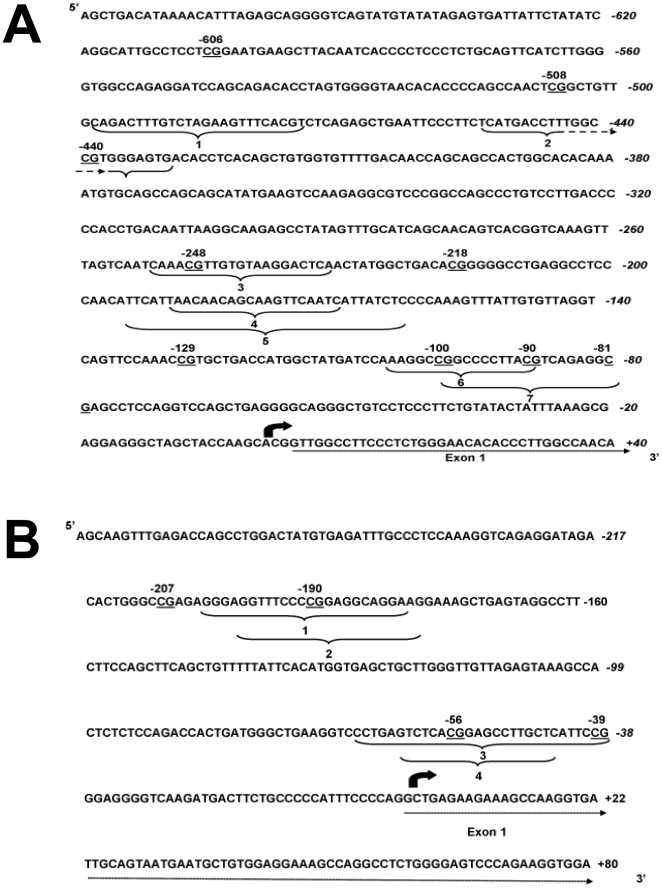
Figure 5. Structure of the phosphoenolpyruvate carboxykinase and DNA methyltransferase 3a promoters.
Genomic sequence of the region of the (A) phosphoenolpyruvate carboxykinase promoter analysed for CpG methylation. CpG reported in the methylation analysis are underlined. Known transcription factor response elements are indicated by curved brackets; (1), heat shock factor, (2) PPAR, (3) CATT enhancer-binding protein, (4), glucocorticoid receptor (5) hepatic nuclear factor-1, (6), Krueppel-like transcription factors, (7) cAMP-response element . (B)Genomic sequence of the region of the DNA methyltransferase 3a2 promoter analysed for CpG methylation. CpG reported in the methylation analysis are underlined. Putative transcription factor response elements are indicated by curved brackets; (1) nuclear factor of activated T cells, (2) retinol x receptor, (3) neurone-restrictive silencer factor, (4) mouse Krueppel factor.
Figure 6
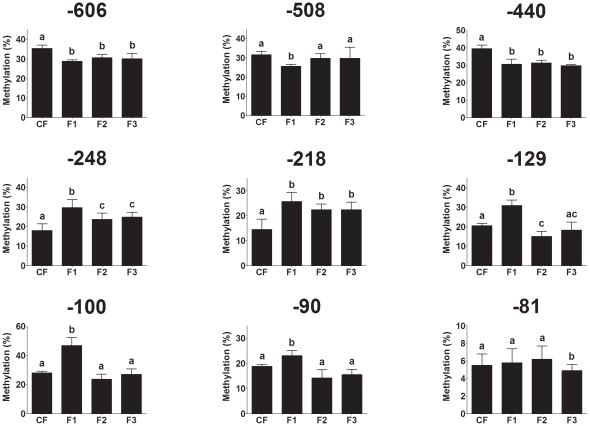
Figure 6. Methylation of individual CpGs in the PEPCK promoter in the liver of the adult offspring.
CpG locations (bp) are relative to the transcription start site. Values are mean ± SD of 5–7 samples. Values with different letters are significantly different (P<0.05).
Figure 7
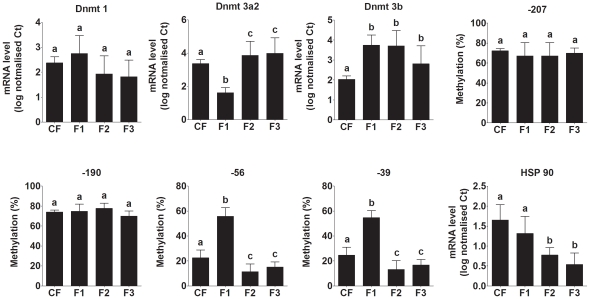
Figure 7. Hepatic DNA methyltransferase expression and Dnmt3a2 promoter methylation, and embryo heat shock protein 90 expression.
Dnmt 1, Dnmt 3a2 and Dnmt3b mRNA expression in the liver of non-pregnant adult offspring on postnatal day 70. Methylation of individual CpGs in the Dnmt 3a2 promoter in adult offspring. HPS 90 mRNA expression in post-conception day 8 gastrulating embryos. Values are mean ± SD, n = 5 to 7 samples per group. Values with different letters are significantly different (P<0.05).
Figure 8
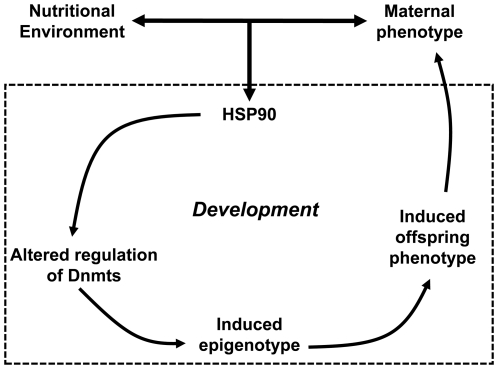
Figure 8. Scheme for induction of phenotypic and epigenetic variation between generations.

References

    1. Kimura M. Cambridge: Cambridge University Press; 1984. The Neutral Theory of Molecular Evolution.
    1. West-Eberhard MJ. Phenotypic accommodation: adaptive innovation due to developmental plasticity. J Exp Zool B Mol Dev Evol. 2005;304:610–618. - PubMed
    1. Badyaev AV. Maternal effects as generators of evolutionary change: a reassessment. Ann N Y Acad Sci. 2008;1133:151–161. - PubMed
    1. Badyaev AV, Oh KP. Environmental induction and phenotypic retention of adaptive maternal effects. BMC Evol Biol. 2008;8:3. - PMC - PubMed
    1. Badyaev AV, Uller T. Parental effects in ecology and evolution: mechanisms, processes and implications. Philos Trans R Soc Lond B Biol Sci. 2009;364:1169–1177. - PMC - PubMed

Publication types

MeSH terms