


Mouse digit tip regeneration is mediated by fate-restricted progenitor cells
- PMID: 22143790
- PMCID: PMC3251149
- DOI: 10.1073/pnas.1118017108
Mouse digit tip regeneration is mediated by fate-restricted progenitor cells
Abstract
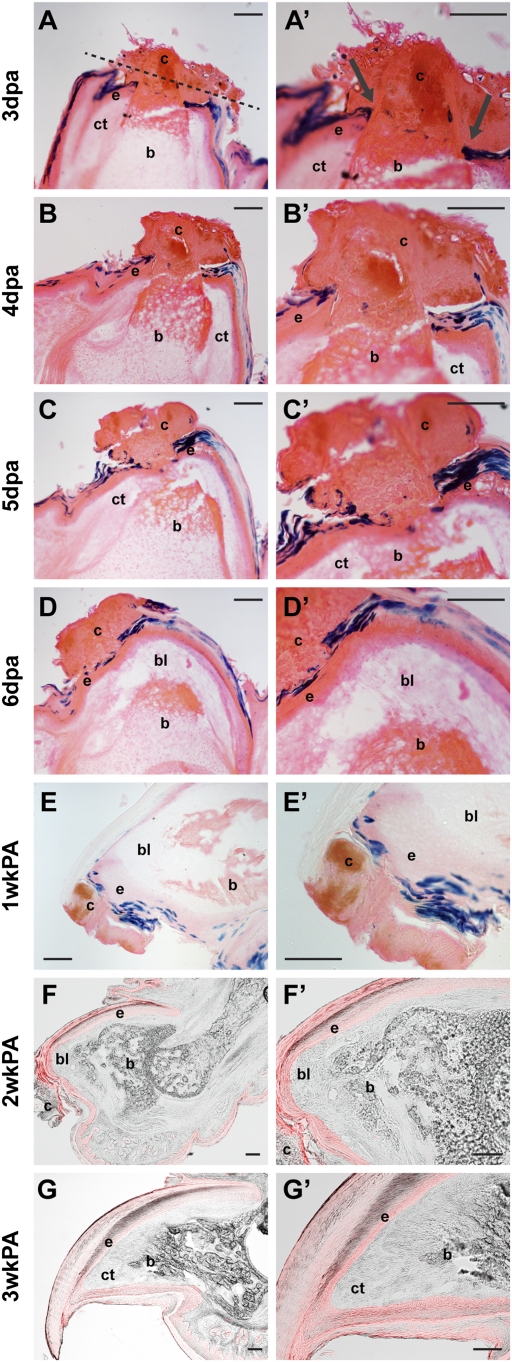
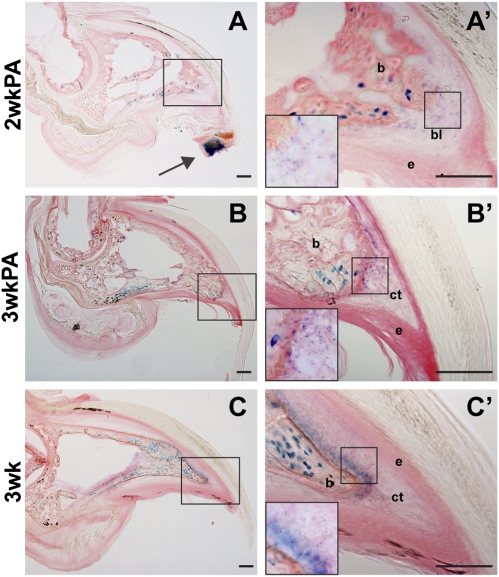
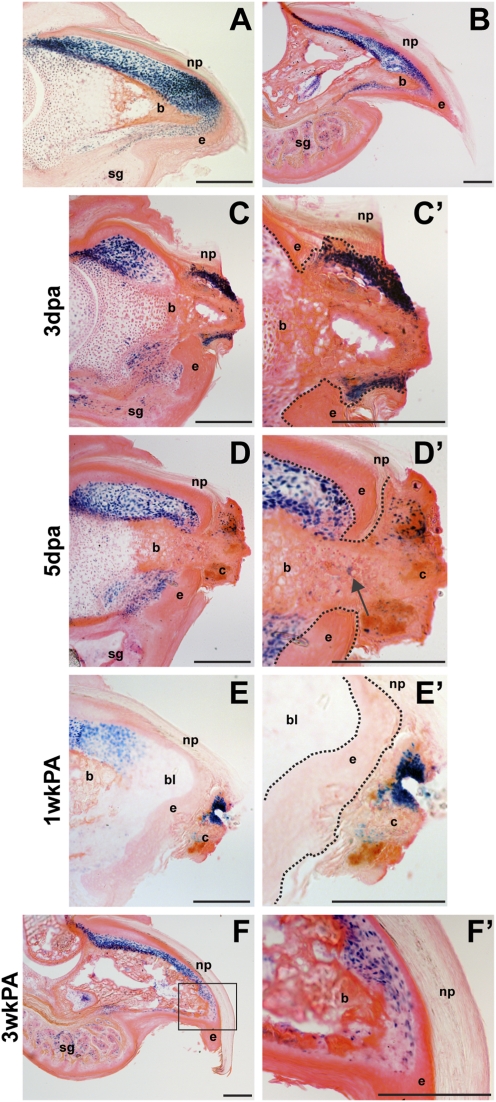
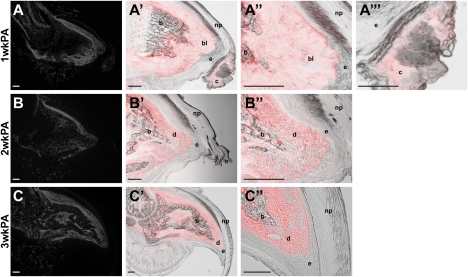
Regeneration of appendages is frequent among invertebrates as well as some vertebrates. However, in mammals this has been largely relegated to digit tip regeneration, as found in mice and humans. The regenerated structures are formed from a mound of undifferentiated cells called a blastema, found just below the site of amputation. The blastema ultimately gives rise to all of the tissues in the regenerate, excluding the epidermis, and has classically been thought of as a homogenous pool of pluripotent stem cells derived by dedifferentiation of stump tissue, although this has never been directly tested in the context of mammalian digit tip regeneration. Successful digit tip regeneration requires that the level of amputation be within the nail bed and depends on expression of Msx1. Because Msx1 is strongly expressed in the nail bed mesenchyme, it has been proposed that the Msx1-expressing cells represent a pluripotent cell population for the regenerating digit. In this report, we show that Msx1 is dynamically expressed during digit tip regeneration, and it does not mark a pluripotent stem cell population. Moreover, we show that both the ectoderm and mesoderm contain fate-restricted progenitor populations that work in concert to regenerate their own lineages within the digit tip, supporting the hypothesis that the blastema is a heterogeneous pool of progenitor cells.
Conflict of interest statement
The authors declare no conflict of interest.
Figures
References
-
- Thornton CS. The effect of apical cap removal on limb regeneration in Amblystoma larvae. J Exp Zool. 1957;134:357–381. - PubMed
-
- Mescher AL. Effects on adult newt limb regeneration of partial and complete skin flaps over the amputation surface. J Exp Zool. 1976;195:117–128. - PubMed
-
- Repesh LA, Oberpriller JC. Scanning electron microscopy of epidermal cell migration in wound healing during limb regeneration in the adult newt, Notophthalmus viridescens. Am J Anat. 1978;151:539–555. - PubMed
-
- Hay ED, Fischman DA. Origin of the blastema in regenerating limbs of the newt Triturus viridescens. An autoradiographic study using tritiated thymidine to follow cell proliferation and migration. Dev Biol. 1961;3:26–59. - PubMed
-
- Butler EG, O'Brien JP. Effects of localized x-radiation on regeneration of the urodele limb. Anat Rec. 1942;84:407–413.
Publication types
MeSH terms
Substances
Grants and funding
LinkOut - more resources
Full Text Sources
Medical
Molecular Biology Databases
