


Bacillus subtilis-mediated protection from Citrobacter rodentium-associated enteric disease requires espH and functional flagella
- PMID: 22144475
- PMCID: PMC3264298
- DOI: 10.1128/IAI.05843-11
Bacillus subtilis-mediated protection from Citrobacter rodentium-associated enteric disease requires espH and functional flagella
Abstract
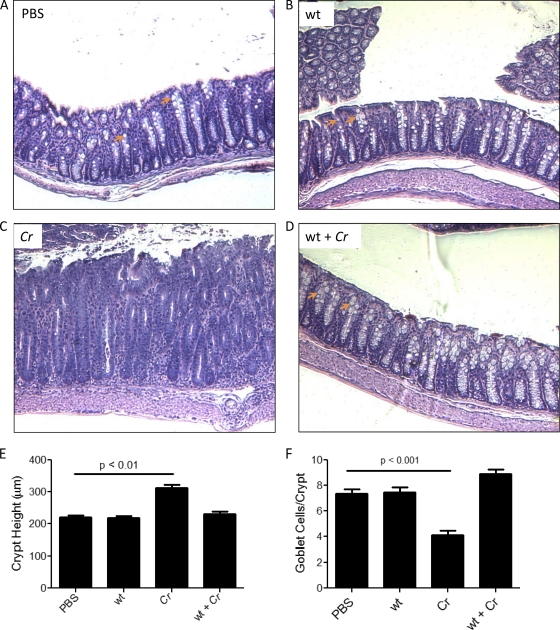
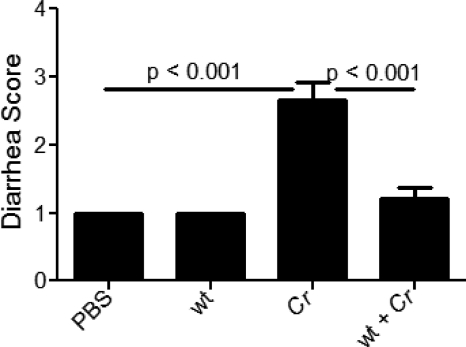
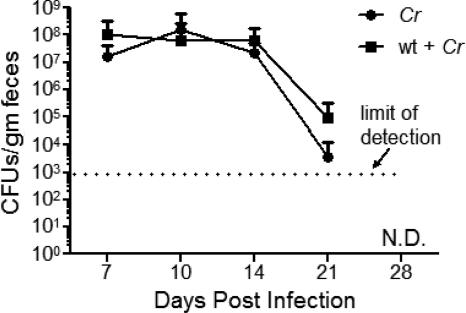
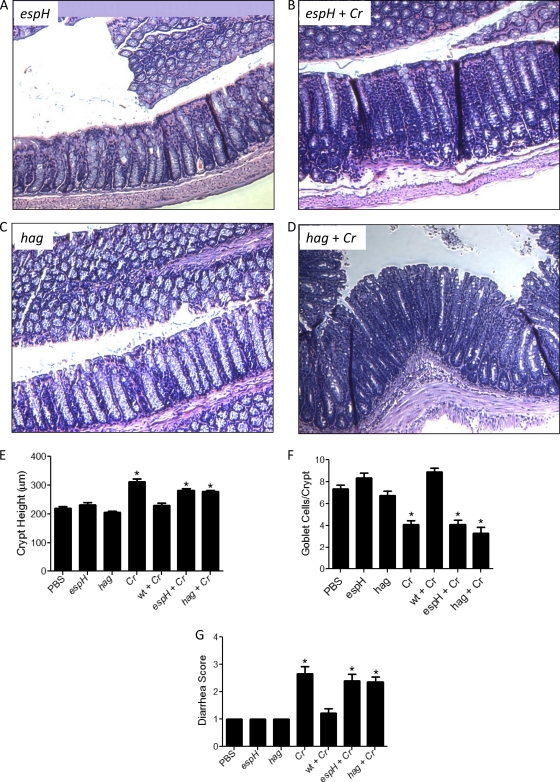
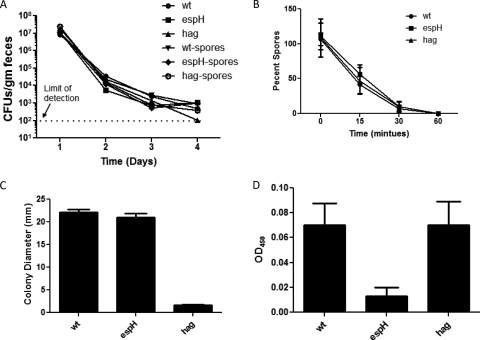
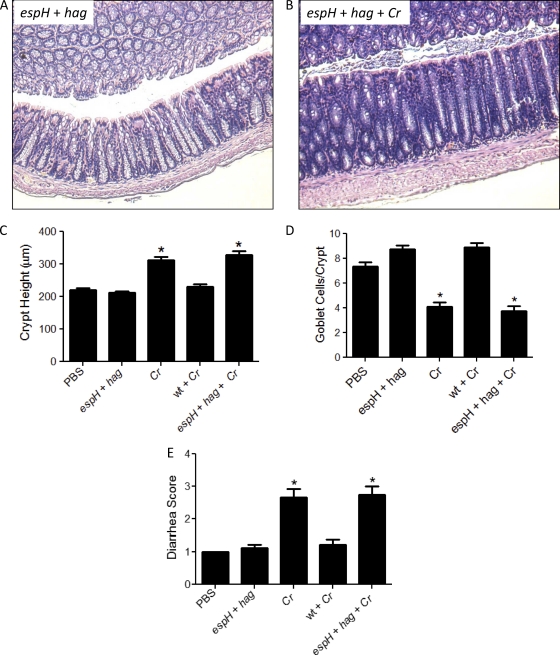
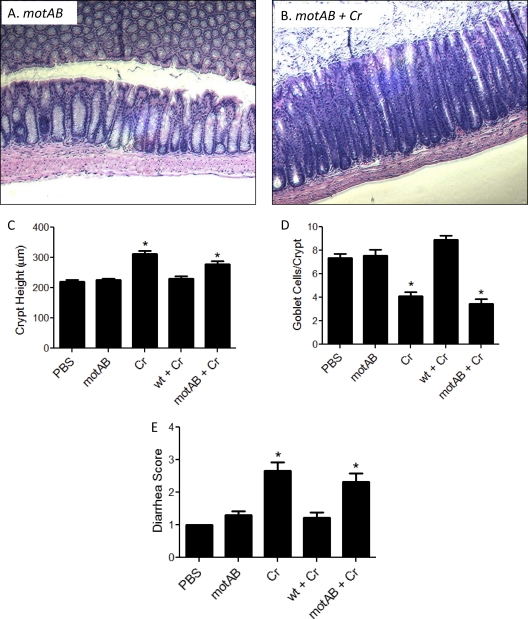
Commensals limit disease caused by invading pathogens; however, the mechanisms and genes utilized by beneficial microbes to inhibit pathogenesis are poorly understood. The attaching and effacing mouse pathogen Citrobacter rodentium associates intimately with the intestinal epithelium, and infections result in acute colitis. C. rodentium is used to model the human pathogens enterohemorrhagic Escherichia coli and enteropathogenic E. coli. To confirm that Bacillus subtilis, a spore-forming bacterium found in the gut of mammals, could reduce C. rodentium-associated disease, mice received wild-type B. subtilis spores and 24 h later were infected by oral gavage with pathogenic C. rodentium. Disease was assessed by determining the extent of colonic epithelial hyperplasia, goblet cell loss, diarrhea, and pathogen colonization. Mice that received wild-type B. subtilis prior to enteric infection were protected from disease even though C. rodentium colonization was not inhibited. In contrast, espH and hag mutants, defective in exopolysaccharides and flagellum production, respectively, did not protect mice from C. rodentium-associated disease. A motAB mutant also failed to protect mice from disease, suggesting that B. subtilis-mediated protection requires functional flagella. By expanding our current mechanistic knowledge of bacterial protection, we can better utilize beneficial microbes to prevent intestinal disease caused by pathogenic bacteria, ultimately reducing human disease. Our data demonstrate that wild-type B. subtilis reduced disease caused by C. rodentium infection through a mechanism that required espH and functional flagella.
Figures
References
-
- Borenshtein D, McBee ME, Schauer DB. 2008. Utility of the Citrobacter rodentium infection model in laboratory mice. Curr. Opin. Gastroenterol. 24:32–37 - PubMed
-
- Castagliuolo I, et al. 2005. Beneficial effect of auto-aggregating Lactobacillus crispatus on experimentally induced colitis in mice. FEMS Immunol. Med. Microbiol. 43:197–204 - PubMed
Publication types
MeSH terms
Substances
Grants and funding
LinkOut - more resources
Full Text Sources
Molecular Biology Databases
