


Schistosoma japonicum ova maintains epithelial barrier function during experimental colitis
- PMID: 22147983
- PMCID: PMC3229631
- DOI: 10.3748/wjg.v17.i43.4810
Schistosoma japonicum ova maintains epithelial barrier function during experimental colitis
Abstract
Aim: To evaluate the impacts of Schistosoma japonicum (S. japonicum) ova on the tight junction barriers in a trinitrobenzenesulfonic acid (TNBS)-induced colitis model.
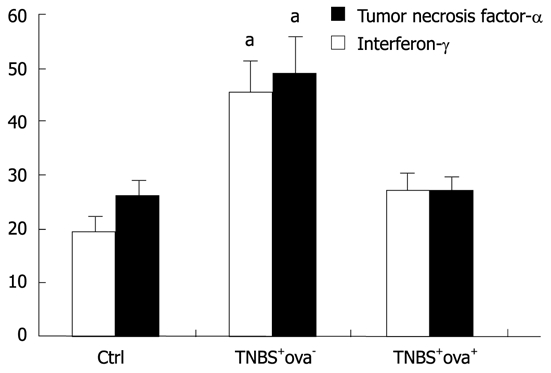
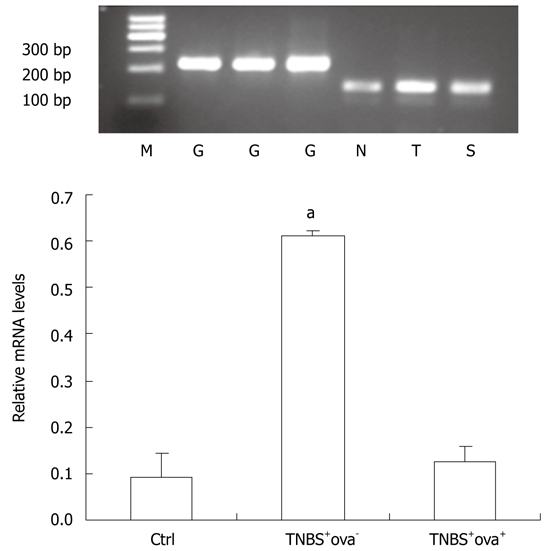
Methods: Balb/c mice were randomly divided into three groups: control group; TNBS(+)ova(-) group and TNBS(+)ova(+) group. TNBS was used intracolonic to induce colitis and mice of the TNBS(+)ova(+) group were pre-exposed to S. japonicum ova as a prophylactic intervention. Colon inflammation was quantified using following variables: mouse mortality, weight loss, colon extent and microscopic inflammation score. Serum expression of tumor necrosis factor-α and interferon-γ were assessed to evaluate the systemic inflammatory response. NOD2 and its mRNA were also tested. Bacterial translocations were tested by culturing blood and several tissues. ZO-1 and occludin were chosen as the representations of tight junction proteins. Both the proteins and mRNA were assessed.
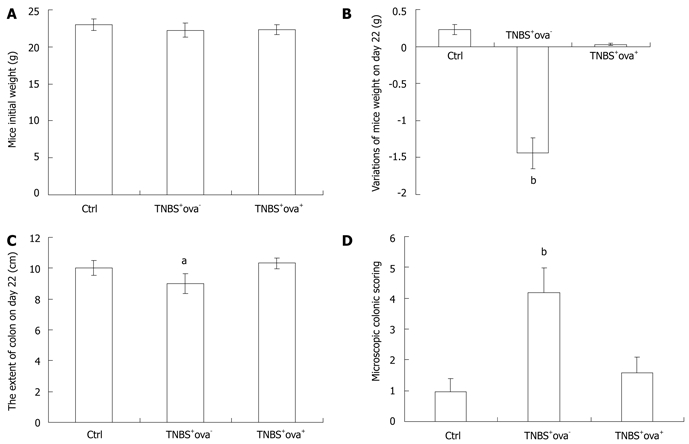
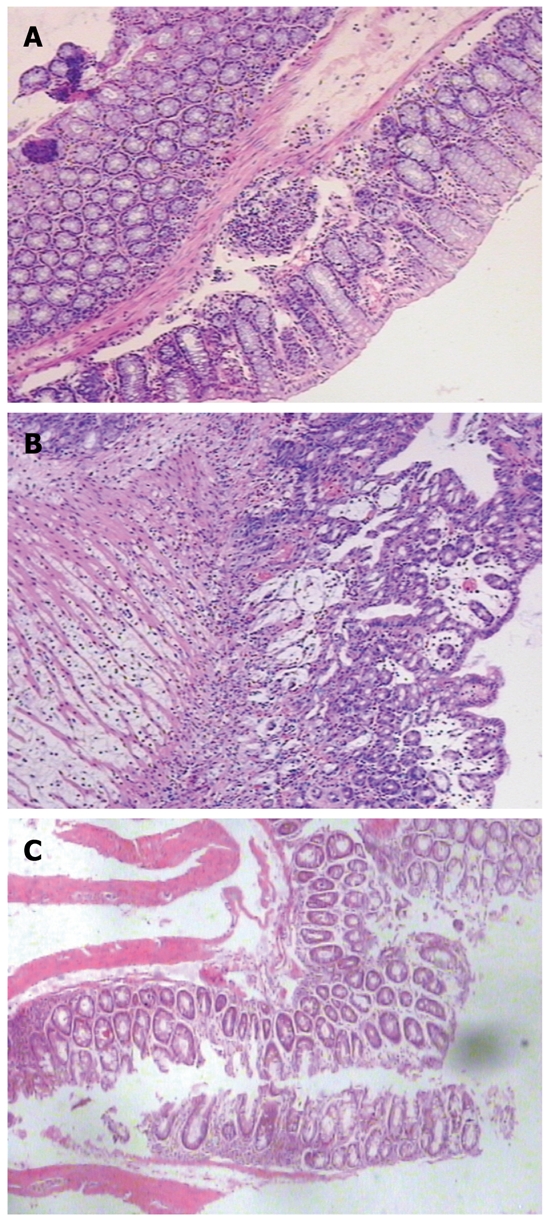
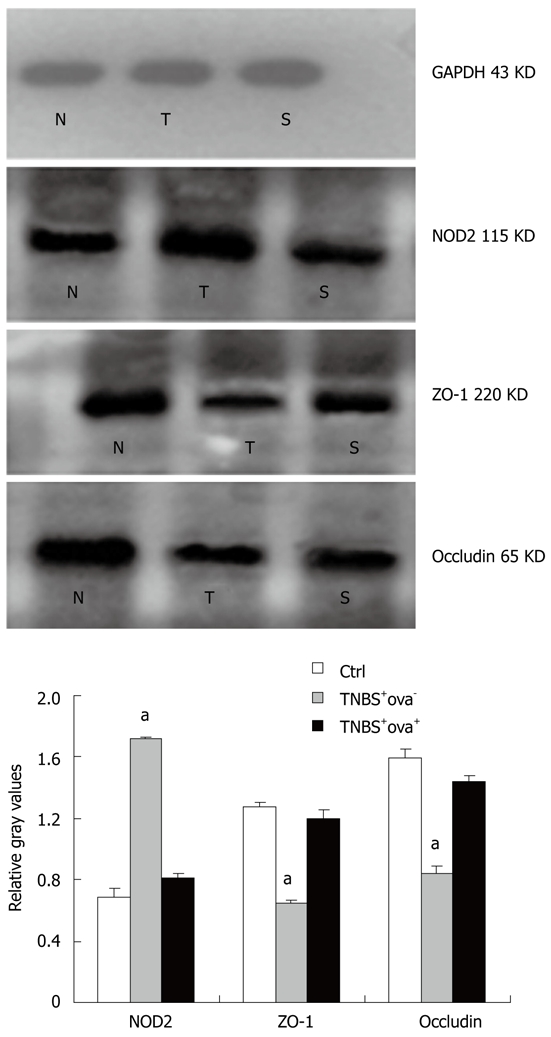
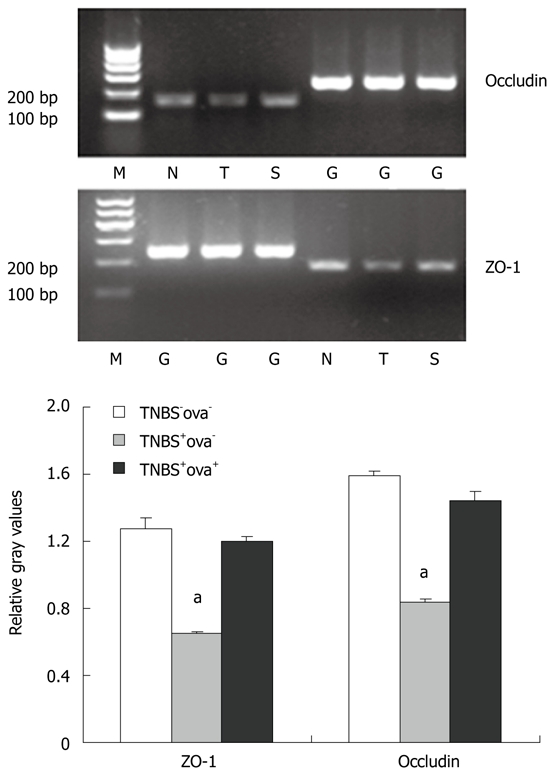
Results: Ova pre-treatment contributed to the relief of colitis and decreased the mortality of the models. NOD2 expression was significantly downregulated when pretreated with the ova. The TNBS injection caused a significant downregulation of ZO-1 and occludin mRNA together with their proteins in the colon; ova pre-exposure reversed these alterations. Treatment with S. japonicum ova in the colitis model caused lower intestinal bacterial translocation frequency.
Conclusion: S. japonicum ova can maintain epithelial barrier function through increasing tight junction proteins, thus causing less exposure of NOD2 to the luminal antigens which may activate a series of inflammatory factors and induce colitis.
Keywords: Crohn’s disease; Occludin; Schistosoma japonicum ova; Tight junction protein; ZO-1.
Figures
References
-
- MacDonald TT, Monteleone G, Pender SL. Recent developments in the immunology of inflammatory bowel disease. Scand J Immunol. 2000;51:2–9. - PubMed
-
- Elson CO, Cong Y, Weaver CT, Schoeb TR, McClanahan TK, Fick RB, Kastelein RA. Monoclonal anti-interleukin 23 reverses active colitis in a T cell-mediated model in mice. Gastroenterology. 2007;132:2359–2370. - PubMed
-
- Schreiber S, Khaliq-Kareemi M, Lawrance IC, Thomsen OØ, Hanauer SB, McColm J, Bloomfield R, Sandborn WJ. Maintenance therapy with certolizumab pegol for Crohn’s disease. N Engl J Med. 2007;357:239–250. - PubMed
-
- Takesue Y, Ohge H, Uemura K, Imamura Y, Murakami Y, Yokoyama T, Kakehashi M, Sueda T. Bacterial translocation in patients with Crohn’s disease undergoing surgery. Dis Colon Rectum. 2002;45:1665–1671. - PubMed
MeSH terms
Substances
LinkOut - more resources
Full Text Sources
