


The effects of print exposure on sentence processing and memory in older adults: Evidence for efficiency and reserve
- PMID: 22149149
- PMCID: PMC3275681
- DOI: 10.1080/13825585.2011.628376
The effects of print exposure on sentence processing and memory in older adults: Evidence for efficiency and reserve
Abstract
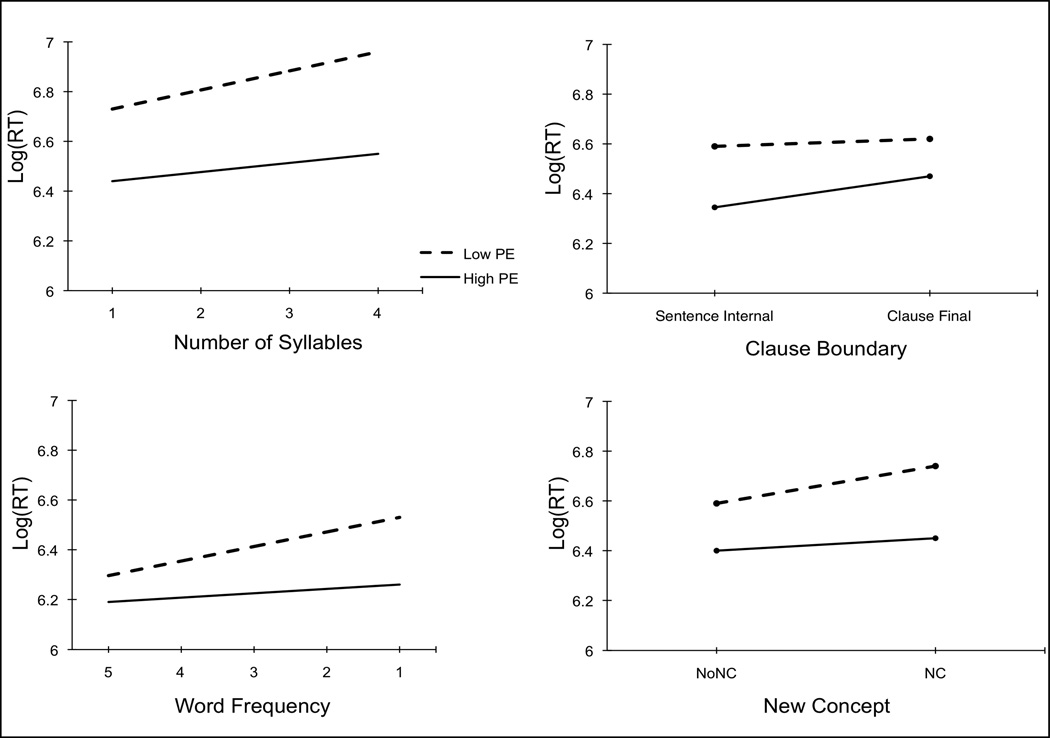
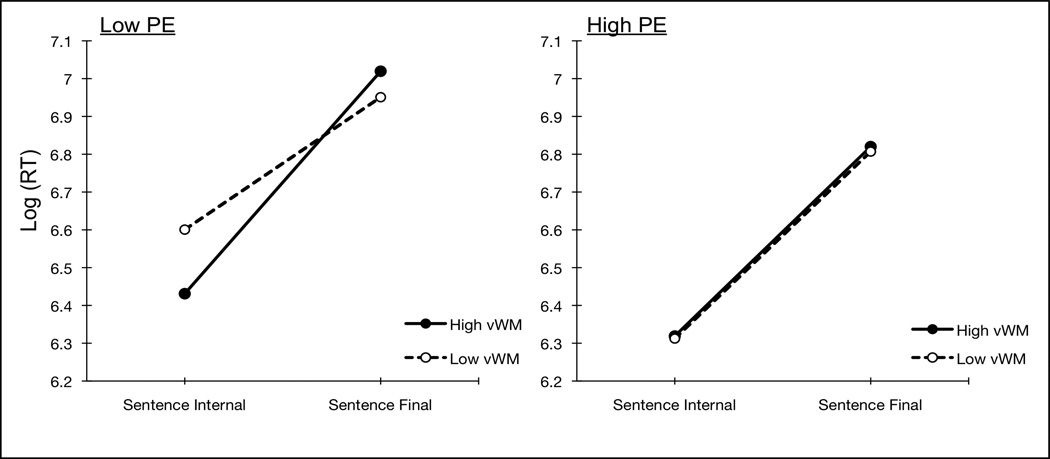
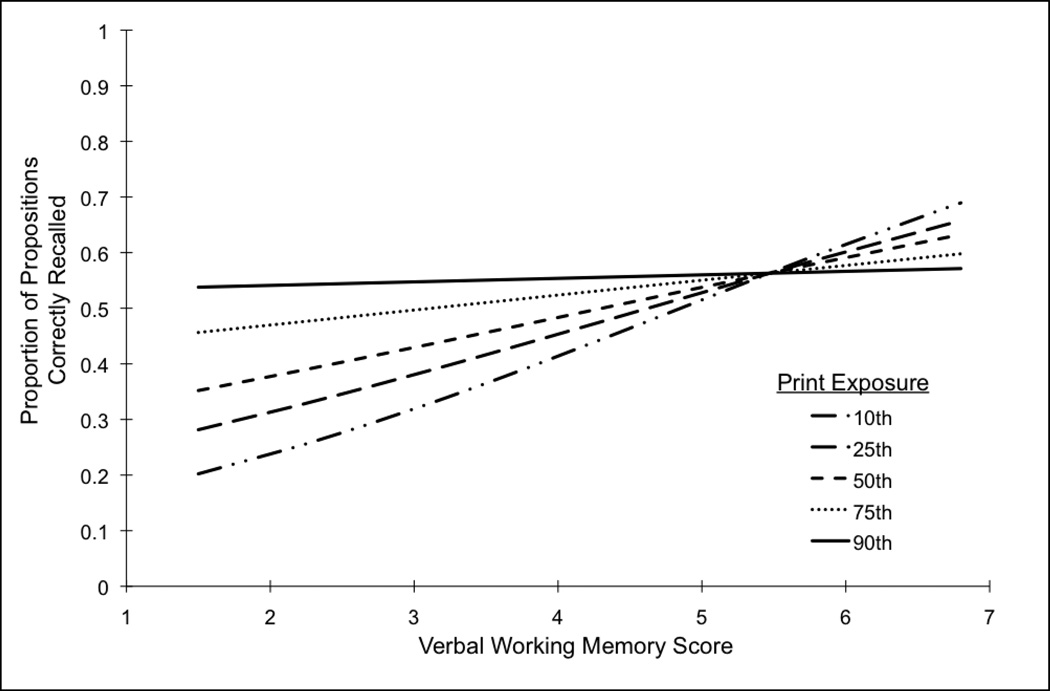
The present study was an examination of how exposure to print affects sentence processing and memory in older readers. A sample of older adults (N = 139; Mean age = 72) completed a battery of cognitive and linguistic tests and read a series of sentences for recall. Word-by-word reading times were recorded and generalized linear mixed effects models were used to estimate components representing attentional allocation to word-level and textbase-level processes. Older adults with higher levels of print exposure showed greater efficiency in word-level processing and in the immediate instantiation of new concepts, but allocated more time to semantic integration at clause boundaries. While lower levels of working memory were associated with smaller wrap-up effects, individuals with higher levels of print exposure showed a reduced effect of working memory on sentence wrap-up. Importantly, print exposure was not only positively associated with sentence memory, but was also found to buffer the effects of working memory on sentence recall. These findings suggest that the increased efficiency of component reading processes that come with life-long habits of literacy buffer the effects of working memory decline on comprehension and contribute to maintaining skilled reading among older adults.
Figures
References
-
- Aaronson D, Ferres S. The word-by-word reading paradigm: An experimental and theoretical approach. In: Kieras DE, Just MA, editors. New methods in reading comprehension research. Hillsdale, N. J.: Erlbaum; 1984. pp. 31–68.
-
- Aaronson D, Scarborough HS. Performance theories for sentence coding: Some quantitative models. Journal of Verbal Learning and Verbal Behavior. 1977;16:277–303.
-
- Ackerman P. Knowledge and cognitive aging. In: Craik FIM, Salthouse TA, editors. The handbook of aging and cognition. 3rd ed. New York: Psychology Press; 2008. pp. 373–443.
-
- Baayen RH, Davidson DJ, Bates DM. Mixed-effects modeling with crossed random effects for subjects and items. Journal of Memory and Language. 2008;59:390–412.
Publication types
MeSH terms
Grants and funding
LinkOut - more resources
Full Text Sources
Medical
