


The assessment of the quality of reporting of meta-analyses in diagnostic research: a systematic review
- PMID: 22151233
- PMCID: PMC3258221
- DOI: 10.1186/1471-2288-11-163
The assessment of the quality of reporting of meta-analyses in diagnostic research: a systematic review
Abstract
Background: Over the last decade there have been a number of guidelines published, aimed at improving the quality of reporting in published studies and reviews. In systematic reviews this may be measured by their compliance with the PRISMA statement. This review aims to evaluate the quality of reporting in published meta-analyses of diagnostic tests, using the PRISMA statement and establish whether there has been a measurable improvement over time.
Methods: Eight databases were searched for reviews published prior to 31(st) December 2008. Studies were selected if they evaluated a diagnostic test, measured performance, searched two or more databases, stated the search terms and inclusion criteria, and used a statistical method to summarise a test's performance. Data were extracted on the review characteristics and items of the PRISMA statement. To measure the change in the quality of reporting over time, PRISMA items for two periods of equal duration were compared.
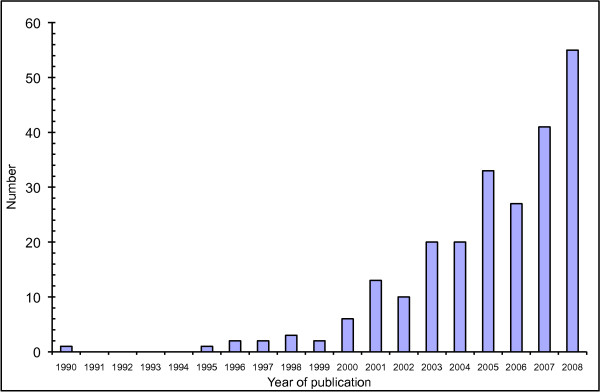
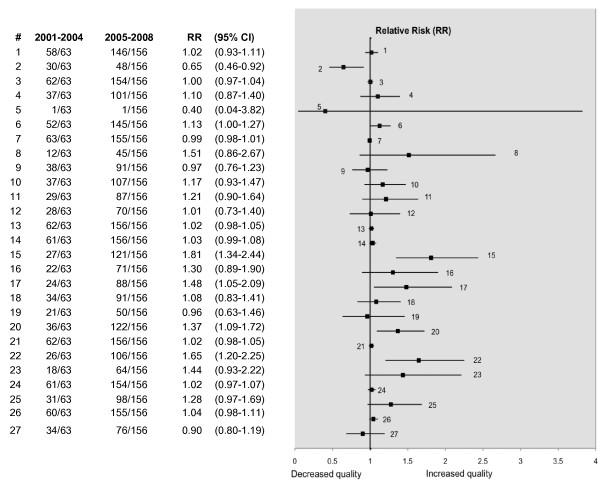
Results: Compliance with the PRISMA statement was generally poor: none of the reviews completely adhered to all 27 checklist items. Of the 236 meta-analyses included following selection: only 2(1%) reported the study protocol; 59(25%) reported the searches used; 76(32%) reported the results of a risk of bias assessment; and 82(35%) reported the abstract as a structured summary. Only 11 studies were published before 2000. Thus, the impact of QUOROM on the quality of reporting was not evaluated. However, the periods 2001-2004 and 2005-2008 (covering 93% of studies) were compared using relative risks (RR). There was an increase in the proportion of reviews reporting on five PRISMA items: eligibility criteria (RR 1.13, 95% CI 1.00 - 1.27); risk of bias across studies (methods) (RR 1.81, 95% CI 1.34 - 2.44); study selection results (RR 1.48, 95% CI 1.05 - 2.09); results of individual studies (RR 1.37, 95% CI 1.09 - 1.72); risk of bias across studies (results) (RR 1.65, 95% CI 1.20 - 2.25).
Conclusion: Although there has been an improvement in the quality of meta-analyses in diagnostic research, there are still many deficiencies in the reporting which future reviewers need to address if readers are to trust the validity of the reported findings.
Figures



References
-
- Buntinx F, Aertgeerts B, Macaskill P. In: The evidence base for clinical diagnosis: theory and methods of diagnostic research. 2. Knottnerus JA, Buntix F, editor. London: BMJ books; 2009. Guidelines for conducting systematic reviews of studies evaluating the accuracy of diagnostic tests; pp. 180–212.
-
- Song F, Eastwood AJ, Gilbody S, Duley L, Sutton AJ. Publication and related biases. Health Technol Assess. 2000;4(10) - PubMed
Publication types
MeSH terms
Grants and funding
LinkOut - more resources
Full Text Sources
