


Reprogramming of gastrointestinal cancer cells
- PMID: 22151786
- PMCID: PMC7713613
- DOI: 10.1111/j.1349-7006.2011.02184.x
Reprogramming of gastrointestinal cancer cells
Abstract
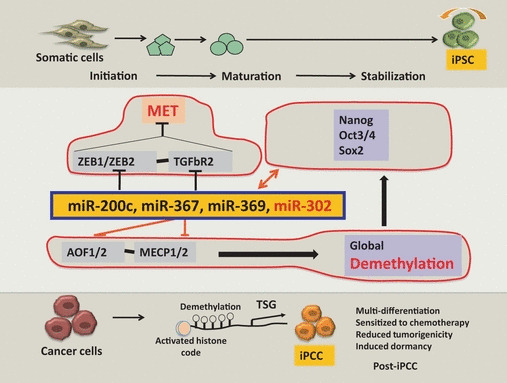
Cell reprogramming reverts cells to multipotent, preprogrammed states by re-establishing epigenetic markers. It can also induce considerable malignant phenotype modification. Because key events in cancer relapse and metastasis, including epithelial-mesenchymal transition phenotypes, are regulated primarily by reversible and transient epigenetic modifications rather than the accumulation of irreversible and stable genetic abnormalities, studying dynamic mechanisms regulating these biological processes is important. Transcription factors for induced pluripotent stem cells and non-coding microRNAs allow pluripotent phenotype induction. We present the current knowledge of the possible applications of cell reprogramming in reducing aggressive phenotype expression, which can induce tumor cell hibernation and maintain appropriate phenotypes, thereby minimizing relapse and metastasis after surgical resection of gastrointestinal cancer.
© 2011 Japanese Cancer Association.
Figures
References
-
- Reik W, Dean W, Walter J. Epigenetic reprogramming in mammalian development. Science 2001; 293: 1089–93. - PubMed
-
- Vogelstein B, Kinzler KW. The multistep nature of cancer. Trends Genet 1993; 9: 138–41. - PubMed
-
- Hanahan D, Weinberg RA. The hallmarks of cancer. Cell 2000; 100: 57–70. - PubMed
-
- Barker N, Ridgway RA, van Es JH et al. Crypt stem cells as the cells‐of‐origin of intestinal cancer. Nature 2009; 457: 608–11. - PubMed
Publication types
MeSH terms
LinkOut - more resources
Full Text Sources
Other Literature Sources
