


Influence of patient payment on antibiotic prescribing in Irish general practice: a cohort study
- PMID: 22152734
- PMCID: PMC3162177
- DOI: 10.3399/bjgp11X593820
Influence of patient payment on antibiotic prescribing in Irish general practice: a cohort study
Abstract
Background: Antibiotics are widely believed to be overused and misused. Approximately 80% of all prescriptions for antibiotics are written by GPs. There are many external factors that influence a GP's decision to prescribe, including patient pressure. Access to primary care services operates on a two-tier system in the Republic of Ireland: General Medical Service (GMS) card holders have free access to GPs and medications; and non-card holders (private patients) must pay a non-subsidised fee to visit their GP.
Aim: To ascertain whether there was a difference in antibiotic prescribing practice between those who pay a fee for their GP consultation and those who attend free of charge.
Design and setting: Cohort study in Irish general practice.
Method: All GPs attending continuing medical education (CME) groups nationwide were invited to participate from October 2008 until April 2010. GPs gathered data on 100 consecutive consultations including diagnosis and patient characteristics.
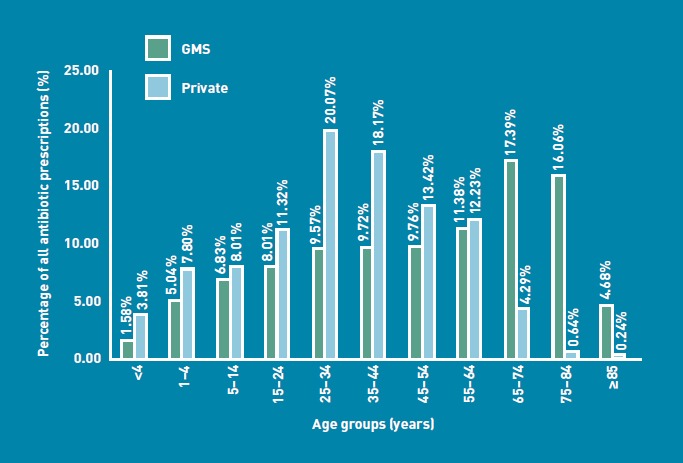
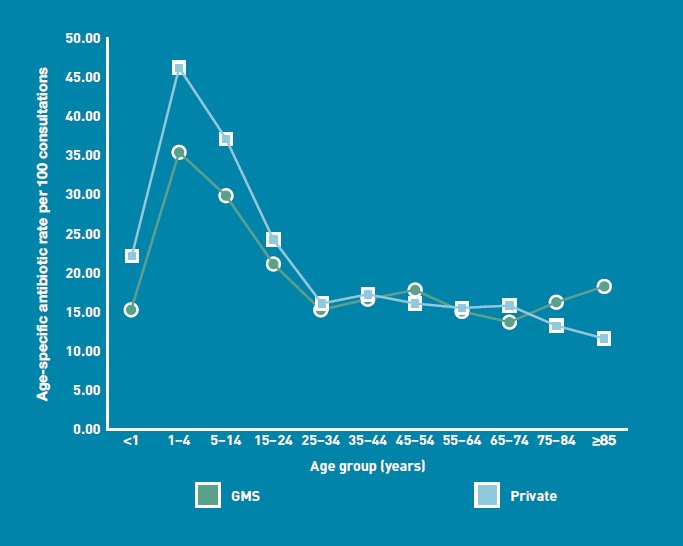
Results: Data were collected from 171 GPs (distributed throughout Ireland), which resulted in 16 899 consultations. Antibiotics were prescribed at 3407 (20.16%) consultations. Nearly half of the prescriptions were for GMS card holders (n = 1669; 48.99%) and 1526 (44.79%) were for private patients; for 212 (6.22%) the payment status of the patient was unknown. Private patients were more likely to receive a prescription for antibiotics (odds ratio 1.23, 95% confidence interval = 1.14 to 1.33).
Conclusion: These results demonstrate that a GP's decision to provide a prescription for antibiotics may be influenced by whether or not the patient pays for their consultation at the GP interface. Private patients are more likely than GMS card holders to receive a prescription for antibiotics.
Figures
Comment in
-
Prescribing safety: the case of inappropriate medicines.Br J Gen Pract. 2011 Sep;61(590):542-3. doi: 10.3399/bjgp11X593730. Br J Gen Pract. 2011. PMID: 22152727 Free PMC article. No abstract available.
-
Doctors' behaviours with antibiotic prescribing.Br J Gen Pract. 2012 Jun;62(599):291. doi: 10.3399/bjgp12X649007. Br J Gen Pract. 2012. PMID: 22687208 Free PMC article. No abstract available.
References
-
- World Health Organisation. Global strategy for containment of antimicrobial resistance. Geneva: WHO; 2001.
-
- Special Eurobarometer338. Antimicrobial Resistance. Belgium: TNS Opinion & Social; 2010.
-
- Cunney R. Strategy for the Control of Antimicrobial Resistance in Ireland (SARI) Dublin: National Disease Surveillance Centre; 2001.
-
- Muller A, Coenen S, Monnet DL. European Surveillance of Antimicrobial Consumption (ESAC): outpatient antibiotic use in Europe, 1998-2005. Euro Surveill. 2007;12(10):E071011.1. - PubMed
-
- Del Mar CB, Glasziou PP, Spinks AB. Antibiotics for sore throat. Cochrane Database Syst Rev. 2006;(4):CD000023. - PubMed
Publication types
MeSH terms
Substances
LinkOut - more resources
Full Text Sources
Medical
Miscellaneous
