


The endocannabinoid system and plant-derived cannabinoids in diabetes and diabetic complications
- PMID: 22155112
- PMCID: PMC3349875
- DOI: 10.1016/j.ajpath.2011.11.003
The endocannabinoid system and plant-derived cannabinoids in diabetes and diabetic complications
Abstract
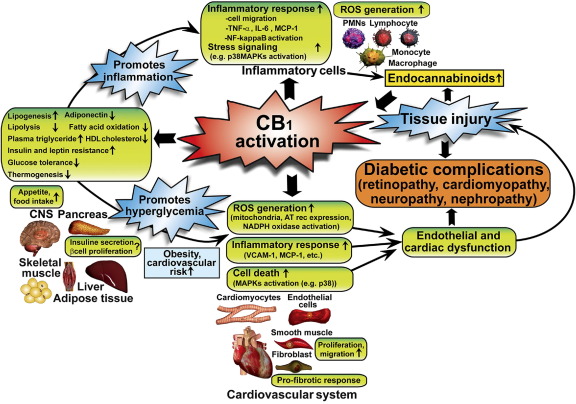
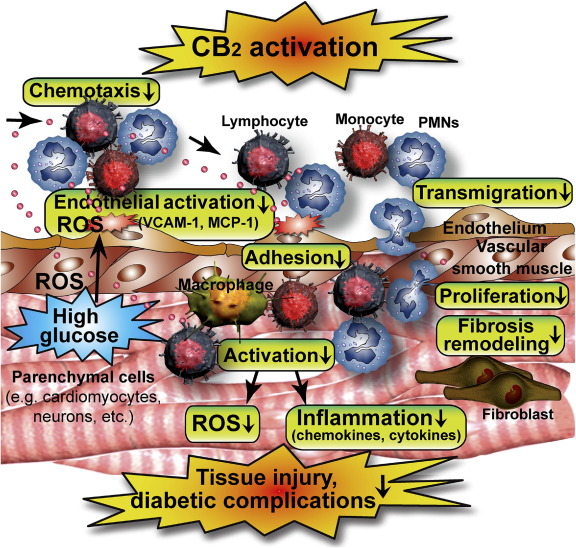
Oxidative stress and inflammation play critical roles in the development of diabetes and its complications. Recent studies provided compelling evidence that the newly discovered lipid signaling system (ie, the endocannabinoid system) may significantly influence reactive oxygen species production, inflammation, and subsequent tissue injury, in addition to its well-known metabolic effects and functions. The modulation of the activity of this system holds tremendous therapeutic potential in a wide range of diseases, ranging from cancer, pain, neurodegenerative, and cardiovascular diseases to obesity and metabolic syndrome, diabetes, and diabetic complications. This review focuses on the role of the endocannabinoid system in primary diabetes and its effects on various diabetic complications, such as diabetic cardiovascular dysfunction, nephropathy, retinopathy, and neuropathy, particularly highlighting the mechanisms beyond the metabolic consequences of the activation of the endocannabinoid system. The therapeutic potential of targeting the endocannabinoid system and certain plant-derived cannabinoids, such as cannabidiol and Δ9-tetrahydrocannabivarin, which are devoid of psychotropic effects and possess potent anti-inflammatory and/or antioxidant properties, in diabetes and diabetic complications is also discussed.
Copyright © 2012 American Society for Investigative Pathology. Published by Elsevier Inc. All rights reserved.
Figures
References
-
- Pertwee R.G., Howlett A.C., Abood M.E., Alexander S.P., Di Marzo V., Elphick M.R., Greasley P.J., Hansen H.S., Kunos G., Mackie K., Mechoulam R., Ross R.A. International Union of Basic and Clinical Pharmacology: LXXIX Cannabinoid receptors and their ligands: beyond CB and CB. Pharmacol Rev. 2010;62:588–631. - PMC - PubMed
-
- Di Marzo V., Bifulco M., De Petrocellis L. The endocannabinoid system and its therapeutic exploitation. Nat Rev Drug Discov. 2004;3:771–784. - PubMed
Publication types
MeSH terms
Substances
Grants and funding
LinkOut - more resources
Full Text Sources
Other Literature Sources
Medical
