


Activation of hexosamine pathway impairs nitric oxide (NO)-dependent arteriolar dilations by increased protein O-GlcNAcylation
- PMID: 22155161
- PMCID: PMC3351206
- DOI: 10.1016/j.vph.2011.11.003
Activation of hexosamine pathway impairs nitric oxide (NO)-dependent arteriolar dilations by increased protein O-GlcNAcylation
Abstract
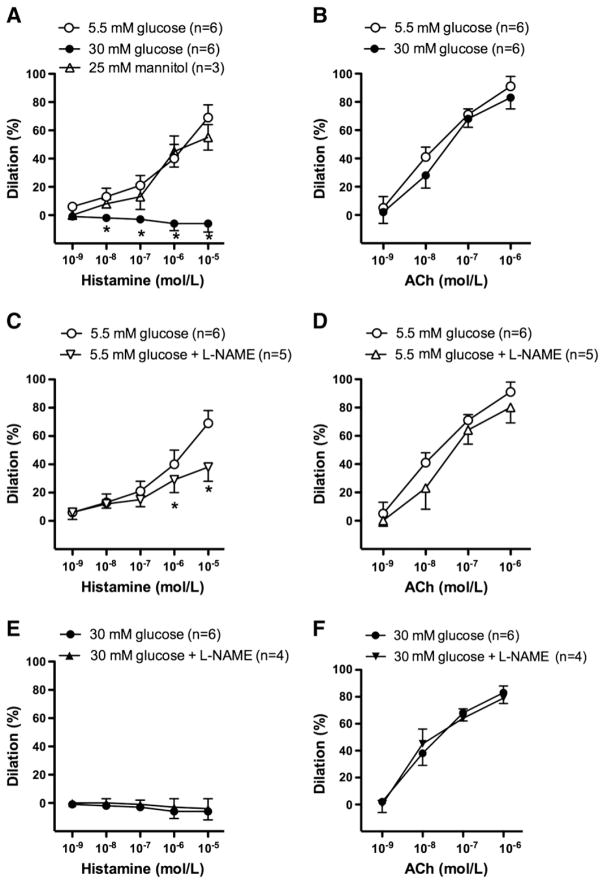
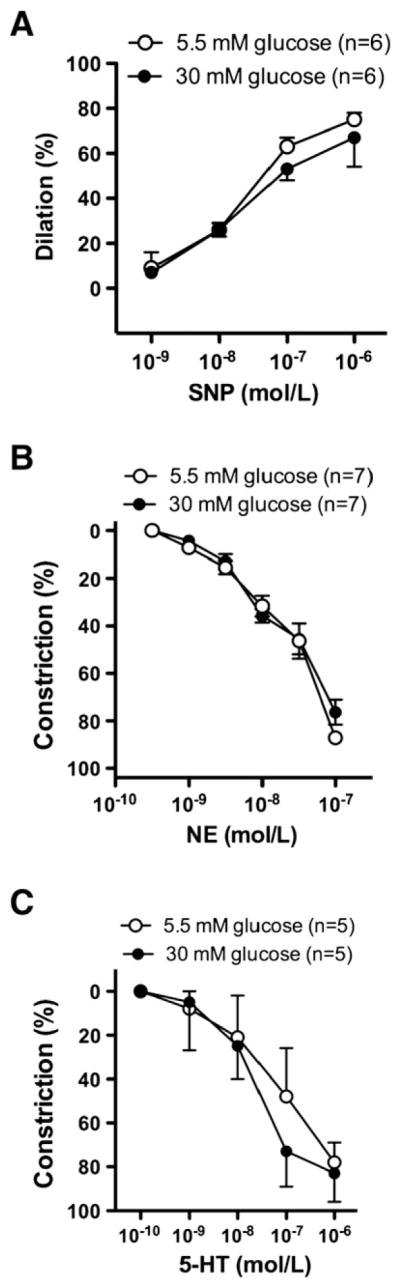
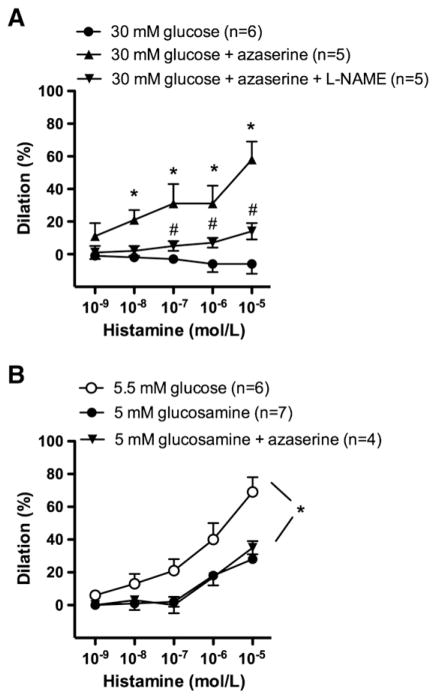
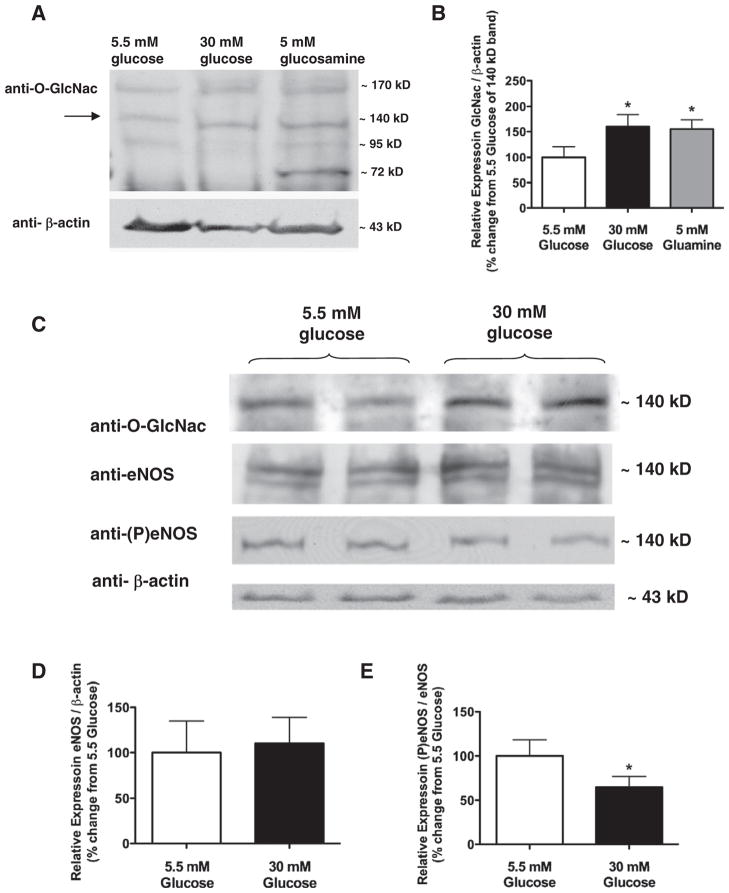
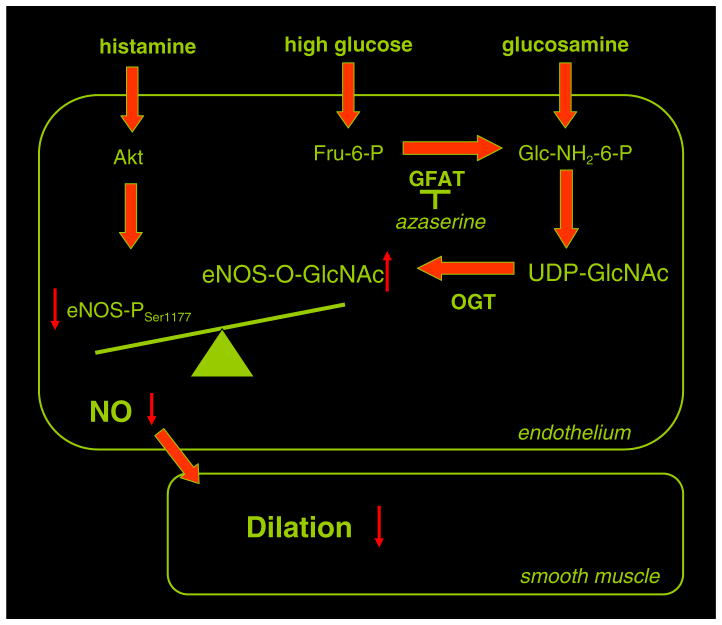
We hypothesized that under high glucose conditions, activation of the hexosamine pathway leads to impaired nitric oxide (NO)-dependent arteriolar dilation. Skeletal muscle arterioles (diameter: ~160μm) isolated from male Wistar rats were exposed to normal glucose (NG, 5.5mmol/L) or high glucose concentrations (HG, 30mmol/L, for 2h) and agonist-induced diameter changes were measured with videomicroscopy. Western blots were performed to identify the vascular levels of protein O-linked-N-acetyl-glucosamine (O-GlcNAc) and phosphorylated endothelial NO synthase (eNOS). In arterioles exposed to HG, dilations to histamine were abolished compared to those exposed to NG (max: -6±6% and 69±9%, respectively), while acetylcholine-induced responses were not affected. Inhibition of NO synthesis with N(G)-nitro-l-arginine methyl ester (L-NAME) reduced histamine-induced dilations in NG arterioles, but it had no effect on microvessels exposed to HG. Dilations to the NO donor, sodium nitroprusside and constrictions to norepinephrine and serotonin were similar in the two groups. In the presence of the inhibitor of hexosamine pathway, azaserine, histamine-induced dilations were significantly augmented in arterioles exposed to HG (max: 67±2%). Moreover, exposure of vessels to glucosamine (5mmol/L, for 2h) resulted in reduced histamine-induced arteriolar dilations (max: 26±3%). The level of protein O-GlcNAcylation was increased, whereas the P-eNOS (Ser-1177) was decreased in HG exposed vessels. These findings indicate that a high concentration of glucose may lead to glucosamine formation, which impairs histamine-induced, NO-mediated arteriolar dilations. We propose that interfering with the hexosamine pathway may prevent microvascular complications in diabetes.
Copyright © 2011 Elsevier Inc. All rights reserved.
Conflict of interest statement
For both authors, no conflict of interest is declared.
Figures
Comment in
-
Hexosamine pathway activation and O-linked-N-acetylglucosamine: novel mediators of endothelial dysfunction in hyperglycemia and diabetes.Vascul Pharmacol. 2012 Mar-Apr;56(3-4):113-4. doi: 10.1016/j.vph.2012.01.005. Epub 2012 Jan 25. Vascul Pharmacol. 2012. PMID: 22289438 No abstract available.
References
-
- Bagi Z, Koller A. Lack of nitric oxide mediation of flow-dependent arteriolar dilation in type I diabetes is restored by sepiapterin. J Vasc Res. 2003;40 (1):47–57. - PubMed
-
- Bagi Z, Ungvari Z, Koller A. Xanthine oxidase-derived reactive oxygen species convert flow-induced arteriolar dilation to constriction in hyperhomocysteinemia: possible role of peroxynitrite. Arterioscler Thromb Vasc Biol. 2002;22 (1):28–33. - PubMed
-
- Bagi Z, Toth E, Koller A, Kaley G. Microvascular dysfunction after transient high glucose is caused by superoxide-dependent reduction in the bioavailability of NO and BH(4) Am J Physiol Heart Circ Physiol. 2004;287 (2):H626–H633. - PubMed
-
- Beleznai T, Feher A, Rutkai I, Edes I, Bagi Z. O-linked-n-acetylglucosamine formation reduces nitric oxide-dependent dilation in arterioles exposed to high glucose concentrations. Circulation. 2008;118:S_552.
Publication types
MeSH terms
Substances
Grants and funding
LinkOut - more resources
Full Text Sources
Medical
