


Cerebrospinal fluid interleukin-10 is a potentially useful biomarker in immunocompetent primary central nervous system lymphoma (PCNSL)
- PMID: 22156547
- PMCID: PMC3280797
- DOI: 10.1093/neuonc/nor203
Cerebrospinal fluid interleukin-10 is a potentially useful biomarker in immunocompetent primary central nervous system lymphoma (PCNSL)
Abstract
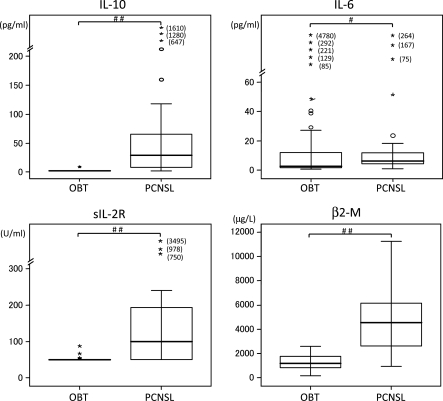
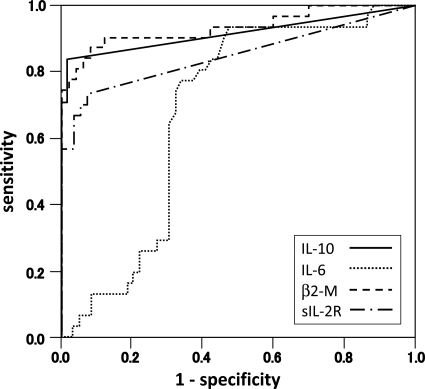
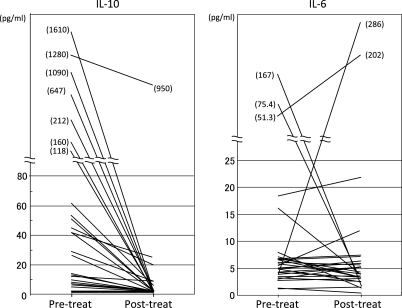
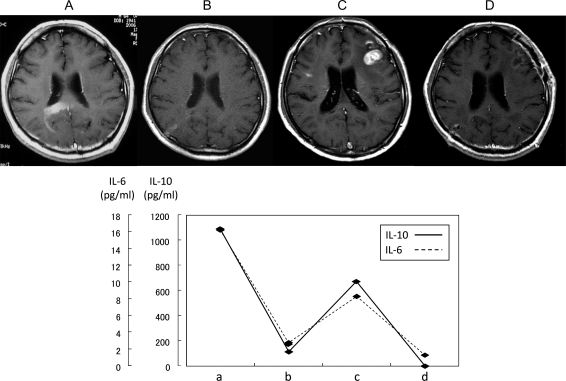
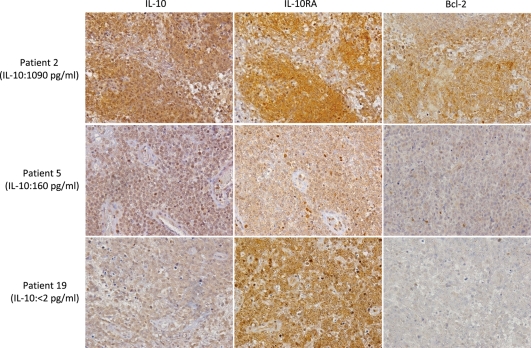
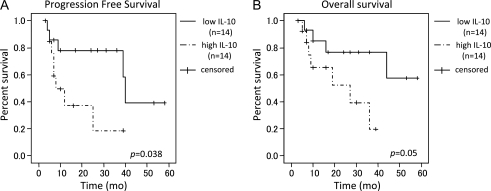
The diagnosis of primary central nervous system lymphoma (PCNSL) by radiographical examination is often difficult because of its similarity to other brain tumors. To test whether interleukin-10 (IL-10) and IL-6 can be used to distinguish PCNSL from other brain tumors that are radiographically similar, cerebrospinal fluid (CSF) levels of IL-10 and IL-6 were measured in 66 patients with intracranial tumors (PCNSLs: 26 cases; other brain tumors: 40 cases). In the patients with PCNSLs, the median CSF levels of IL-10 and IL-6 were 27 pg/mL and 5.4 pg/mL, respectively. The CSF IL-10 and IL-6 levels were significantly higher in PCNSLs than in the other brain tumors. To validate the diagnostic value of CSF IL-10 in PCNSL, we prospectively examined 24 patients with brain lesions that were suspected to be PCNSL. We observed that the CSF IL-10 levels were significantly higher in PCNSLs than in other brain tumors. At an IL-10 cutoff level of 9.5 pg/mL, the sensitivity and specificity were 71.0% and 100%, respectively. After therapy, the CSF IL-10 levels were decreased in all patients and were increased at relapse in most of these patients. Immunohistochemically, all PCNSLs, except for 1 unclassified PCNSL, expressed both IL-10 and IL-10 receptor-A. In the patients with high CSF IL-10, IL-10 expression levels in tumor were relatively higher, compared with low CSF IL-10; however, there was no significant difference between these groups. In addition, elevated CSF level of IL-10 was significantly associated with having a shorter progression-free survival (hazard ratio, 3.37; 95% confidence interval, 0.985-11.528; log-rank, P= .038). These results indicate that the CSF level of IL-10 may be a useful diagnostic and prognostic biomarker in patients with PCNSLs.
Figures
References
-
- Olson JE, Janney CA, Rao RD, et al. The continuing increase in the incidence of primary central nervous system non-Hodgkin lymphoma: a surveillance, epidemiology, and end results analysis. Cancer. 2002;95:1504–1510. doi:10.1002/cncr.10851. - DOI - PubMed
-
- Sierra del Rio M, Rousseau A, Soussain C, et al. Primary CNS lymphoma in immunocompetent patients. Oncologist. 2009;14:526–539. doi:10.1634/theoncologist.2008-0236. - DOI - PubMed
-
- Bataille B, Delwail V, Menet E, et al. Primary intracerebral malignant lymphoma: report of 248 cases. J Neurosurg. 2000;92:261–266. doi:10.3171/jns.2000.92.2.0261. - DOI - PubMed
-
- Bernstein M, Berger M. Neuro-Oncology: The Essentials. New York, NY: Thieme Medical Publishers; 2000.
-
- Antinori A, De Rossi G, Ammassari A, et al. Value of combined approach with thallium-201 single-photon emission computed tomography and Epstein-Barr virus DNA polymerase chain reaction in CSF for the diagnosis of AIDS-related primary CNS lymphoma. J Clin Oncol. 1999;17:554–560. - PubMed
Publication types
MeSH terms
Substances
LinkOut - more resources
Full Text Sources
Other Literature Sources
Medical
