


Curcumin: a novel Stat3 pathway inhibitor for chemoprevention of lung cancer
- PMID: 22156994
- PMCID: PMC3319490
- DOI: 10.1097/CEJ.0b013e32834ef194
Curcumin: a novel Stat3 pathway inhibitor for chemoprevention of lung cancer
Abstract
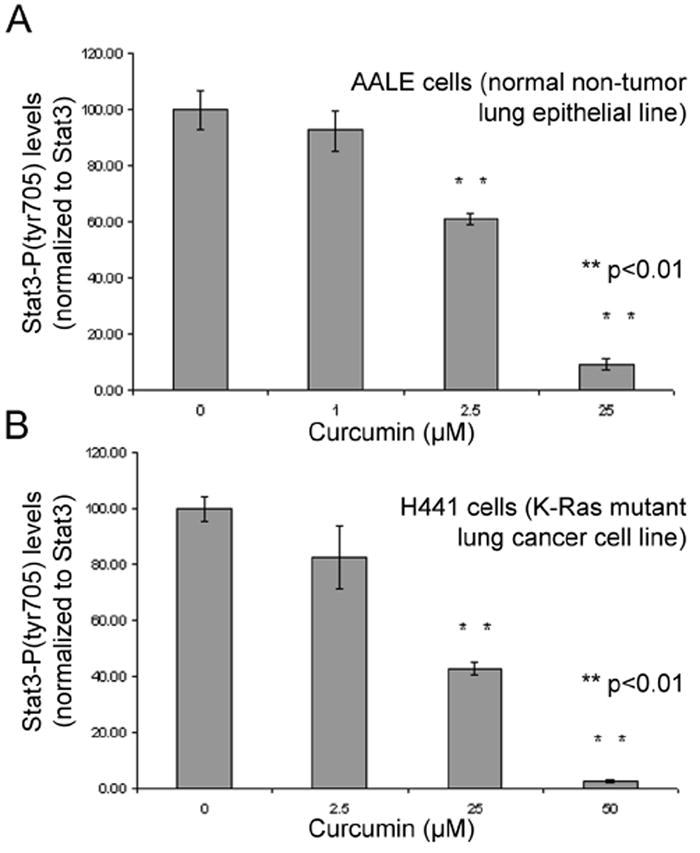
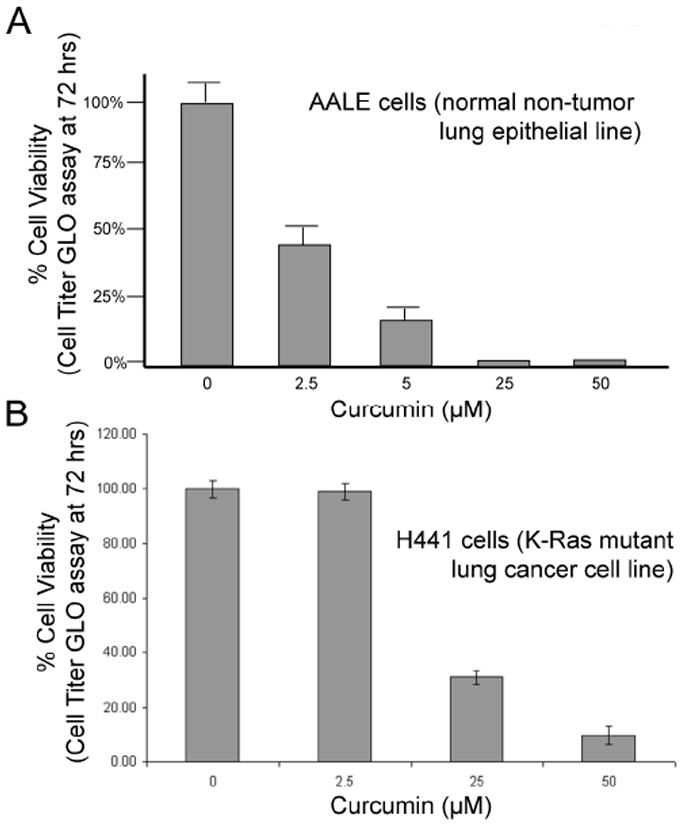
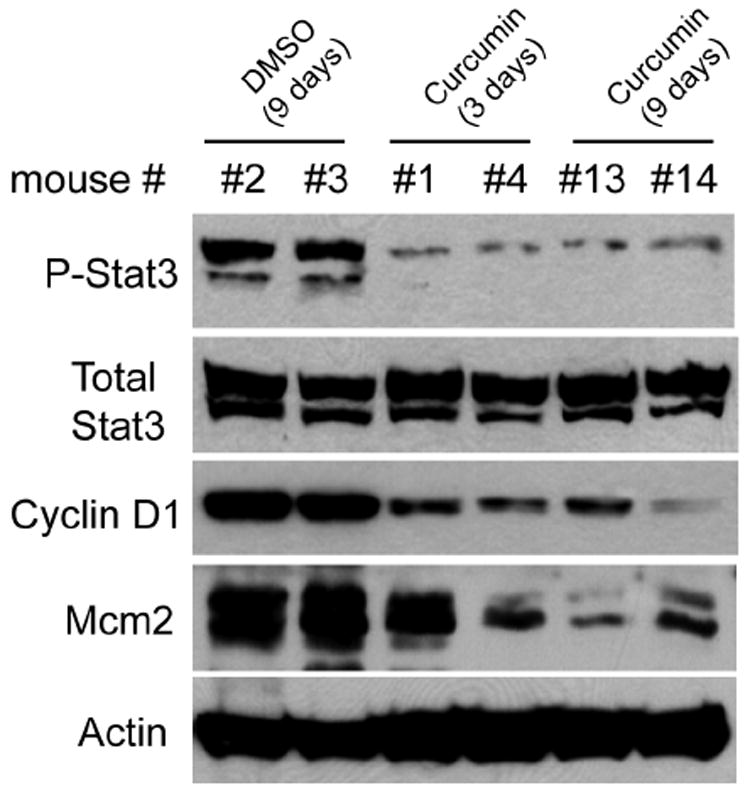
Multiple studies from independent groups find evidence for signal transducer and activator of transcription 3 (Stat3) activation in nearly 50% of lung cancers, suggesting a functional role for this target in subsets of lung cancer. On the basis of the existing evidence, we hypothesized that bioavailable curcuminoid complex may modulate lung carcinogenesis, primarily by inhibiting Stat3 activation. With the safety of this being botanically well established, the objective of these studies was to test our hypothesis in vitro and in vivo in an effort to inform the design of a phase II chemoprevention trial in former smokers. We treated non-tumor-derived, normal (but immortalized) human bronchial epithelial cells (AALE) (Lundberg et al., 2002; Pillai et al., 2011) and lung adenocarcinoma-derived cells (H441) with bioactive curcumin C3 complex. Asynchronous cells in each case were treated with curcumin for 24 h, followed by immunoblotting for Stat3 and activated Stat3-P, prior signal of which was used for normalization. We also completed a preclinical trial in which 12 mice were randomly divided into three groups and subjected to 3 days or 9 days of curcumin intraperitoneal injections, followed by analysis of lung tissues for Stat3-P changes and growth suppressive effects of the curcumin. The growth suppressive effects were measured using Cyclin D1 and the replicative helicase subunit, Mcm2, as surrogates for the proliferative capacity of the tissues. In-vitro studies with curcuminoid complex demonstrated that the activity of Stat3 in both normal bronchoepithelial cells and lung cancer-derived cells is sensitive to curcumin exposure. In a dose-dependent manner, curcumin treatment resulted in significant suppression of Stat3 phosphorylation and reduction in the proliferative capacity of both cell types. In the preclinical trial with rodent models, curcumin reduced Stat3-P and the proliferative markers CycD1 and Mcm2 in mice lung tissues in vivo. These culture and preclinical studies indicate that the activity of the Stat3 pathway can be suppressed by curcumin treatment, concomitant with a reduction in cell proliferation, supporting our hypothesis that inhibition of the Stat3 pathway represents at least one important mechanism by which curcumin elicits its effects on the bronchoepithelium. These data provide a rationale for the use of curcumin as a promising chemopreventive agent in high-risk populations such as former smokers.
Figures
References
-
- Jemal A, Siegel R, Ward E, Murray T, Xu J, Thun MJ. Cancer statistics, 2007. CA Cancer J Clin. 2007;57:43–66. - PubMed
-
- Garfinkel L, Silverberg E. Lung cancer and smoking trends in the United States over the past 25 years. CA Cancer J Clin. 1991;41:137–45. - PubMed
-
- Irvin JE, Brandon TH. The increasing recalcitrance of smokers in clinical trials. Nicotine Tob Res. 2000;2:79–84. - PubMed
-
- Tong L, Spitz MR, Fueger JJ, Amos CA. Lung carcinoma in former smokers. Cancer. 1996;78:1004–1010. - PubMed
Publication types
MeSH terms
Substances
Grants and funding
LinkOut - more resources
Full Text Sources
Other Literature Sources
Medical
Research Materials
Miscellaneous
