


Stroke-related changes in neuromuscular fatigue of the hip flexors and functional implications
- PMID: 22157434
- PMCID: PMC3940208
- DOI: 10.1097/PHM.0b013e31823caac0
Stroke-related changes in neuromuscular fatigue of the hip flexors and functional implications
Abstract
Objective: The aim of this study was to compare stroke-related changes in hip flexor neuromuscular fatigue of the paretic leg during a sustained isometric submaximal contraction with those of the nonparetic leg and controls and to correlate fatigue with clinical measures of function.
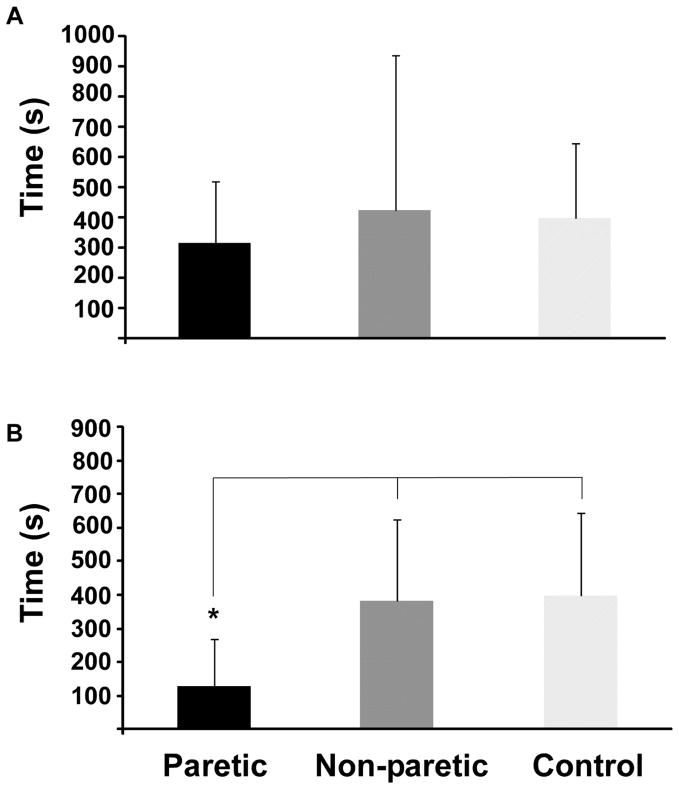
Design: Hip torques were measured during a fatiguing hip flexion contraction at 20% of the hip flexion maximal voluntary contraction in the paretic and nonparetic legs of 13 people with chronic stroke and 10 age-matched controls. In addition, the participants with stroke performed a fatiguing contraction of the paretic leg at the absolute torque equivalent to 20% maximal voluntary contraction of the nonparetic leg and were tested for self-selected walking speed (10-m Walk Test) and balance (Berg).
Results: When matching the nonparetic target torque, the paretic hip flexors had a shorter time to task failure compared with the nonparetic leg and controls (P < 0.05). The time to failure of the paretic leg was inversely correlated with the reduction of hip flexion maximal voluntary contraction torque. Self-selected walking speed was correlated with declines in torque and steadiness. Berg-Balance scores were inversely correlated with the force fluctuation amplitude.
Conclusions: Fatigue and precision of contraction are correlated with walking function and balance after stroke.
Figures



References
-
- Perry J. Gait analysis. Thorofare: SLACK; 1992.
-
- Nadeau S, Arsenault AB, Gravel D, Bourbonnais D. Analysis of the clinical factors determining natural and maximal gait speeds in adults with a stroke. Am J Phys Med Rehabil. 1999;78:123–130. - PubMed
-
- De Quervain IA, Simon SR, Leurgans S, Pease WS, McAllister D. Gait pattern in the early recovery period after stroke. J Bone Joint Surg Am. 1996;78:1506–1514. - PubMed
-
- Hsu AL, Tang PF, Jan MH. Analysis of impairments influencing gait velocity and asymmetry of hemiplegic patients after mild to moderate stroke. Arch Phys Med Rehabil. 2003;84:1185–1193. - PubMed
Publication types
MeSH terms
Grants and funding
LinkOut - more resources
Full Text Sources
Medical
