


Impact of the 2009 influenza pandemic on pneumococcal pneumonia hospitalizations in the United States
- PMID: 22158564
- PMCID: PMC3276240
- DOI: 10.1093/infdis/jir749
Impact of the 2009 influenza pandemic on pneumococcal pneumonia hospitalizations in the United States
Abstract
Background: Infection with influenza virus increases the risk for developing pneumococcal disease. The A/H1N1 influenza pandemic in autumn 2009 provided a unique opportunity to evaluate this relationship.
Methods: Using weekly age-, state-, and cause-specific hospitalizations from the US State Inpatient Databases of the Healthcare Cost and Utilization Project 2003-2009, we quantified the increase in pneumococcal pneumonia hospitalization rates above a seasonal baseline during the pandemic period.
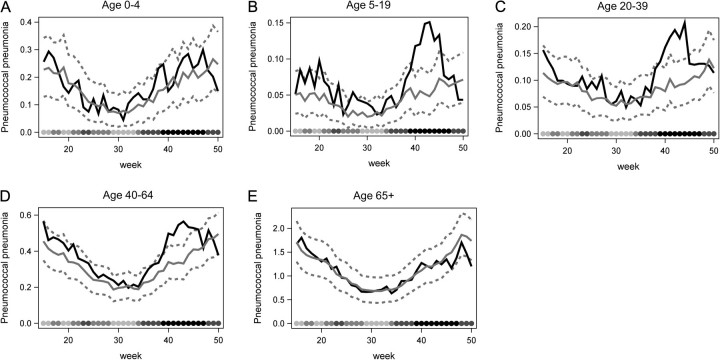
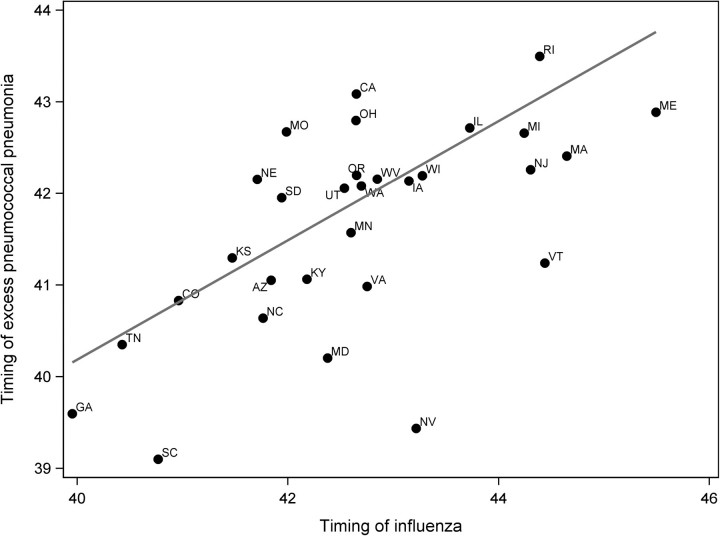
Results: We found a significant increase in pneumococcal hospitalizations from late August to mid-December 2009, which corresponded to the timing of highest pandemic influenza activity. Individuals aged 5-19 years, who have a low baseline level of pneumococcal disease, experienced the largest relative increase in pneumococcal hospitalizations (ratio, 1.6 [95% confidence interval {CI}, 1.4-1.7]), whereas the largest absolute increase was observed among individuals aged 40-64 years. In contrast, there was no excess disease in the elderly. Geographical variation in the timing of excess pneumococcal hospitalizations matched geographical patterns for the fall pandemic influenza wave.
Conclusions: The 2009 influenza pandemic had a significant impact on the rate of pneumococcal pneumonia hospitalizations, with the magnitude of this effect varying between age groups and states, mirroring observed variations in influenza activity.
Figures
References
-
- Hodges R, MacLeod C. Epidemic pneumococcal pneumonia. Am J Epidemiol. 1946;44:231–6. - PubMed
-
- O'Brien KL, Walters MI, Sellman J, et al. Severe pneumococcal pneumonia in previously healthy children: the role of preceding influenza infection. Clin Infect Dis. 2000;30:784–9. - PubMed
-
- Techasaensiri B, Techasaensiri C, Mejías A, McCracken GH, Ramilo O. Viral coinfections in children with invasive pneumococcal disease. Pediatr Infect Dis J. 2010;29:519–23. - PubMed
-
- Kim PE, Musher DM, Glezen WP, Barradas MC, Nahm WK, Wright CE. Association of invasive pneumococcal disease with season, atmospheric conditions, air pollution, and the isolation of respiratory viruses. Clin Infect Dis. 1996;22:100–6. - PubMed
Publication types
MeSH terms
LinkOut - more resources
Full Text Sources
Medical
