


Modulation of acid-sensing ion channels: molecular mechanisms and therapeutic potential
- PMID: 22162785
- PMCID: PMC3230262
Modulation of acid-sensing ion channels: molecular mechanisms and therapeutic potential
Abstract
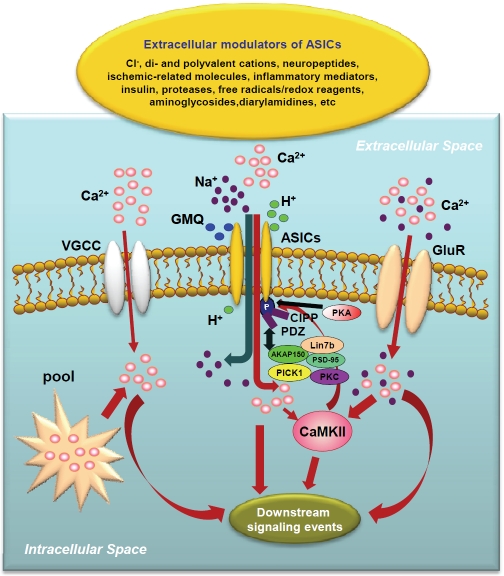
Increases in extracellular proton concentrations, which takes place in physiological conditions such as synaptic signaling and pathological conditions such as tissue inflammation, ischemic stroke, traumatic brain injury, and epileptic seizure, activates a unique family of membrane ion channels; the acid-sensing ion channels (ASICs). All ASICs belong to amiloride-sensitive degenerin/epithelial Na(+) channel superfamily. Four genes encoded at seven sub-units have been identified. ASICs are expressed primarily in neurons and have been shown to play critical roles in synaptic plasticity, learning/memory, fear conditioning, sensory transduction, pain perception, ischemic brain injury, seizure, and other neurological as well as psychological disorders. Although protons are the primary activator for ASICs, the properties and/or level of expression of these channels are modulated dramatically by neuropeptides, di-and polyvalent cations, inflammatory mediators, associated proteins, and protein phosphorylations, etc. Modulation of ASICs can result in profound changes in the activities and functions of these channels in both physiological and pathological processes. In this article, we provide an up to date review on the modulations of ASICs by exogenous agents and endogenous signaling molecules. A better understanding of how ASICs can be modulated should help define new strategies to counteract the deleterious effects of dysregulated ASIC activity.
Keywords: Acid-sensing ion channel; acidosis; modulation; neuron.
Figures
References
-
- Chesler M. The regulation and modulation of pH in the nervous system. Prog Neurobiol. 1990;34(5):401–427. - PubMed
-
- Back T, Hoehn M, Mies G, Busch E, Schmitz B, Kohno K, Hossmann KA. Penumbral tissue alkalosis in focal cerebral ischemia: relationship to energy metabolism, blood flow, and steady potential. Ann Neurol. 2000;47(4):485–492. - PubMed
-
- CROWELL JW, KAUFMANN BN. Changes in tissue pH after circulatory arrest. Am J Physiol. 1961;200:743–745. - PubMed
-
- Ljunggren B, Norberg K, Siesjo BK. Influence of tissue acidosis upon restitution of brain energy metabolism following total ischemia. Brain Res. 1974;77(2):173–186. - PubMed
Grants and funding
LinkOut - more resources
Full Text Sources