


Comparing Measures of Late HIV Diagnosis in Washington State
- PMID: 22162804
- PMCID: PMC3226360
- DOI: 10.1155/2012/182672
Comparing Measures of Late HIV Diagnosis in Washington State
Abstract
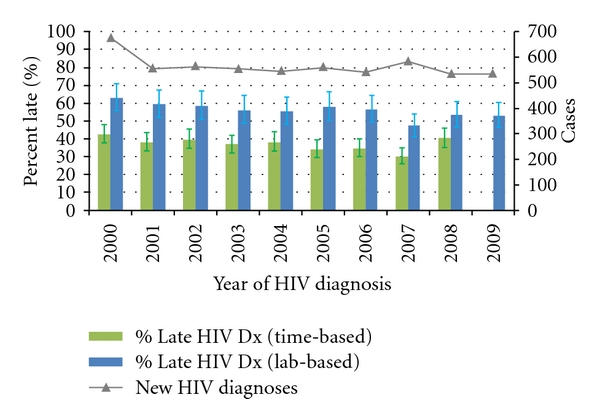
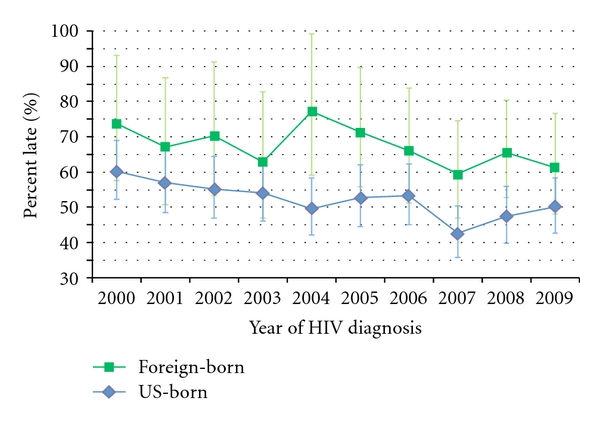
As more US HIV surveillance programs routinely use late HIV diagnosis to monitor and characterize HIV testing patterns, there is an increasing need to standardize how late HIV diagnosis is measured. In this study, we compared two measures of late HIV diagnosis, one based on time between HIV and AIDS, the other based on initial CD4(+) results. Using data from Washington's HIV/AIDS Reporting System, we used multivariate logistic regression to identify predictors of late HIV diagnosis. We also conducted tests for trend to determine whether the proportion of cases diagnosed late has changed over time. Both measures lead us to similar conclusions about late HIV diagnosis, suggesting that being male, older, foreign-born, or heterosexual increase the likelihood of late HIV diagnosis. Our findings reaffirm the validity of a time-based definition of late HIV diagnosis, while at the same time demonstrating the potential value of a lab-based measure.
Figures
References
-
- U.S. CDC. HIV prevalence estimates-United States, 2006. Morbidity and Mortality Weekly Report. 2008;57(39):1073–1076. - PubMed
-
- U.S. CDC. Revised recommendations for HIV testing of adults, adolescents, and pregnant women in health-care settings. Morbidity and Mortality Weekly Report. 2006;55:1–17. - PubMed
-
- Jenkins TC, Gardner EM, Thrun MW, Cohn DL, Burman WJ. Risk-based human immunodeficiency virus (HIV) testing fails to detect the majority of HIV-infected persons in medical care settings. Sexually Transmitted Diseases. 2006;33(5):329–333. - PubMed
-
- White House Office of National AIDS Policy. National HIV/AIDS Strategy for the United States. The White House; 2010.
LinkOut - more resources
Full Text Sources
Research Materials
Miscellaneous
