


Comparison of diagnostic accuracy of endoscopic ultrasound-guided fine-needle aspiration with 22- and 25-gauge needles in the same patients
- PMID: 22163079
- PMCID: PMC3234693
- DOI: 10.4161/jig.1.3.18508
Comparison of diagnostic accuracy of endoscopic ultrasound-guided fine-needle aspiration with 22- and 25-gauge needles in the same patients
Abstract
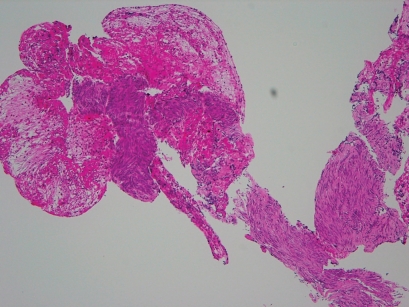
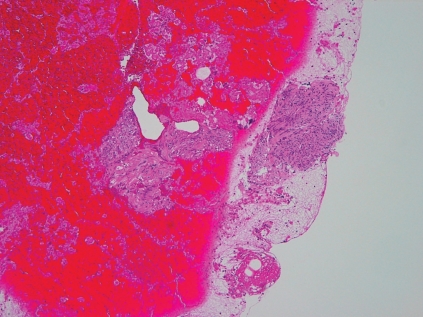
BACKGROUND: Various factors, such as the optimal number of passes, aspiration pressure, and the use of 19-gauge and Trucut biopsy needles, have been studied to improve the diagnostic accuracy of endoscopic ultrasound-guided fine-needle aspiration (EUS-FNA). We retrospectively compared the diagnostic accuracy of EUS-FNA between 25- and 22-gauge needles, which have been widely used recently. SUBJECTS AND METHODS: The study group comprised 47 consecutive patients who underwent EUS-FNA with both 22- and 25-gauge needles from October 2007 through March 2010. Their underlying diseases were pancreatic cancer in 24 patients, submucosal tumors in 11, other pancreatic tumors in 4, chronic pancreatitis in 4, enlarged lymph nodes in 3, and gall bladder cancer in 1. Tissue specimens, which were pushed out of the puncture needle, were placed into physiological saline solution. Gray-whitish, worm-like specimens were used for histologic diagnosis. The remaining specimen was centrifuged, and the sediment was plated on slides and examined by a cytopathologist to obtain the cytologic diagnosis. RESULTS: A total of 75 punctures (mean, 1.6) were performed with 25-gauge needles, and 69 punctures (mean, 1.4) were performed with 22-gauge needles. The overall tissue-sampling rate for cytology was 100% (47/47), which was significantly (p=0.01) superior to 83% (39/47) for histology. The overall diagnostic accuracy on the cytologic and histologic examinations was 79% (37/47) and 85% (33/39) (p=0.48). According to needle type, the tissue-sampling rate for cytology and histology on each puncture was 97% (73/75) and 56% (42/75) with 25-guage needles, and was 97% (67/69) and 58% (40/69) with 22-guage needles, the accuracy of cytologic diagnosis on each puncture was 73% (53/73) with 25-gauge needles and 66% (44/67) with 22-gauge needles (p=0.37); the accuracy of histologic diagnosis on each puncture was 60% (25/42) and 75% (30/40) (p=0.14), respectively. No patient had complications. CONCLUSIONS: The tissue-sampling rate and diagnostic accuracy did not differ significantly between 22- and 25-gauge needles in patients with pancreatic or gastrointestinal diseases who underwent EUS-FNA.
Figures
References
-
- Vilmann P, Jacobsen GK, Henriksen FW, Hancke S. Endoscopic ultrasonography with guided fine needle aspiration biopsy in pancreatic disease. Gastrointest Endosc. 1992;38:172–173. - PubMed
-
- O'Toole D, Palazzo L, Arotçarena R, Dancour A, Aubert A, Hammel P, et al. Assessment of complications of EUS-guided fine-needle aspiration. Gastrointest Endosc. 2001;53:470–474. - PubMed
-
- Kida M. Pancreatic masses. Gastrointest Endosc. 2009;69:S102–S109. - PubMed
-
- Wiersema MJ, Jondal ML, Schwartz DA, Clain JE, Levy MJ, Vazquez-Sequeiros E, et al. Prospective comparison of a 19- versus 22-gauge needle for performing EUS-FNA of pancreas mass lesions: assessment of accuracy and factors influencing safety. Gastrointest Endosc. 2002;55:AB240.
-
- Varadarajulu S, Fraig M, Schmulewitz N, Roberts S, Wildi S, Hawes RH, et al. Comparison of EUS-guided 19-gauge Trucut needle biopsy with EUS-guided fine-needle aspiration. Endoscopy. 2004;36:397–401. - PubMed
LinkOut - more resources
Full Text Sources