


Fluorescent sensing of chlorophenols in water using an azo dye modified β-cyclodextrin polymer
- PMID: 22163864
- PMCID: PMC3231385
- DOI: 10.3390/s110504598
Fluorescent sensing of chlorophenols in water using an azo dye modified β-cyclodextrin polymer
Abstract
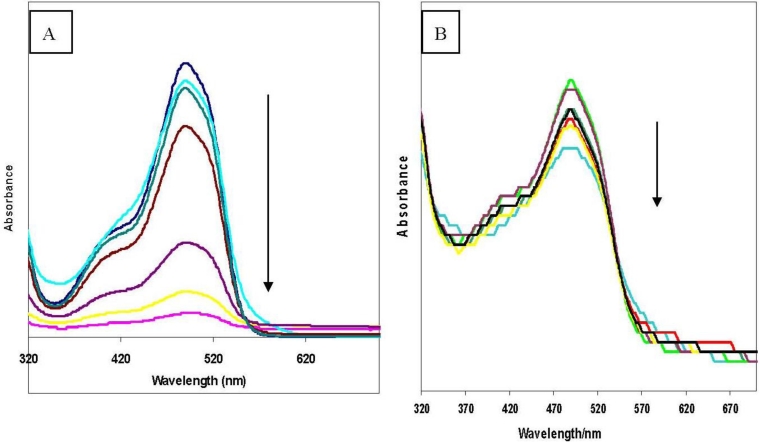
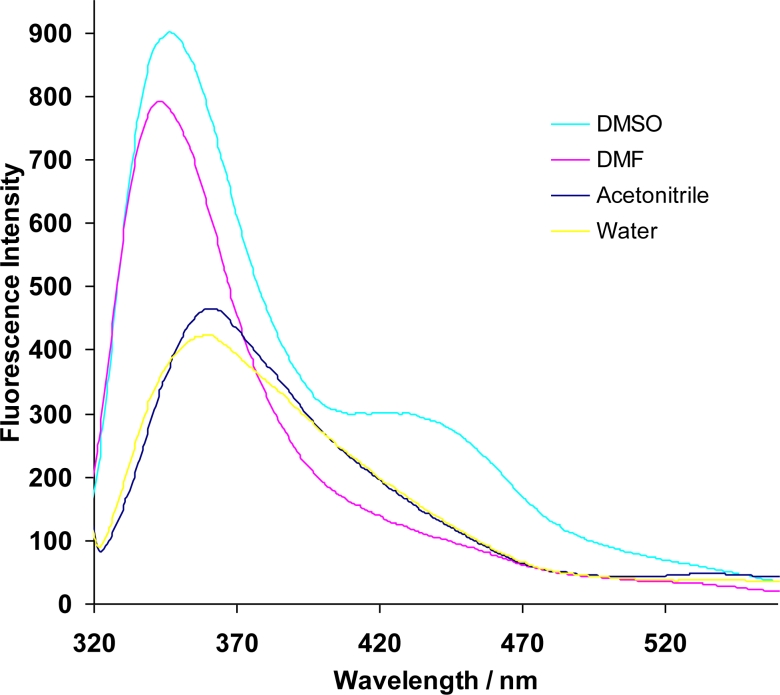
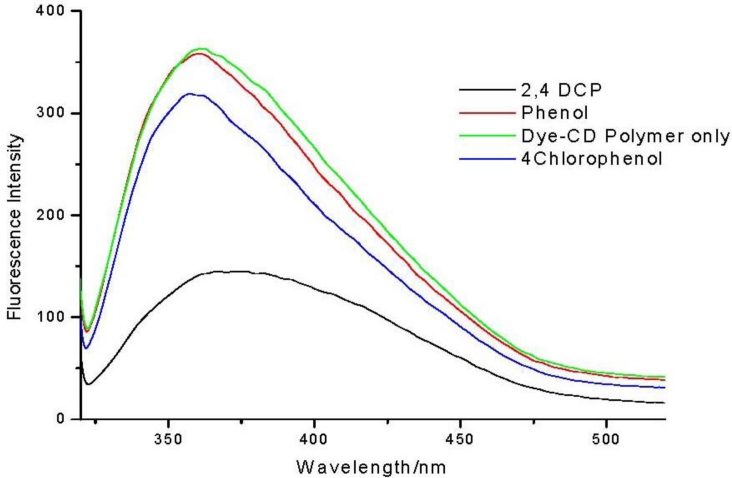
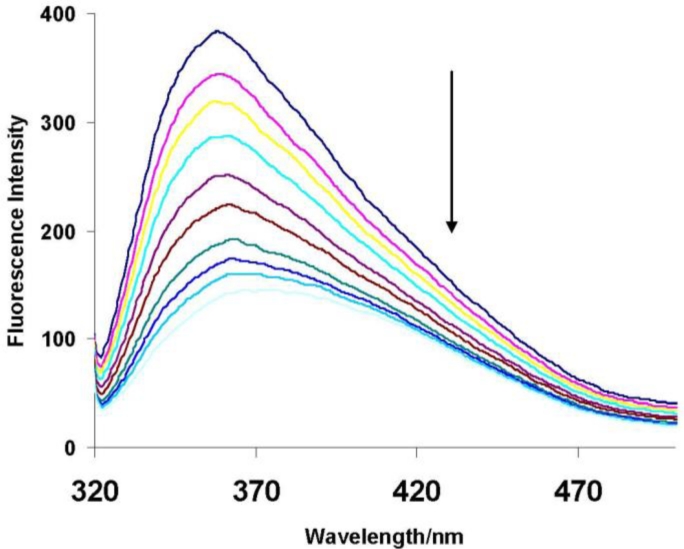
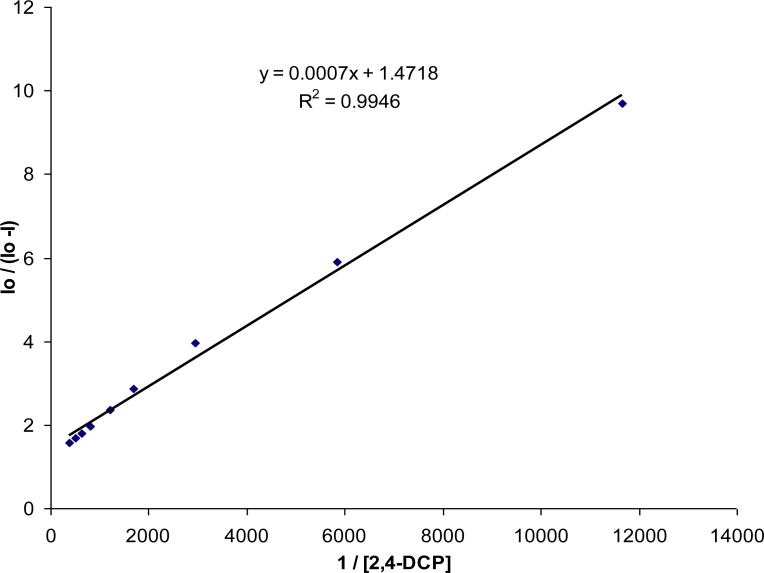
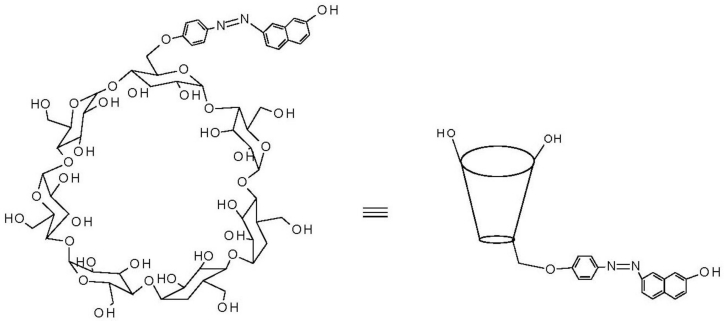
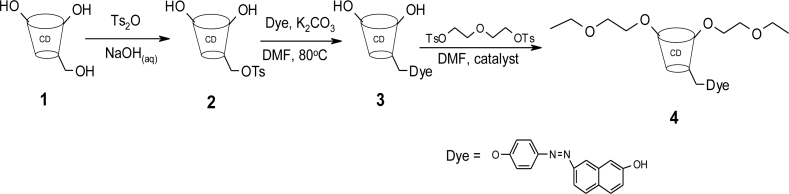
A water soluble azo dye modified β-cyclodextrin polymer 4 was synthesized and used as a chemosensor for the detection of chlorinated phenols, model chlorinated by-products (CBPs) of water treatment for drinking purposes. The characterization of the intermediates and the azo dye modified β-CD polymer was done by UV/Vis Spectrophotometry, FT-IR and (1)H-NMR spectroscopies. The chlorophenols were capable of quenching the fluorescence of the polymer. The polymer showed greater sensitivity towards 2,4-dichlorophenol, with a sensitivity factor of 0.35 compared to 0.05 and 0.12 for phenol and 4-chlorophenol, respectively. The stability constants (K(s)) of the pollutants were also determined by the Benesi-Hildebrand method to be 2.104 × 10(3) M(-1) for 2,4-dichlorophenol and 1.120 × 10(2) M(-1) for 4-chlorophenol.
Keywords: azo dye; chemosensor; chlorinated by-product; fluorescence; β-cyclodextrin polymer.
Figures
References
-
- Thomas SW, Joly GD, Swager TM. Chemical sensors based on amplifying fluorescent conjugated polymers. Chem. Rev. 2007;107:1339–1386. - PubMed
-
- Basabe-Desmonts L, Reinhoudt DN, Crego-Calama M. Design of fluorescent materials for chemical sensing. Chem. Soc. Rev. 2007;36:993–1017. - PubMed
-
- Steed JW, Atwood JL. Supramolecular Chemistry. John Wiley & Sons, Inc; Hoboken, NJ, USA: 2000. pp. 2–5.
-
- Wang J, Ueno A. Naphthol-modified β-cyclodextrins as fluorescent sensors for detecting contaminants in drinking water. Macromol. Rapid Commun. 2000;21:887–890.
Publication types
MeSH terms
Substances
LinkOut - more resources
Full Text Sources
