


Measuring oscillating walking paths with a LIDAR
- PMID: 22163891
- PMCID: PMC3231393
- DOI: 10.3390/s110505071
Measuring oscillating walking paths with a LIDAR
Abstract
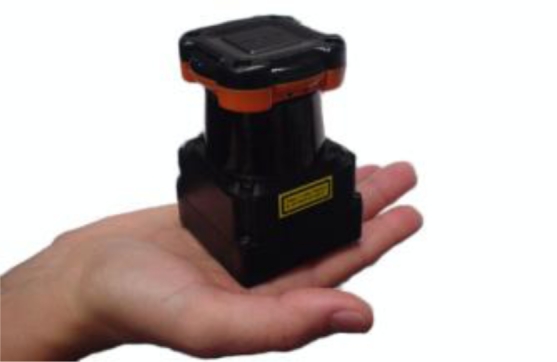
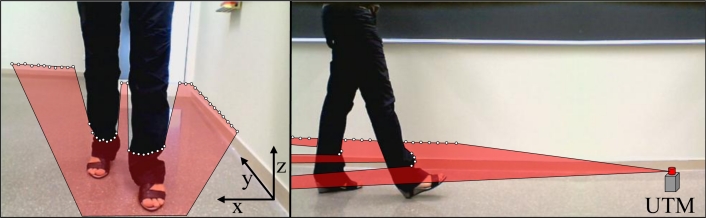
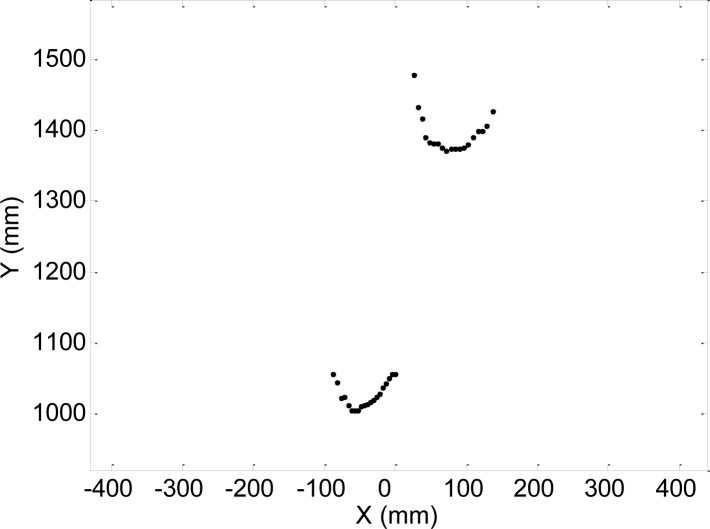
This work describes the analysis of different walking paths registered using a Light Detection And Ranging (LIDAR) laser range sensor in order to measure oscillating trajectories during unsupervised walking. The estimate of the gait and trajectory parameters were obtained with a terrestrial LIDAR placed 100 mm above the ground with the scanning plane parallel to the floor to measure the trajectory of the legs without attaching any markers or modifying the floor. Three different large walking experiments were performed to test the proposed measurement system with straight and oscillating trajectories. The main advantages of the proposed system are the possibility to measure several steps and obtain average gait parameters and the minimum infrastructure required. This measurement system enables the development of new ambulatory applications based on the analysis of the gait and the trajectory during a walk.
Keywords: LIDAR; alcohol intake; gait measurement; gait trajectory; laser range sensor; oscillatory path.
Figures
References
-
- Brooks P. Body Work. Harvard University Press; Cambridge, MA, USA: 1993.
-
- Guyton A. Function of the Human Body. 4th ed. Saunders; Philadelphia, PA, USA: 1974.
-
- Martorell R. Body size, adaptation and function. Hum. Organ. 1989;48:15–20.
-
- Cutting J, Kozlowski L. Recognising friends by their walk: Gait perception without familiarity cues. Bull. Psychonomic Soc. 1977;9:353–356.
-
- Little J, Boyd J. Recognizing people by their gait: The shape of motion. Videre. 1998;1:2–32.
MeSH terms
LinkOut - more resources
Full Text Sources
Other Literature Sources
