. 2011;6(12):e28378.
doi: 10.1371/journal.pone.0028378. Epub 2011 Dec 2.

Glutathione and adaptive immune responses against Mycobacterium tuberculosis infection in healthy and HIV infected individuals

Affiliations

Glutathione and adaptive immune responses against Mycobacterium tuberculosis infection in healthy and HIV infected individuals

Carlos Guerra et al. PLoS One. 2011.

Abstract

Glutathione (GSH), a tripeptide antioxidant, is essential for cellular homeostasis and plays a vital role in diverse cellular functions. Individuals who are infected with Human immuno deficiency virus (HIV) are known to be susceptible to Mycobacterium tuberculosis (M. tb) infection. We report that by enhancing GSH levels, T-cells are able to inhibit the growth of M. tb inside macrophages. In addition, those GSH-replenished T cell cultures produced increased levels of Interleukin-2 (IL-2), Interleukin-12 (IL-12), and Interferon-gamma (IFN-γ), cytokines, which are known to be crucial for the control of intracellular pathogens. Our study reveals that T lymphocytes that are derived from HIV infected individuals are deficient in GSH, and that this deficiency correlates with decreased levels of Th1 cytokines and enhanced growth of M. tb inside human macrophages.


Conflict of interest statement

Competing Interests: Although, one of the co-authors of this manuscript is a Managing Partner for Your Energy Systems (a small biotech company), this does not alter the authors' adherence to all the PLoS ONE policies on sharing data and materials.

Figures

Figure 1
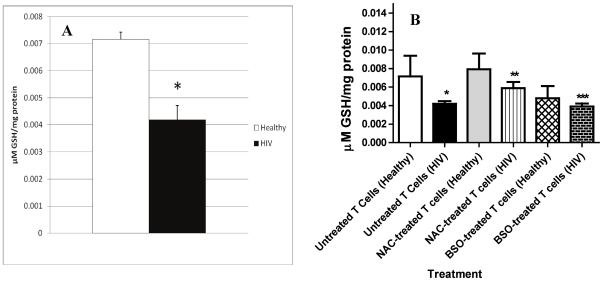
Figure 1. Assay of GSH levels in T cells isolated from healthy and HIV positive individuals.
Intracellular levels of GSH in freshly isolated T cells from healthy volunteers and HIV-infected individuals was determined by spectrophotometry, using an assay kit from Calbiochem (Figure 1a). T cells (2×10⁵/well) purified from PBMCs using nylon wool columns were pelleted by centrifugation and an equal volume of ice cold 5% MPA was added to the pellet. Supernatants were collected after centrifugation and analyzed for total GSH using an assay kit from Calbiochem, as per manufacturer’s instructions. Total GSH in the samples were normalized with protein. Proteins in the samples were estimated by Bradford’s method using Bio-Rad reagent. We also tested the effects of NAC and BSO in increasing and decreasing the intracellular levels of GSH, respectively in T cells isolated from both healthy subjects and individuals with HIV infection (Figure 1b). T cells (2×10⁵/well) isolated from healthy and HIV positive subjects were treated as follows: mock treatment, treatment with NAC (10 mM) and treatment with BSO (500 µM). Following overnight incubation, T cells were pelleted and used for GSH measurement as per manufacturer’s instructions. Results shown in Figure 1b are averages from experiments performed using T cells isolated from three healthy individuals and eight individuals with HIV infection. * represent significant difference in the levels of GSH between untreated T cells derived from healthy subjects versus untreated T cells derived from individuals with HIV infection. **denotes significant difference in the levels of GSH between untreated T cells versus NAC-treated T cells from HIV positive subjects. *** denotes statistically significant difference in the levels of GSH between NAC-treated T cells and BSO-treated T cells from individuals with HIV infection.
Figure 2
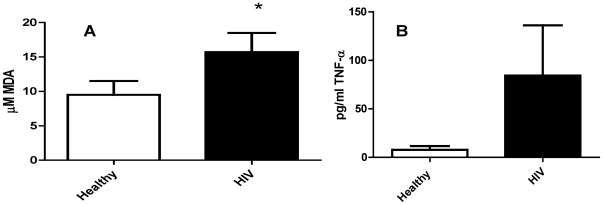
Figure 2. Assay of free radicals and TNF-α in plasma samples from healthy and HIV positive individuals.
Plasma samples separated from blood of healthy volunteers and HIV-infected individuals were used for measurement of free radicals (Figure 2a) and TNF-α (Figure 2b). Free radical levels in plasma samples derived from healthy subjects and individuals with HIV infection was determined by measuring the levels of MDA using a colorimetric assay kit from Cayman. Levels of TNF-α in the plasma samples were determined by ELISA using assay kits procured from eBioscience. Results in Figure 2 are averages of data collected from thirteen healthy subjects and thirteen individuals with HIV infection.
Figure 3
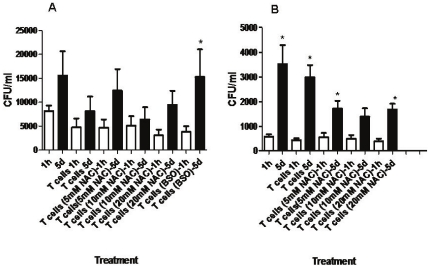
Figure 3. Intracellular survival of H37Rv inside T cell-monocyte co-cultures.
We determined the intracellular survival of H37Rv inside T cell-monocyte co-cultures from healthy subjects (Figure 3a) and individuals with HIV infection (Figure 3b). Human monocytes were infected with the processed virulent laboratory strain of M. tb, H37Rv at a multiplicity of infection of 10∶1. T cells were purified using nylon wool column. T cells were treated as follows: a) no additives b) NAC (5 mM) c) NAC (10 mM) d) NAC (20 mM) and e) BSO (500 µM) for 24 h. T cells were washed, resuspended in fresh media and then added to the infected monocytes. Infected monocytes-T cell co-cultures were terminated at 1 hour and 5 days post-infection to determine the intracellular survival of H37Rv inside human monocytes. Monocyte lysates were plated on 7H11 medium enriched with ADC to estimate the growth or killing of H37Rv. Results shown in Figure 3a are averages from five different experiments performed in triplicate. Results shown in Figure 3b are averages from seven different experiments performed in triplicate.
Figure 4
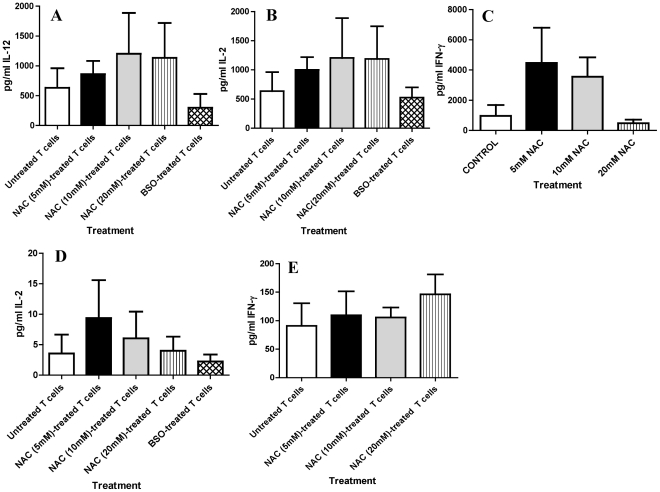
Figure 4. Assay of IL-12, IL-2 and IFN-γin supernatants derived from co-cultures of T cells-M. tb-infected monocytes.
Levels of IL-12, IL-2 and IFN-γ were assayed in supernatants derived from co-cultures of T cells-M. tb-infected monocytes from healthy individuals (Figure 4a, b and c) and individuals with HIV infection (Figure 4d and e) T cells were purified using nylon wool column. T cells were treated as follows: 1) no additives 2) NAC (5 mM) 3) NAC (10 mM) 4) NAC (20 mM) and 5) BSO (500 µM) for 24 h. Following incubation with stimulants, T cells were washed, re-suspended in fresh RPMI containing human serum without any stimulants and then added to the infected monocytes. Supernatants were collected from co-cultures of H37Rv-infected monocytes-T cells at 5 days post-infection were filtered and assayed for the levels of IL-12, IL-2 and IFN-γ using assay kits from eBioscience. Data in Figures 4a, b and c represent means±SE from four different healthy individuals. Data in Figures 4d and e represent means±SE from six different individuals with HIV infection.
Figure 5
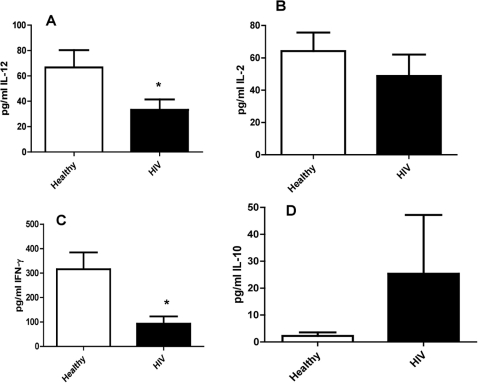
Figure 5. Assay of IL-12, IL-2, IFN-γ and IL-10 in plasma samples from healthy and HIV positive individuals.
Plasma samples separated from blood of healthy volunteers and HIV-infected individuals were used for measurement of IL-12 (Figure 5a), IL-2 (Figure 5b), IFN-γ (Figure 5c) and IL-10 (Figure 5d) by ELISA using assay kits from eBioscience. Results in Figure 5 are averages from data collected from thirteen healthy subjects and thirteen individuals with HIV infection.
Figure 6
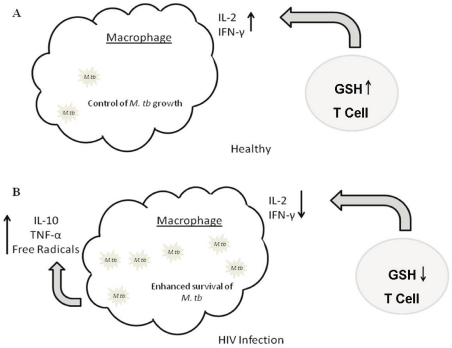
Figure 6. Model describing the mechanism by which GSH-enhanced T cells control M. tb infection in macrophages.

References

    1. WHO. WHO report. Global tuberculosis control. In: Epidemiology, strategy, editors. financing. Geneva, Switzerland: World Health Organization; 2009; 2009.
    1. Zhang M, Gong J, Iyer DV, Jones BE, Modlin RL, et al. T cell cytokine responses in persons with tuberculosis and human immunodeficiency virus infection. J Clin Invest. 1994;94:2435–42. - PMC - PubMed
    1. Buhl R, Jaffe HA, Holroyd KJ, Wells FB, Mastrangeli A, et al. Systemic glutathione deficiency in symptom-free HIV seropositive individuals. Lancet. 1989;2:1294–8. - PubMed
    1. Staal F, Roederer M, Herzenberg LA, Herzenberg LA. Intracellular thiols regulate activation of nuclear factor κB and transcription of human immunodeficiency virus. Proc Natl Acad Sci USA. 1990;87:9943–7. - PMC - PubMed
    1. Staal FJ. Glutathione and HIV infection: reduced reduced, or increased oxidized? Eur J Clin Invest. 1998;28:194–6. - PubMed

Publication types

MeSH terms