


Systematic analysis of sequences and expression patterns of drought-responsive members of the HD-Zip gene family in maize
- PMID: 22164299
- PMCID: PMC3229603
- DOI: 10.1371/journal.pone.0028488
Systematic analysis of sequences and expression patterns of drought-responsive members of the HD-Zip gene family in maize
Abstract
Background: Members of the homeodomain-leucine zipper (HD-Zip) gene family encode transcription factors that are unique to plants and have diverse functions in plant growth and development such as various stress responses, organ formation and vascular development. Although systematic characterization of this family has been carried out in Arabidopsis and rice, little is known about HD-Zip genes in maize (Zea mays L.).
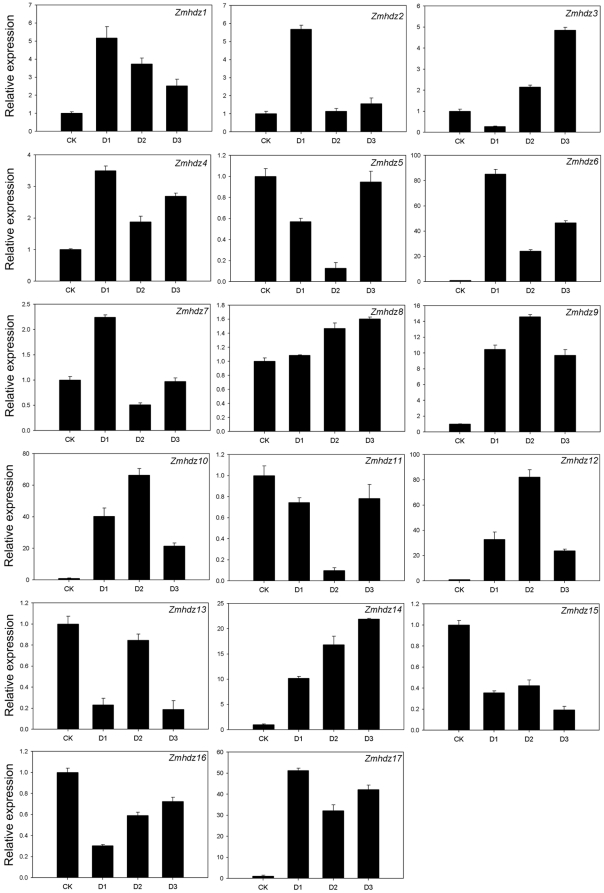
Methods and findings: In this study, we described the identification and structural characterization of HD-Zip genes in the maize genome. A complete set of 55 HD-Zip genes (Zmhdz1-55) were identified in the maize genome using Blast search tools and categorized into four classes (HD-Zip I-IV) based on phylogeny. Chromosomal location of these genes revealed that they are distributed unevenly across all 10 chromosomes. Segmental duplication contributed largely to the expansion of the maize HD-ZIP gene family, while tandem duplication was only responsible for the amplification of the HD-Zip II genes. Furthermore, most of the maize HD-Zip I genes were found to contain an overabundance of stress-related cis-elements in their promoter sequences. The expression levels of the 17 HD-Zip I genes under drought stress were also investigated by quantitative real-time PCR (qRT-PCR). All of the 17 maize HD-ZIP I genes were found to be regulated by drought stress, and the duplicated genes within a sister pair exhibited the similar expression patterns, suggesting their conserved functions during the process of evolution.
Conclusions: Our results reveal a comprehensive overview of the maize HD-Zip gene family and provide the first step towards the selection of Zmhdz genes for cloning and functional research to uncover their roles in maize growth and development.
Conflict of interest statement
Figures
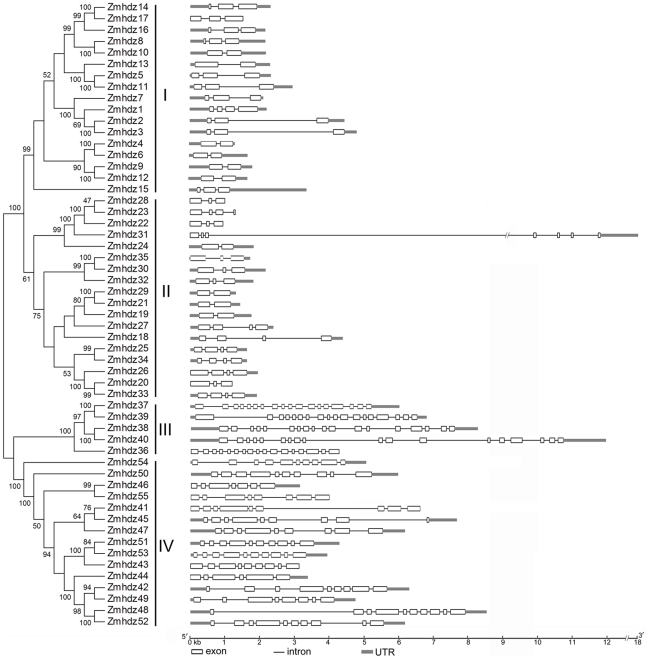
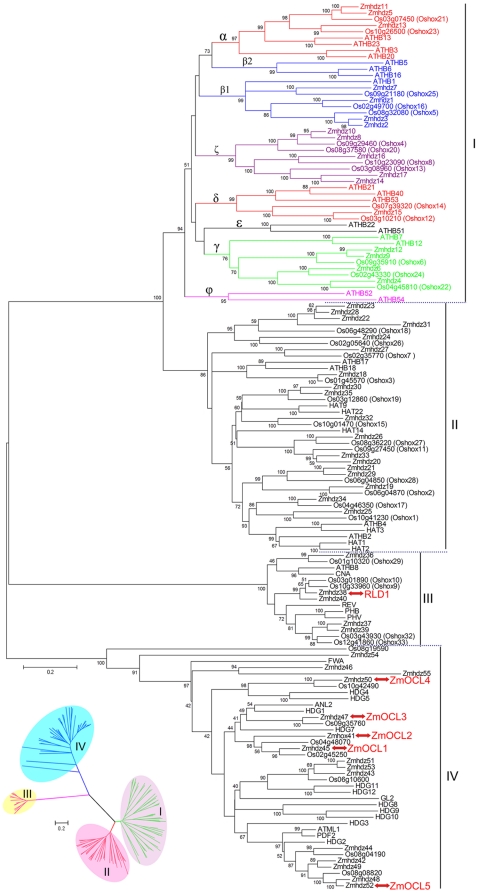
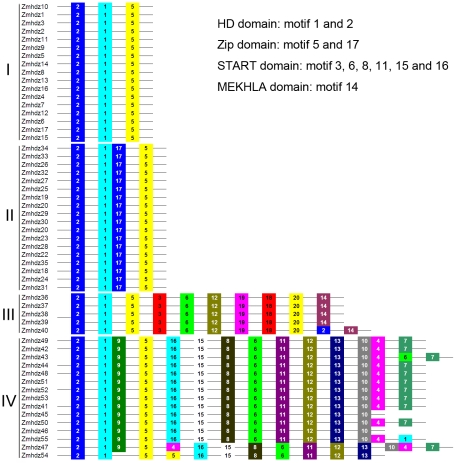
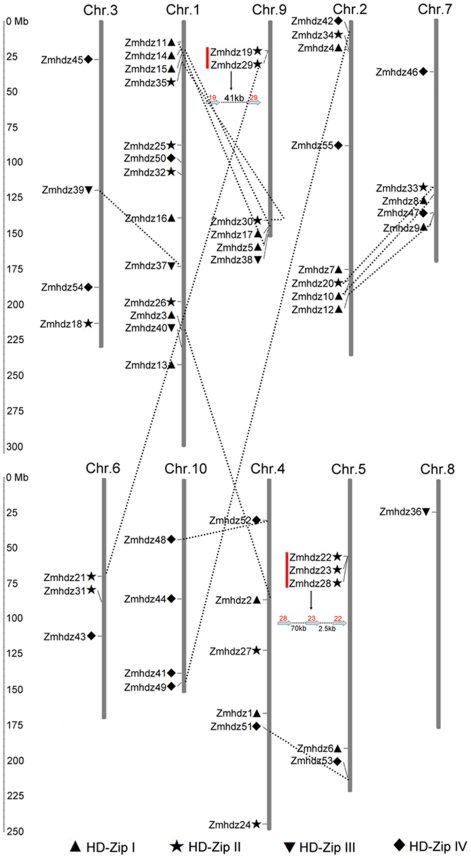
 ). Chromosome numbers are shown at the top of each vertical gray bar, and the names on the left side of each chromosome correspond to the approximate locations of each HD-Zip gene. Genes involved in segmental duplication are joined by dashed lines, and the red rectangle indicates the gene cluster on each chromosome. The scale is in megabases (Mb).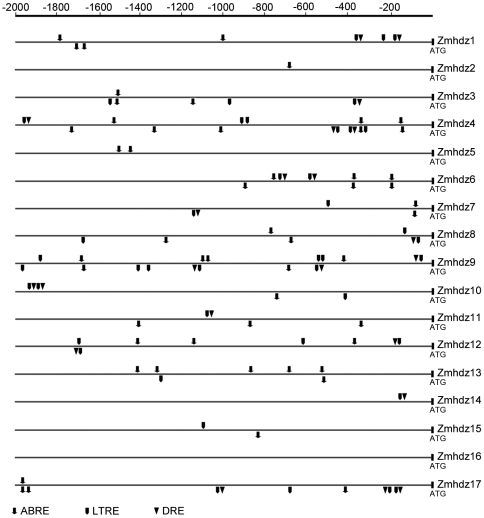
References
-
- Hanes SD, Brent R. DNA specificity of the bicoid activator protein is determined by homeodomain recognition helix residue 9. Cell. 1989;57:1275–1283. - PubMed
-
- Ariel FD, Manavella PA, Dezar CA, Chan RL. The true story of the HD-Zip family. Trends Plant Sci. 2007;12:419–426. - PubMed
-
- Vollbrecht E, Veit B, Sinha N, Hake S. The developmental gene Knotted-1 is a member of a maize homeobox gene family. Nature. 1991;350:241–243. - PubMed
Publication types
MeSH terms
LinkOut - more resources
Full Text Sources
Other Literature Sources
Research Materials
