


Septin 9 methylated DNA is a sensitive and specific blood test for colorectal cancer
- PMID: 22168215
- PMCID: PMC3271041
- DOI: 10.1186/1741-7015-9-133
Septin 9 methylated DNA is a sensitive and specific blood test for colorectal cancer
Abstract
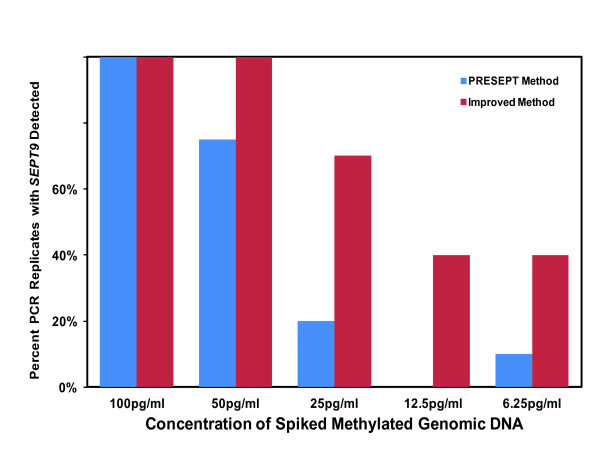
Background: About half of Americans 50 to 75 years old do not follow recommended colorectal cancer (CRC) screening guidelines, leaving 40 million individuals unscreened. A simple blood test would increase screening compliance, promoting early detection and better patient outcomes. The objective of this study is to demonstrate the performance of an improved sensitivity blood-based Septin 9 (SEPT9) methylated DNA test for colorectal cancer. Study variables include clinical stage, tumor location and histologic grade.
Methods: Plasma samples were collected from 50 untreated CRC patients at 3 institutions; 94 control samples were collected at 4 US institutions; samples were collected from 300 colonoscopy patients at 1 US clinic prior to endoscopy. SEPT9 methylated DNA concentration was tested in analytical specimens, plasma of known CRC cases, healthy control subjects, and plasma collected from colonoscopy patients.
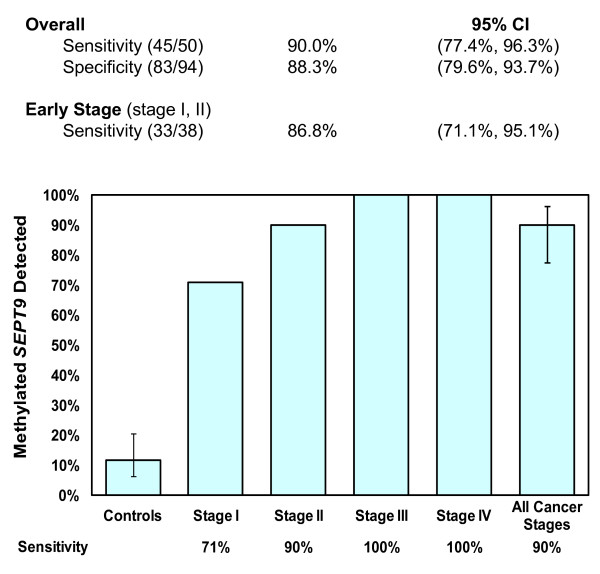
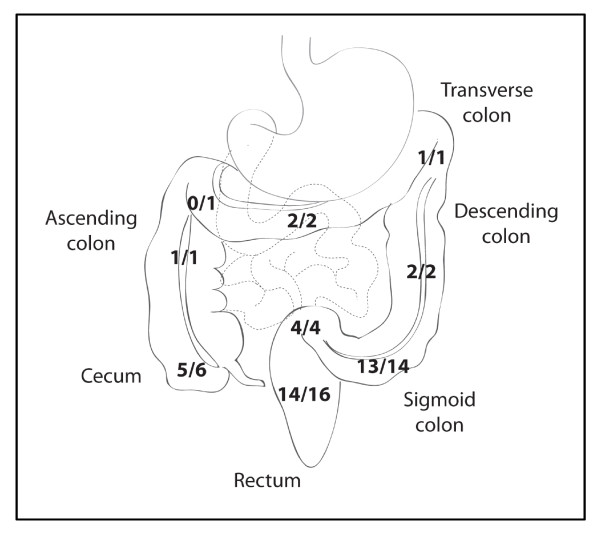
Results: The improved SEPT9 methylated DNA test was more sensitive than previously described methods; the test had an overall sensitivity for CRC of 90% (95% CI, 77.4% to 96.3%) and specificity of 88% (95% CI, 79.6% to 93.7%), detecting CRC in patients of all stages. For early stage cancer (I and II) the test was 87% (95% CI, 71.1% to 95.1%) sensitive. The test identified CRC from all regions, including proximal colon (for example, the cecum) and had a 12% false-positive rate. In a small prospective study, the SEPT9 test detected 12% of adenomas with a false-positive rate of 3%.
Conclusions: A sensitive blood-based CRC screening test using the SEPT9 biomarker specifically detects a majority of CRCs of all stages and colorectal locations. The test could be offered to individuals of average risk for CRC who are unwilling or unable to undergo colonscopy.
Figures
References
-
- Lofton-Day C, Model F, deVos T, Tetzner R, Distler J, Schuster M, Song X, Lesche R, Liebenberg V, Ebert M, Molnar B, Grützmann R, Pilarsky C, Sledziewski A. DNA methylation biomarkers for blood-based colorectal cancer screening. Clin Chem. 2008;54:414–423. doi: 10.1373/clinchem.2007.095992. - DOI - PubMed
-
- Leon SA, Shapiro B, Sklaroff DM, Yaros MJ. Free DNA in the serum of cancer patients and the effect of therapy. Cancer Res. 1977;37:646–650. - PubMed
-
- Maebo A. Plasma DNA level as a tumor marker in primary lung cancer. Nihon Kyobu Shikkan Gakkai Zasshi. 1990;28:1085–1091. - PubMed
Publication types
MeSH terms
Substances
LinkOut - more resources
Full Text Sources
Other Literature Sources
Medical
