


Comparisons of complementary feeding indicators and associated factors in children aged 6-23 months across five South Asian countries
- PMID: 22168521
- PMCID: PMC6860856
- DOI: 10.1111/j.1740-8709.2011.00370.x
Comparisons of complementary feeding indicators and associated factors in children aged 6-23 months across five South Asian countries
Abstract
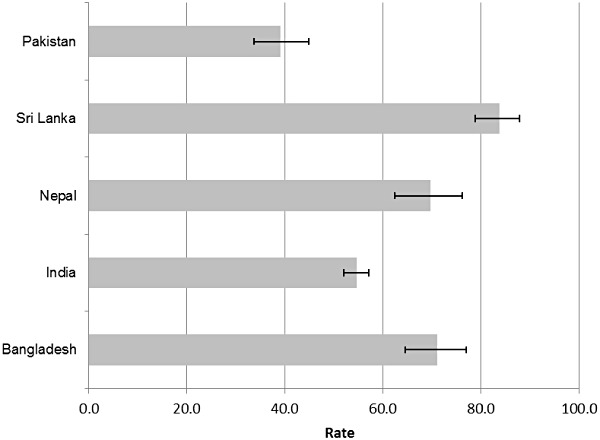
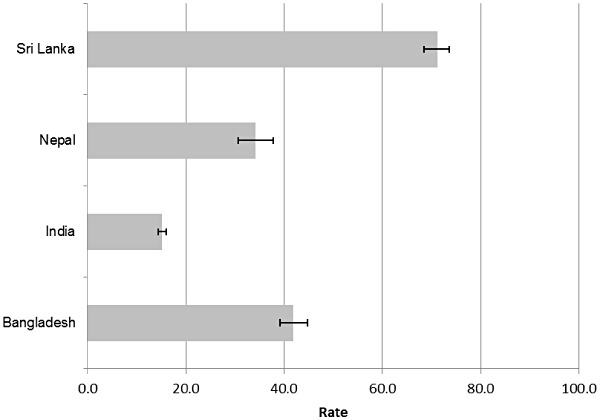
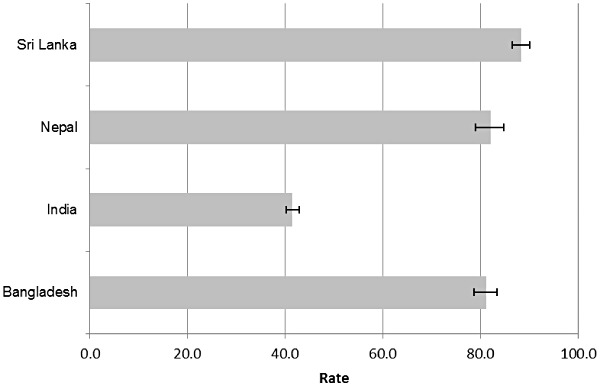
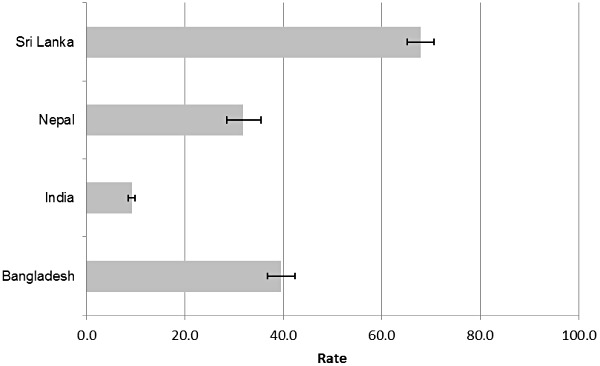
Improving infant and young child feeding practices will help South Asian countries achieve the Millennium Development Goal of reducing child mortality. This paper aims to compare key indicators of complementary feeding and their determinants in children aged 6-23 months across five South Asian countries - Bangladesh, India, Nepal, Pakistan and Sri Lanka. The latest Demographic and Health Survey and National Family Health Survey India data were used. The analyses were confined to last-born children aged 6-23 months - 1728 in Bangladesh, 15,028 in India, 1428 in Nepal, 2106 in Sri Lanka and 443 infants aged 6-8 months in Pakistan. Introduction of solid, semi-solid or soft foods, minimum dietary diversity, minimum meal frequency and minimum acceptable diet, and their significant determinants were compared across the countries. Minimum dietary diversity among children aged 6-23 months ranged from 15% in India to 71% in Sri Lanka, with Nepal (34%) and Bangladesh (42%) in between. Minimum acceptable diet among breastfed children was 9% in India, 32% in Nepal, 40% in Bangladesh and 68% in Sri Lanka. The most consistent determinants of inappropriate complementary feeding practices across all countries were the lack of maternal education and lower household wealth. Limited exposure to media, inadequate antenatal care and lack of post-natal contacts by health workers were among predictors of inappropriate feeding. Overall, complementary feeding practices among children aged 6-23 months need improvement in all South Asian countries. More intensive interventions are necessary targeting the groups with sup-optimal practices, while programmes that cover entire populations are being continued.
© 2011 Blackwell Publishing Ltd.
Figures
References
-
- Bernal Rivas J. & Lorenzana Albert P. (2003) Dietary diversity and associated factors among beneficiaries of 77 child care centers, Central Regional, Venezuela. Archivoslatinoamericanos de nutricion 53, 52–58. - PubMed
-
- Black R.E., Allen L.H., Bhutta Z.A., Caulfield L.E., de Onis M., Ezzati M. & Rivera J. (2008) Maternal and child undernutrition: global and regional exposures and health consequences. Lancet 371, 243–260. doi: 10.1016/S0140‐6736(07)61690‐0. - PubMed
-
- Brown K., Dewey K. & Allen L. (1998) Complementary Feeding of Young Children in Developing Countries: A Review of Current Scientific Knowledge. World Health Organization: Geneva.
-
- Daelmans B., Dewey K. & Arimond M. (2009) New and updated indicators for assessing infant and young child feeding. Food and Nutrition Bulletin 30, S256–S262. - PubMed
-
- Department of Census and Statistics (2010) Statistical Abstract 2010 . Available at: http://www.statistics.gov.lk/home.asp (Accessed 01 June 2010).
Publication types
MeSH terms
LinkOut - more resources
Full Text Sources
Medical
