


Calcium-induced folding and stabilization of the Pseudomonas aeruginosa alkaline protease
- PMID: 22170064
- PMCID: PMC3281706
- DOI: 10.1074/jbc.M111.310300
Calcium-induced folding and stabilization of the Pseudomonas aeruginosa alkaline protease
Abstract
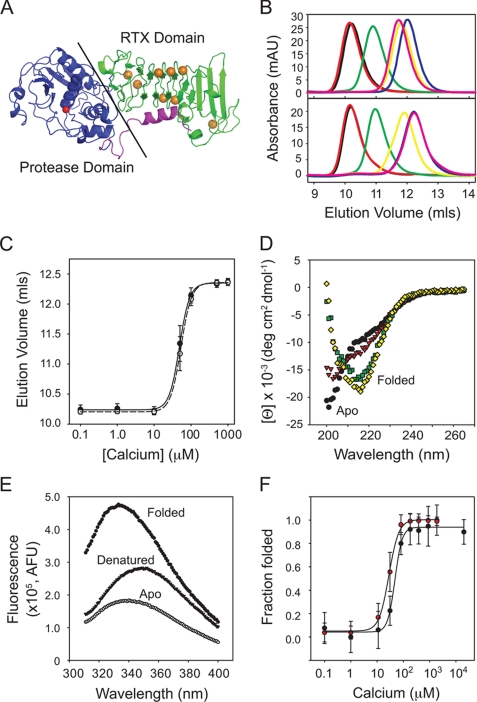
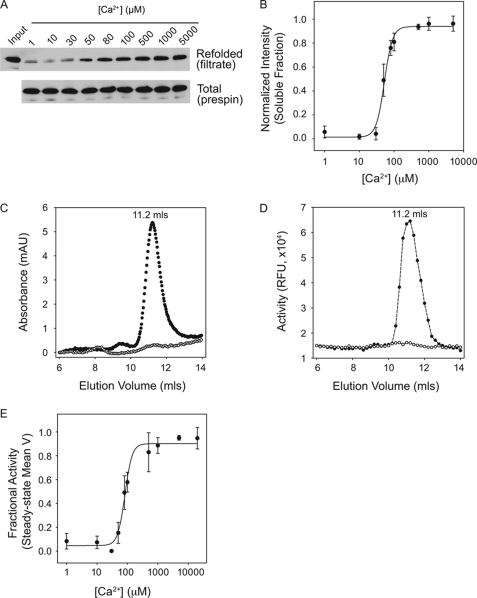
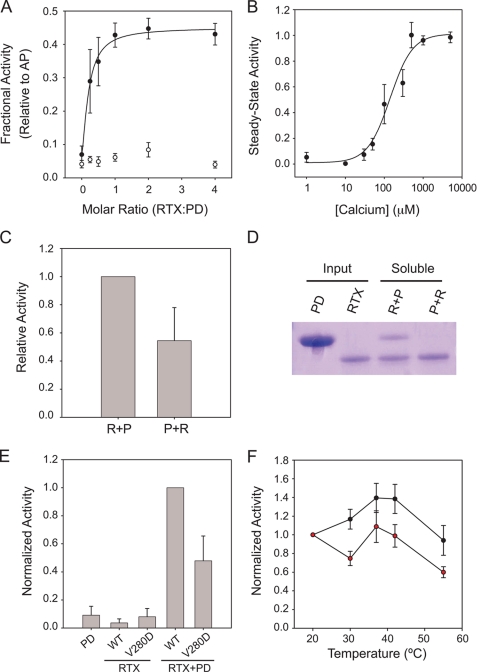
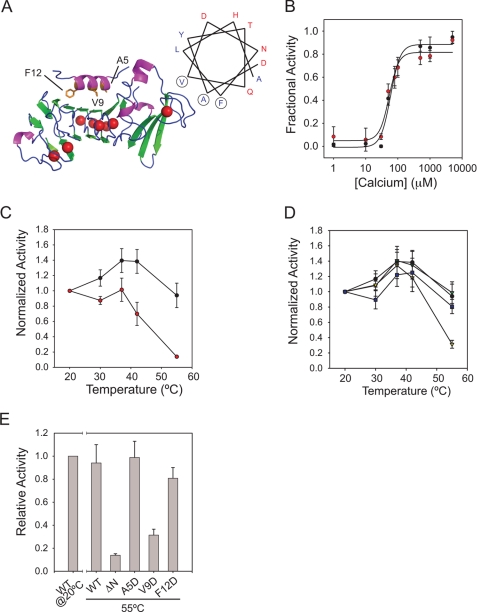
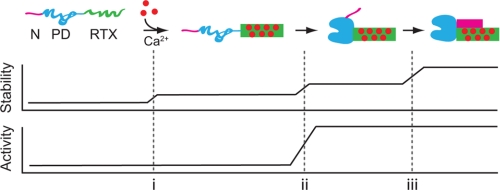
Pseudomonas aeruginosa is an opportunistic pathogen that contributes to the mortality of immunocompromised individuals and patients with cystic fibrosis. Pseudomonas infection presents clinical challenges due to its ability to form biofilms and modulate host-pathogen interactions through the secretion of virulence factors. The calcium-regulated alkaline protease (AP), a member of the repeats in toxin (RTX) family of proteins, is implicated in multiple modes of infection. A series of full-length and truncation mutants were purified for structural and functional studies to evaluate the role of Ca(2+) in AP folding and activation. We find that Ca(2+) binding induces RTX folding, which serves to chaperone the folding of the protease domain. Subsequent association of the RTX domain with an N-terminal α-helix stabilizes AP. These results provide a basis for the Ca(2+)-mediated regulation of AP and suggest mechanisms by which Ca(2+) regulates the RTX family of virulence factors.
Figures
References
-
- Lyczak J. B., Cannon C. L., Pier G. B. (2000) Establishment of Pseudomonas aeruginosa infection. Lessons from a versatile opportunist. Microbes Infect. 2, 1051–1060 - PubMed
-
- Hobden J. A. (2002) Pseudomonas aeruginosa proteases and corneal virulence. DNA Cell Biol. 21, 391–396 - PubMed
-
- Leidal K. G., Munson K. L., Johnson M. C., Denning G. M. (2003) Metalloproteases from Pseudomonas aeruginosa degrade human RANTES, MCP-1, and ENA-78. J. Interferon Cytokine Res. 23, 307–318 - PubMed
Publication types
MeSH terms
Substances
Grants and funding
LinkOut - more resources
Full Text Sources
Miscellaneous
