


Juvenile polyposis syndrome
- PMID: 22171123
- PMCID: PMC3235625
- DOI: 10.3748/wjg.v17.i44.4839
Juvenile polyposis syndrome
Abstract
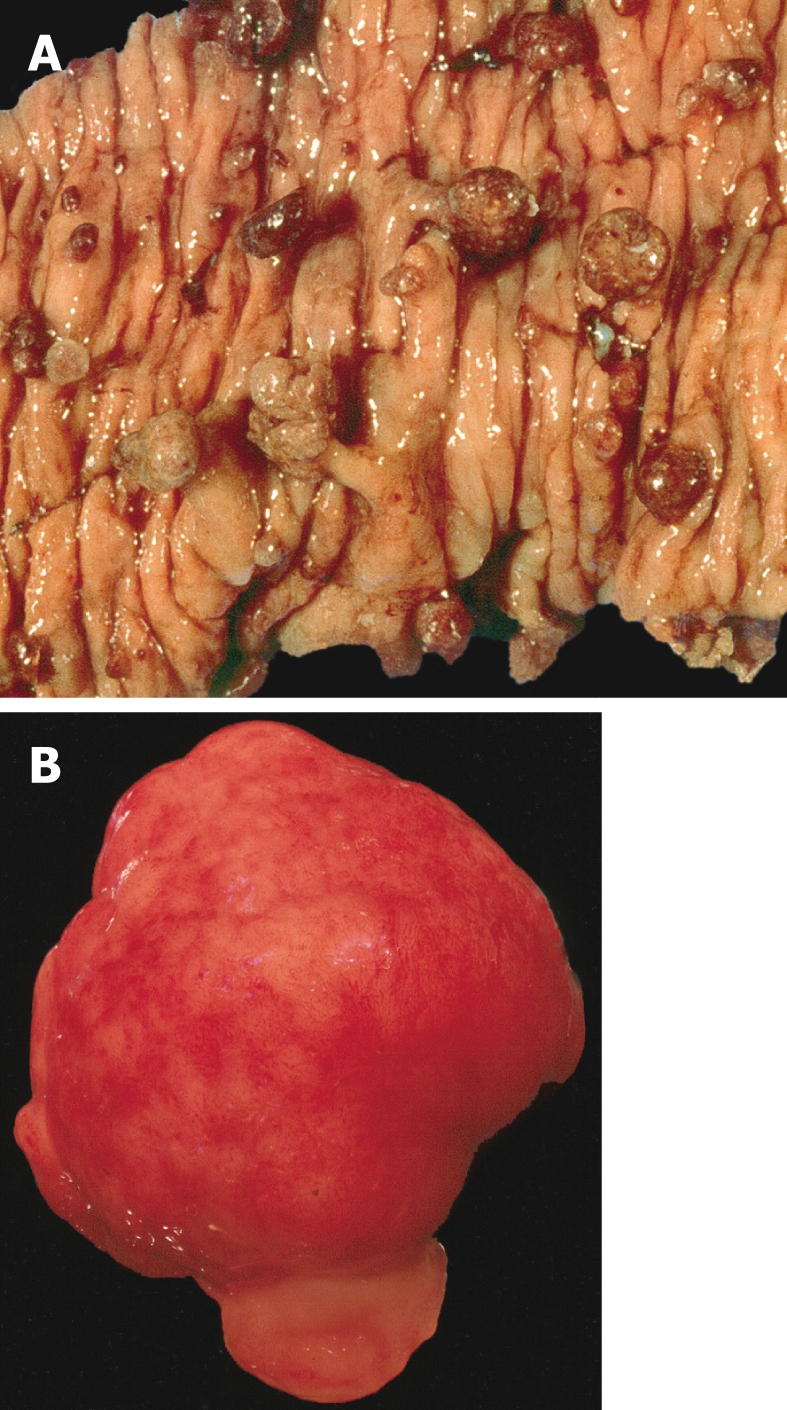
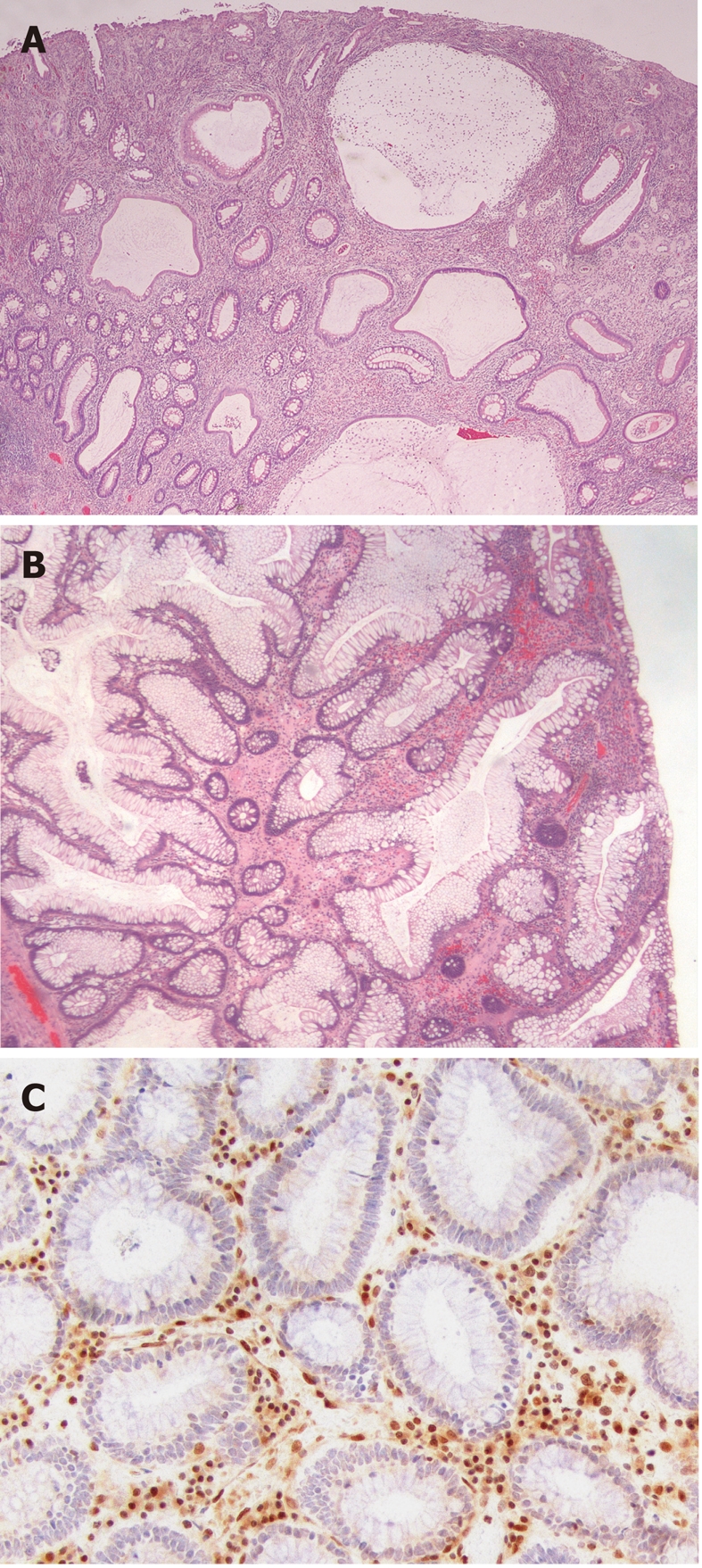
Juvenile polyposis syndrome is a rare autosomal dominant syndrome characterized by multiple distinct juvenile polyps in the gastrointestinal tract and an increased risk of colorectal cancer. The cumulative life-time risk of colorectal cancer is 39% and the relative risk is 34. Juvenile polyps have a distinctive histology characterized by an abundance of edematous lamina propria with inflammatory cells and cystically dilated glands lined by cuboidal to columnar epithelium with reactive changes. Clinically, juvenile polyposis syndrome is defined by the presence of 5 or more juvenile polyps in the colorectum, juvenile polyps throughout the gastrointestinal tract or any number of juvenile polyps and a positive family history of juvenile polyposis. In about 50%-60% of patients diagnosed with juvenile polyposis syndrome a germline mutation in the SMAD4 or BMPR1A gene is found. Both genes play a role in the BMP/TGF-beta signalling pathway. It has been suggested that cancer in juvenile polyposis may develop through the so-called "landscaper mechanism" where an abnormal stromal environment leads to neoplastic transformation of the adjacent epithelium and in the end invasive carcinoma. Recognition of this rare disorder is important for patients and their families with regard to treatment, follow-up and screening of at risk individuals. Each clinician confronted with the diagnosis of a juvenile polyp should therefore consider the possibility of juvenile polyposis syndrome. In addition, juvenile polyposis syndrome provides a unique model to study colorectal cancer pathogenesis in general and gives insight in the molecular genetic basis of cancer. This review discusses clinical manifestations, genetics, pathogenesis and management of juvenile polyposis syndrome.
Keywords: BMPR1A; Colorectal cancer; Hamartoma; Juvenile polyposis syndrome; SMAD4.
Figures
References
-
- Nugent KP, Talbot IC, Hodgson SV, Phillips RK. Solitary juvenile polyps: not a marker for subsequent malignancy. Gastroenterology. 1993;105:698–700. - PubMed
-
- Jass JR, Williams CB, Bussey HJ, Morson BC. Juvenile polyposis--a precancerous condition. Histopathology. 1988;13:619–630. - PubMed
-
- van Hattem WA, Brosens LA, de Leng WW, Morsink FH, Lens S, Carvalho R, Giardiello FM, Offerhaus GJ. Large genomic deletions of SMAD4, BMPR1A and PTEN in juvenile polyposis. Gut. 2008;57:623–627. - PubMed
-
- Calva-Cerqueira D, Chinnathambi S, Pechman B, Bair J, Larsen-Haidle J, Howe JR. The rate of germline mutations and large deletions of SMAD4 and BMPR1A in juvenile polyposis. Clin Genet. 2009;75:79–85. - PubMed
Publication types
MeSH terms
Substances
Supplementary concepts
LinkOut - more resources
Full Text Sources
Medical
Miscellaneous
