


Frequent hospital readmissions for Clostridium difficile infection and the impact on estimates of hospital-associated C. difficile burden
- PMID: 22173518
- PMCID: PMC3657466
- DOI: 10.1086/663209
Frequent hospital readmissions for Clostridium difficile infection and the impact on estimates of hospital-associated C. difficile burden
Abstract
Objective: Clostridium difficile infection (CDI) is associated with hospitalization and may cause readmission following admission for any reason. We aimed to measure the incidence of readmissions due to CDI.
Design: Retrospective cohort study.
Patients: Adult inpatients in Orange County, California, who presented with new-onset CDI within 12 weeks of discharge.
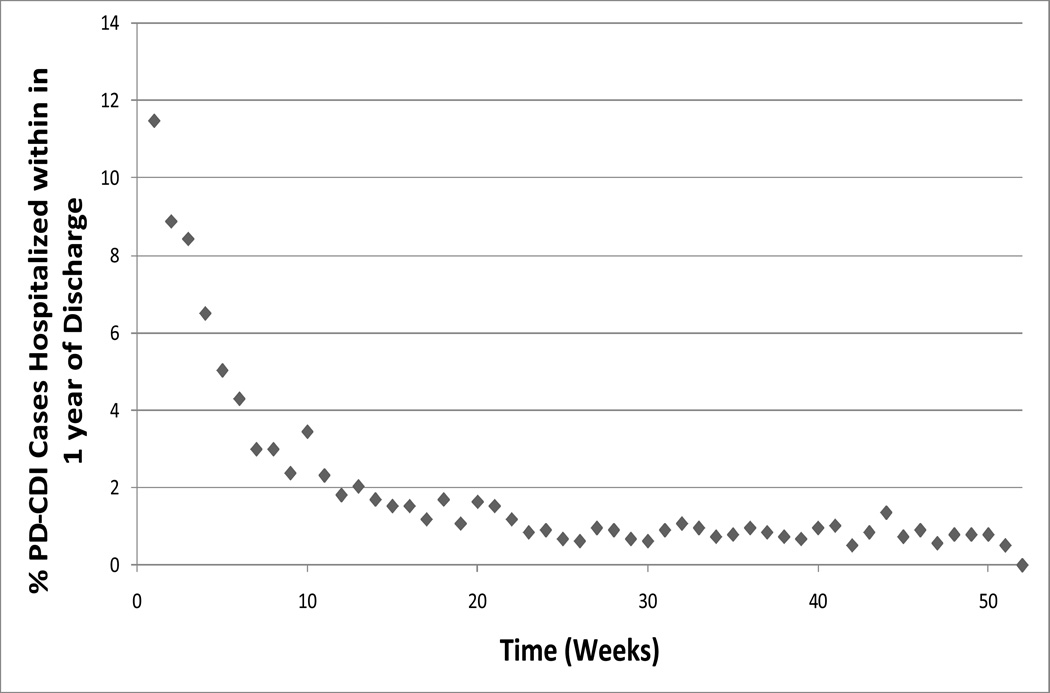
Methods: We assessed mandatory 2000-2007 hospital discharge data for trends in hospital-associated CDI (HA-CDI) incidence, with and without inclusion of postdischarge CDI (PD-CDI) events resulting in rehospitalization within 12 weeks of discharge. We measured the effect of including PD-CDI events on hospital-specific CDI incidence, a mandatory reporting measure in California, and on relative hospital ranks by CDI incidence.
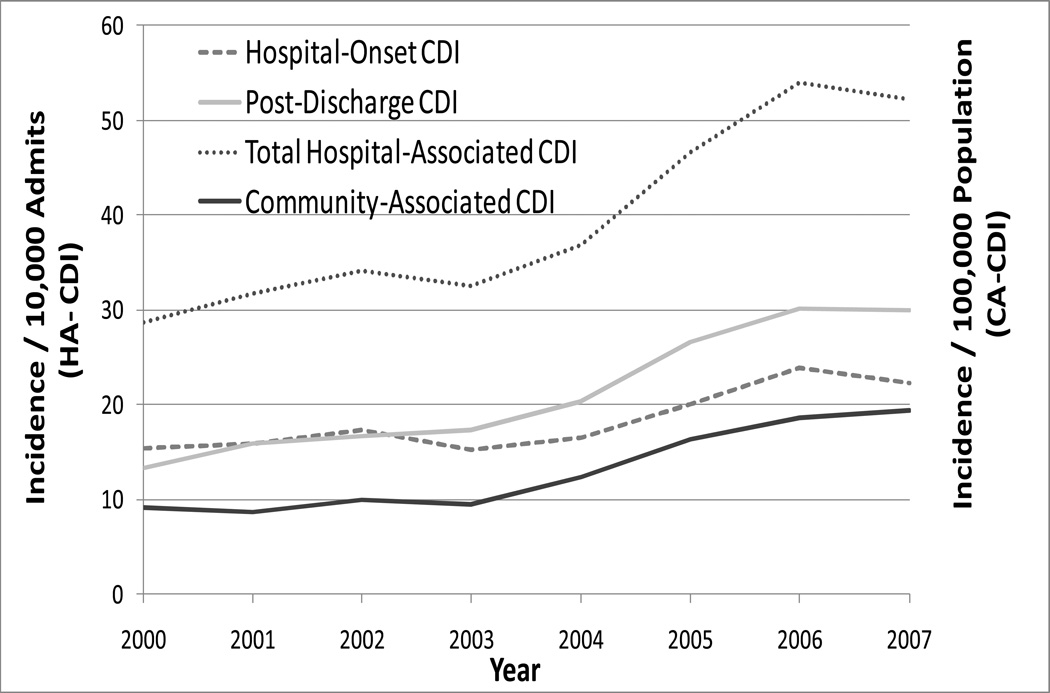
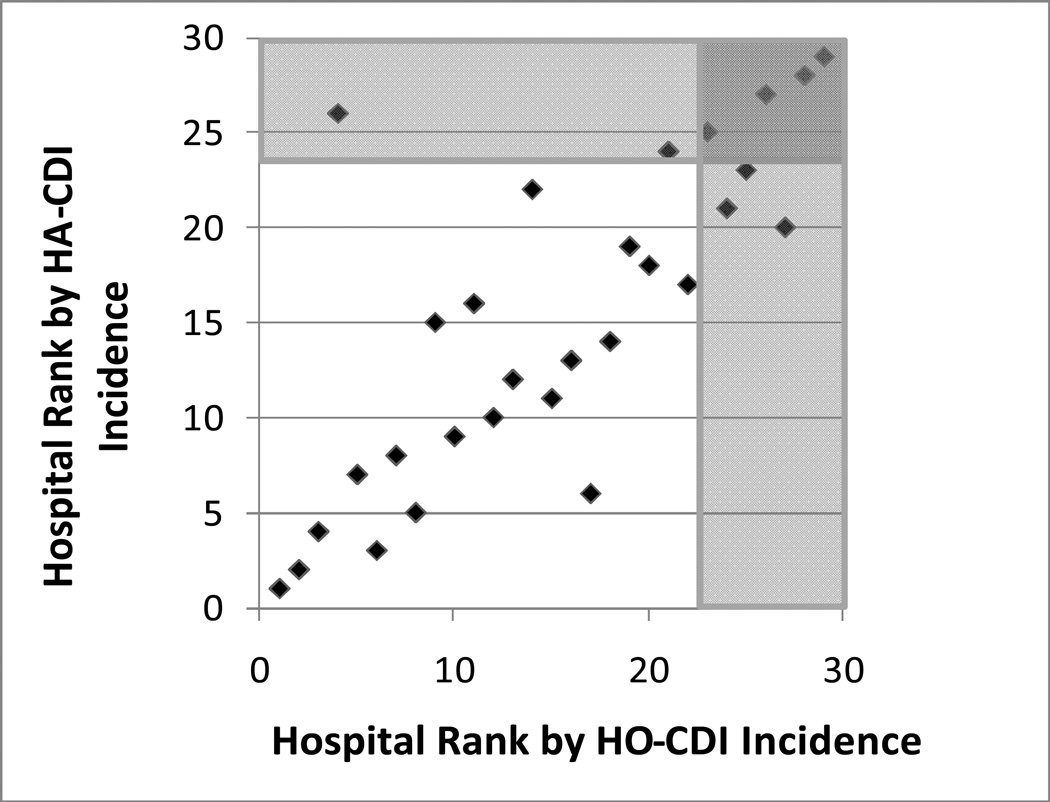
Results: From 2000 to 2007, countywide hospital-onset CDI (HO-CDI) incidence increased from 15 per 10,000 to 22 per 10,000 admissions. When including PD-CDI events, HA-CDI incidence doubled (29 per 10,000 in 2000 and 52 per 10,000 in 2007). Overall, including PD-CDI events resulted in significantly higher hospital-specific CDI incidence, although hospitals had disproportionate amounts of HA-CDI occurring postdischarge. This resulted in substantial shifts in some hospitals' rankings by CDI incidence. In multivariate models, both HO and PD-CDI were associated with increasing age, higher length of stay, and select comorbidities. Race and Hispanic ethnicity were predictive of PD-CDI but not HO-CDI.
Conclusions: PD-CDI events associated with rehospitalization are increasingly common. The majority of HA-CDI cases may be occurring postdischarge, raising important questions about both accurate reporting and effective prevention strategies. Some risk factors for PD-CDI may be different than those for HO-CDI, allowing additional identification of high-risk groups before discharge.
Conflict of interest statement
All other authors report no conflict of interest.
Figures
References
-
- Yokoe DS, Avery TR, Huang SS. Surgical Site infection Surveillance Following Total hip and Knee Arthroplasty Using California Administrative Data. Dallas, TX: Oral Presentation, Society for Healthcare Epidemiology of America; Apr 1–4, 2011.
-
- Klevens RM, Morrison MA, Nadle J, et al. Invasive Methicillin-Resistant Staphylococcus aureus Infections in the United States. JAMA. 2007;298(15):1763–1771. - PubMed
-
- Huang SS, Platt R. Risk of Methicillin-Resistant Staphylococcus aureus Infection After Previous Infection or Colonization. Clin Infect Dis. 2003;36(3):281–285. - PubMed
Publication types
MeSH terms
Grants and funding
LinkOut - more resources
Full Text Sources
Other Literature Sources
Medical